


Bread Finds Its Way Home
For much of the twentieth century, Americans didn’t bake bread. We bought it. Bread became something that arrived in a brightly colored plastic bag from the supermarket. It was convenient, soft, perfectly sliced, and remarkably consistent. There was nothing wrong with that if all you wanted was a sandwich.
But something had been lost.

Bread had once been something families created. Every village had a baker. Every home had its own traditions. Hand mixed Dough, sourdough starters were passed from generation to generation, and the smell of fresh bread drifting from an oven was simply part of everyday life.
When Bread Forgot How to Be Bread
By the middle of the twentieth century, America had become remarkably good at making bread quickly, cheaply and consistently. Unfortunately, we had also become remarkably good at stripping away much of what made bread worth celebrating in the first place.
The neighborhood baker disappeared. Commercial yeast replaced the sourdough starter. Stone-ground flour gave way to highly refined white flour. Bread became softer, sweeter, lasted longer on the shelf, and fit neatly into a plastic bag. It was an engineering triumph.

It just wasn’t much of a culinary one.
So when critics began pointing fingers at bread in the 1970s, they weren’t entirely wrong. Much of what Americans were eating hardly resembled the breads that had nourished civilizations for thousands of years. The mistake wasn’t noticing that modern bread had changed.
The mistake was blaming bread itself.
About the same time, something wonderful was happening on the other side of the cultural conversation. In Northern California, a generation of young cooks, gardeners and seekers began asking a different question. Instead of asking how bread could be made faster, they asked how it had been made before factories.
One of the books that captured that spirit was The Tassajara Bread Book. Published in 1970 by Edward Espe Brown, it became far more than a cookbook. It was a manifesto for rediscovering whole grains, fresh flour, long fermentation, and the quiet satisfaction of making bread with your own hands. For many people, it was their first introduction to bread that tasted like grain instead of packaging.
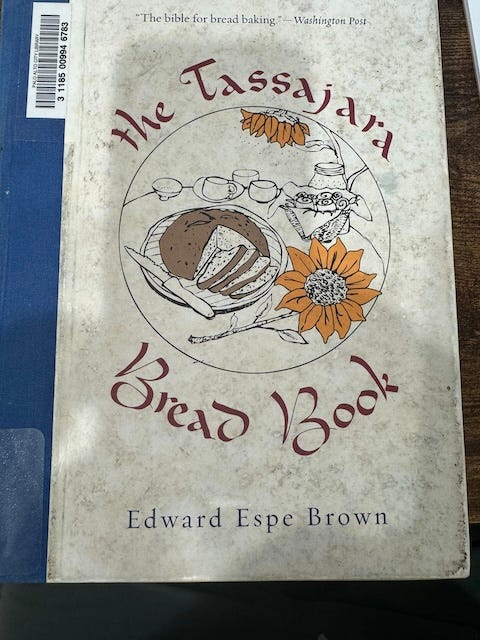
I was a little too young to be part of the hippie movement, but I’ve always admired what happened in kitchens during those years. Along with questioning politics, music and culture, they questioned food. They pulled flour mills onto kitchen counters. They nurtured sourdough starters. They baked dense whole-grain loaves that would horrify some modern influencers, but those loaves represented something important: a return to food that people recognized.
Whether the revolution succeeded because of idealism or because homemade bread simply tasted better is difficult to say.
I suspect it was both.
The irony is delicious. While one movement was beginning to declare that bread itself was the problem, another was quietly rediscovering that the real problem wasn’t bread at all.
It was forgetting how to make it.
That’s a lesson worth remembering today. When someone tells me bread is unhealthy, my first question isn’t whether they’re right.
It’s, “Which bread are we talking about?”
Then came the Summer of Love.
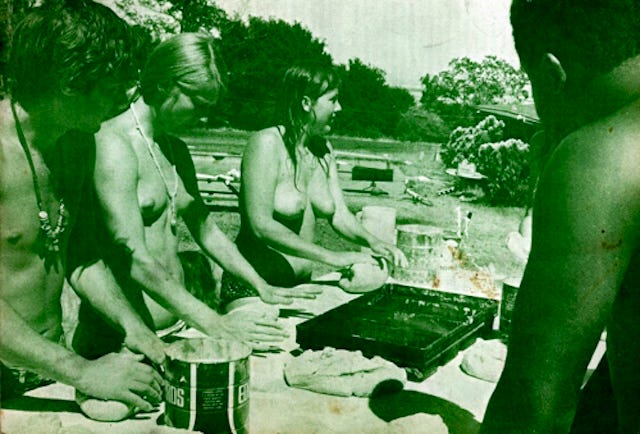
I was just a little too young to be part of the hippie movement, although being a Californian I’ve always admired some of what they rediscovered. Along with questioning politics, music and culture, they also began questioning food. Instead of buying factory-made white bread, they started grinding whole grains, baking their own loaves, and rediscovering sourdough. They didn’t invent whole-grain bread. Humanity had been making it for thousands of years. They simply reminded America that bread could be more than something wrapped in plastic.
Ironically, what looked like a cultural rebellion was also a return to tradition.
The more I study culinary medicine, the more I realize that progress often looks like rediscovering something our grandparents quietly knew all along. Good olive oil. Beans. Lentils. Soup. Whole grains. Fermented foods. None of them are new. They simply disappeared for a while beneath convenience and clever marketing.
That’s one of the reasons I enjoy freshly made baked bread. I don’t bake bread, as my own efforts produce something better suited for construction than consumption. Every failed loaf reminds me how remarkable those first bakers were. Somewhere, thousands of years ago, someone looked at flour and water and imagined something more. Fortunately for civilization, they were far better bakers than I am.
The Staff of Life
For most of human history, bread wasn’t a side dish.
It was life itself.
That’s where the old expression “the staff of life” comes from. A staff is something you lean on for support. Bread became the food entire civilizations leaned upon. It wasn’t simply nourishment. It was security. A good harvest meant grain in the silo, flour in the mill, bread in the oven, and another year in which children grew up instead of going hungry.
The ancient Egyptians understood this perhaps better than anyone. We often look at the pyramids and marvel at the engineering, mathematics, and sheer determination required to build them. We imagine pharaohs, priests and monuments to the afterlife.
I see bread.
Not because the pyramids were built to celebrate bread, but because they could not have been built without it.
The workers who quarried stone, hauled massive blocks, and shaped one of history’s greatest engineering achievements needed to eat every day. That required farmers growing grain, millers grinding flour, bakers tending ovens, and perhaps most importantly, enough stored grain to feed thousands of people who were no longer spending their days hunting for food.
The real miracle of Egypt wasn’t simply the pyramids.
It was the granary.

Archaeologists have uncovered enormous grain silos throughout ancient Egypt. Some were circular, remarkably sophisticated structures designed to keep grain dry, protected from rodents and insects, and available long after harvest. They were, in many ways, the skyscrapers of food security. Modern grain storage follows many of the same principles because the problem has never changed. If you can preserve grain, you can preserve civilization.
That’s the quiet genius of bread.
Grain can be harvested once and feed people for months. Once enough grain is stored, not everyone has to be a farmer. One person becomes a baker. Another becomes a mason. Another studies the stars and invents a calendar to predict the Nile floods. Someone else learns mathematics to measure fields after the river recedes. Priests, scribes, physicians and architects all become possible because somebody else is growing wheat.
Bread didn’t simply feed civilization.
Bread freed civilization.
It allowed human beings to specialize, and specialization is where remarkable things happen. Medicine appears. Writing appears. Engineering appears. Music becomes something more than rhythm around a campfire. Trade expands because surplus grain can be exchanged for timber, metals, spices and ideas.
The more I think about it, the more convinced I become that bread deserves far more credit than it usually receives. We celebrate kings, generals and inventors. We build museums around pharaohs and monuments around emperors.
Perhaps we should spend a little more time thanking the baker.
Without bread, there may have been no pyramids to admire.
Armies Marched on Bread
Once grain could be stored and bread could be made in quantity, it became the fuel of armies. Soldiers could not march on sentiment, and they could not carry a fresh roast for weeks. Bread was portable, familiar, and reliable. It could be baked into loaves, hardened into biscuits, carried across long distances, and eaten with whatever else the army found. Empires expanded because supply lines held, and those supply lines often began with grain.
Napoleon is usually credited with saying that an army marches on its stomach. Whether he said it exactly that way matters less than the truth behind it. Armies that ran out of bread stopped being armies and became hungry men far from home. Bread was not glamorous, but strategic. Generals may have planned the battles, but bakers helped determine who reached them.
Bread and the Roman Crowd
The Roman emperors understood bread in a different way. They knew that feeding the population was not simply charity; it was political survival. Rome developed an enormous grain distribution system to supply the city, and free or subsidized grain became part of the relationship between the state and its people. Later, bread joined the circuses as shorthand for keeping the public fed and entertained.
It sounds cynical, and it was, but it also recognized a basic truth. Speeches rarely impress hungry people. When bread became scarce or expensive, unrest followed. The emperors could tolerate criticism, satire, and even the occasional bad chariot race. What they could not tolerate was an empty grain supply.
The Sourdoughs Head North
Thousands of years later, that same tradition traveled with prospectors into Alaska and the Yukon. My grandfather was one of them. He was born in 1870 and headed north in search of gold, carrying the same basic technology that had fed Egyptians, Romans, and soldiers across history: grain transformed by microbes into bread.
Those prospectors became known as Sourdoughs because they carefully guarded their starter. They fed it, carried it from camp to camp, and kept it warm through brutal winters. Some even slept with it so it would not freeze. In a place where supply lines were uncertain and winter could isolate a settlement for months, a living sourdough starter was more than a culinary curiosity. It was insurance.
My grandfather was not marching with a Roman legion or building a pyramid, but continuing the same human story. Bread traveled with people because bread made travel, settlement, and survival possible. From the Nile to Rome to the Alaskan frontier, civilization often moved forward with a loaf in hand.
So...Should We Eat Bread?
That brings us back to the question that started this article.
Is bread good for us?
Like so many questions in nutrition, the answer isn’t simply yes or no.
It’s, “Which bread?”
One of the great mistakes we make in nutrition is treating all bread as though it were the same food. It isn’t. A naturally fermented whole-grain sourdough loaf and a highly refined white sandwich bread may share the same name, but nutritionally they’re distant cousins.
Whole grains are remarkable little packages. The bran provides fiber that feeds our microbiome. The germ contains healthy fats, vitamin E, minerals and thousands of plant compounds that we’re still learning about. The starchy endosperm provides energy. Strip away the bran and germ and you’ve removed much of what made the grain interesting in the first place.
The science here has become remarkably consistent. People who eat more whole grains tend to have lower rates of heart disease, type 2 diabetes, obesity, colorectal cancer and premature death. That’s one of the reasons whole grains remain a cornerstone of the Mediterranean diet. The recommendation isn’t based on nostalgia or tradition. It’s based on decades of research that keeps arriving at the same conclusion.
One of the ironies of modern nutrition is that many whole-grain breads now technically qualify as “ultra-processed foods” under classification systems such as NOVA. That label often surprises people. A loaf made from whole-grain flour, water, yeast, salt and perhaps a few ingredients to improve consistency may still fall into that category. Yet when we look at the actual health outcomes, whole-grain breads consistently perform very differently from sugary snacks, soft drinks and many other highly processed foods that share the same label.
That’s a good reminder that food isn’t judged by a classification system alone.
It’s judged by what happens when people eat it.
One of my favorite lunches remains wonderfully uncomplicated. A slice of toasted whole-grain sourdough, a little peanut butter—remember, peanuts are legumes—and perhaps a piece of fruit. Or tear off a warm piece of bread, dip it into good extra-virgin olive oil, and you’ve recreated one of the oldest and healthiest meals in the Mediterranean.
Simple food.
Good science.
A little history in every bite.
The story of bread, however, doesn’t end with whole grains. Social media has placed bread on trial for everything from inflammation to dementia, from gluten to “brain fog,” and the verdict often arrives long before the evidence.
Let’s look at what the research actually says.
The Trial of Bread
If social media had been a courtroom, bread would have been convicted years ago.
The charges are extensive. Bread causes obesity. Bread causes diabetes. Bread causes heart disease. Bread causes dementia. Bread causes inflammation. Bread causes autoimmune disease. Bread causes “leaky gut.” Bread spikes insulin, destroys your microbiome, and according to a few influencers, probably knocked the dinosaurs off the planet.
It’s quite a rap sheet.
The problem is that the jury reached a verdict before anyone bothered to examine the evidence. Here is that evidence:
