


Hangover Pills, Liver Detox, and the Much Bigger Problem With Alcohol

I noticed another new supplement making the rounds again - something to help you with a hangover. Lots of science shows how it gets rid of “the toxic metabolite” that causes all the problems. That is the implication, take this before and after, and you can party like a college kid. Oh, here we go again.
Every few years, a familiar promise reappears.
A supplement that claims to:
Prevent hangovers
Protect the liver
Neutralize alcohol’s damage
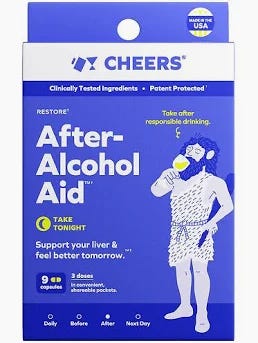
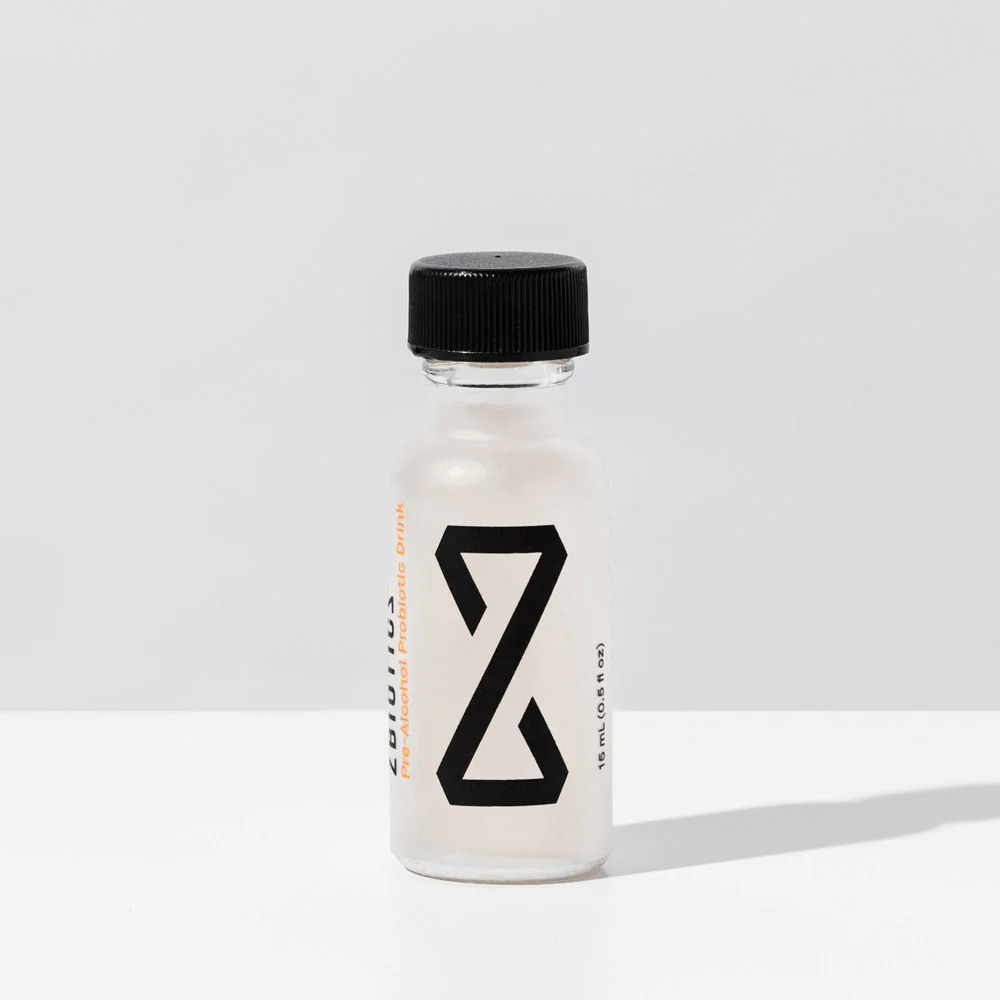
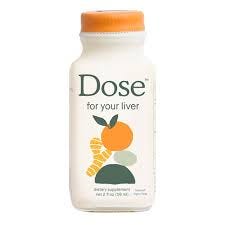
This time, the bottles are sleeker, the language more scientific, and the marketing more confident. Products like Cheers, Dose, and ZBiotics suggest that if we just target the right pathway—acetaldehyde, glutathione, probiotics—we can drink without consequence. Party like you’re back in college, without the tests.
That framing misses the real issue.
Alcohol is not just a liver problem.
And hangovers are not the real harm.
And you are not a college kid anymore, your body aged and alcohol helped age it.
First: a hard truth we’ve been slow to say out loud
There is no safe level of alcohol in the diet. I know, here I go again.
That is not ideology. That is the current scientific consensus.
Risk does not suddenly appear at “heavy drinking.” It rises with any regular exposure, even at levels long considered “moderate.”
Many of us—including physicians—rethink our relationship with alcohol. Not because we hit rock bottom. Not because we lost control. But because the biology no longer supports the story we were told.
Cutting way back—or heading toward zero—is not failure.
It is informed decision-making.
Alcohol and addiction: this affects more than “problem drinkers”
Alcohol is addictive. That does not mean you will lose your job, wreck your family, or end up in rehab.
Addiction often looks quieter.
It looks like:
Wanting the two-martini lunch
Needing the after-work drink to “turn the brain off”
Feeling restless when it’s not there
Drinking more often than you planned, even if never “too much”
Alcohol alters dopamine signaling, stress responses, and habit loops—even in casual drinkers. You don’t need to spiral to be affected. You just need repetition.
That’s why so many people are surprised when they cut back and realize how much mental space alcohol was occupying.
This is not about shame.
It’s about recognizing a drug for what it is.
Why “liver detox” framing is misleading
Most alcohol supplements focus on the liver because it feels concrete and fixable.
But alcohol harms the body through multiple systems, many of which are not mediated by the liver and not improved by supplements.
Alcohol is a carcinogen
Alcohol is a Group 1 carcinogen, in the same category as tobacco smoke.
It increases cancer risk through:
DNA damage
Impaired DNA repair
Chronic inflammation
Hormonal effects
Increased tissue permeability to other carcinogens
These effects occur throughout the body.
Smoking plus alcohol is especially dangerous
One of the strongest signals in cancer epidemiology:
People who both drink and smoke have dramatically higher rates of:
Oral cancer
Pharyngeal cancer
Laryngeal cancer
Esophageal cancer
Alcohol acts as a solvent, allowing tobacco carcinogens to penetrate deeper into tissues. No probiotic or amino acid meaningfully alters this risk. So if you smoke, don’t drink, and if you drink, don’t smoke. And if you don’t drink and don’t smoke, well, that is a good combination.
Alcohol and the brain: dementia matters more than hangovers
Alcohol increases the risk of:
Cognitive decline - not just stupid when you drink, but forever.
Earlier onset dementia
Structural brain changes
Mechanisms include:
Direct neurotoxicity
Repeated neuroinflammation
Sleep disruption
Vascular injury
Nutrient depletion
These are cumulative effects, built over years. No hangover pill addresses this. And, yes, in the paid section, I go into what you can do to help reverse this - from science, not from a supplement. Oh, and coffee is included.
Where the supplements come in (briefly)
Products like Cheers, Dose, and ZBiotics target real but narrow pathways:
Acetaldehyde binding
Antioxidant support
Herbal anti-inflammatory effects
Gut-level metabolism
None of them:
Prevent alcohol from reaching the brain
Prevent immune activation
Prevent cancer risk
Prevent addiction biology
Prevent long-term neurodegeneration
They may make some people feel slightly better after modest drinking. That is not the same as protection.
The honest bottom line
If someone is worried about what alcohol has done—or might do—to their body, the solution is not in a bottle.
It is in changing the relationship with alcohol itself.
And for many people, that change looks like:
Drinking far less
Drinking rarely
Or choosing zero
Not because they “had to.”
Because the evidence caught up.
🔒 Paid Subscribers: What These Supplements Actually Do—and What Does Help
Now let’s be precise and fair.
Some of the pathways these supplements target are biologically real. They’re just not the main drivers of harm. In the paid section, we will examine these and what to do if you wake up with a hangover - what works, no supplement required.
