


FORK U, is my food and nutrition podcast that comes out on Thursdays. This week, we’re talking about one of humanity’s greatest foods: cheese.
🍎 Listen on Apple Podcasts
Over the past few episodes, we’ve explored how cooking transformed food, how soup transformed leftovers, and how bread transformed grain. In many ways, bread transformed civilization itself. Once humans could reliably grow, store, and bake grain, we could build cities, support craftsmen, create governments, and eventually invent everything from mathematics to podcasts. Yes, I just used math and podcasts in the same sentence.
If bread helped build civilization, I’d argue cheese made us civilized.
Think about it. You can have a city without cheese. But can you have a dinner party? I mean, don’t dis a brie. OK, my son turned 16 on the 20th. The minute he was born, I became a dad, and the dad joke place of the brain was engaged.
Cheese took a food that spoiled in a day or two, and transformed it into something that could nourish people for months—or even years. It traveled with shepherds, fed armies, filled monastery cellars, and eventually found its way onto charcuterie boards where otherwise reasonable adults argue about Parmesan aging.
Recently, cheese has mystified nutrition. For decades, it was dismissed as little more than saturated fat. But it doesn’t behave like one.
Cheesy Origins
Of course, no one knows exactly when cheese was invented. Like so many important discoveries in human history, it probably wasn’t invented at all. It was discovered.
You’ve probably seen a bota di vino - a container looking like a stomach to carry wine. Stomach’s were some of the first containers used to transport liquids. Imagine putting milk into this container for a long trip. Inside the lining of the young ruminant’s stomach is rennet, enzymes whose job is to help digest milk.
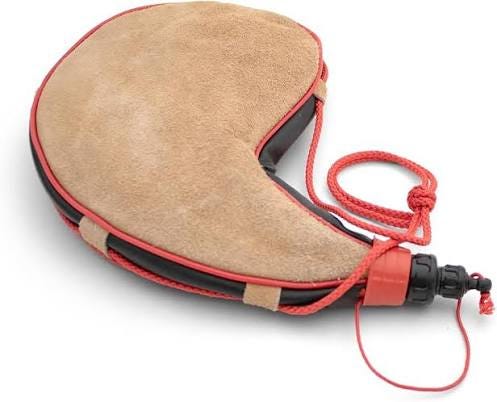
As the horseman rode, the milk mixed with the remnant enzymes, along with naturally occurring bacteria, and began transforming the milk. By the end of the day, instead of milk, he found soft curds floating in watery whey.
Food was a precious commodity, it was scarce, and you didn’t just toss stuff out. You did taste it. And one of our ancestors did this. Took a bite and probably declared, “Now if I could invent a cracker.”
Archaeologists have found evidence of cheese making more than 7,000 years ago, and milk fats preserved in ancient pottery tell us that people separated curds from whey long before written history. Whether it happened in the Fertile Crescent, Central Asia, or somewhere else entirely, we’ll probably never know. I always thought it occurred in Pike’s Market in Seattle.
Someone was curious enough to taste milk transformed into this primitive cheese, that could be carried across mountains, traded between villages, stored through the winter, and eventually aged into hundreds of varieties that still define cuisines around the world.
Sometimes food doesn’t begin with a plan. Sometimes it begins because of a happy accident, and being hungry enough to take a bite.
Many Milk and Hands Make Much Cheese
Once people discovered they could transform milk into cheese, there was no going back.
Different animals produced different milk. Different climates favored different bacteria and molds. Some cheeses were eaten fresh. Others were salted, pressed, smoked, wrapped in leaves, or tucked away in caves to age for months or years. Before long, every region had its own signature cheese, each reflecting its landscape, its animals, and the people who made it.
Goat’s milk gives us tangy chèvre. Sheep’s milk becomes rich Pecorino and Roquefort. Water buffalo milk produces the creamy mozzarella that belongs on a proper Neapolitan pizza. Camel’s milk is made into cheese in parts of Africa and the Middle East. Yak cheese sustains families high in the Himalayas. Reindeer milk has been used in northern Scandinavia, although it is so rich that making cheese from it has always been more curiosity than commerce.
Donkey milk is among the rarest milks in the world for cheesemaking because donkeys produce very little of it. In Serbia, a cheese known as Pule is made from Balkan donkey milk and has become one of the most expensive cheeses on Earth.
One of the funniest scenes in Borat involves cheese. Very nice. If you know, you know.
Roquefort may be the most famous of them all.
One of my favorite examples is blue cheese. The blue veins running through Roquefort, Stilton, and Gorgonzola aren’t accidents. They’re created by Penicillium molds that have been carefully cultivated for centuries. These are relatives of the same family of molds that eventually led Alexander Fleming to discover penicillin, although they are different species and one doesn’t turn into the other. Nature, it turns out, runs more chemistry experiments than a college organic chemistry class.
Legend says a young shepherd was eating his lunch of bread and fresh sheep’s cheese in a cave in southern France when he spotted a beautiful young woman. As young men have done throughout history, he abandoned his lunch to chase after her. By the time he returned—whether days or weeks later—the cheese had become streaked with blue-green mold growing from the cave walls.
He tasted it. The result was Roquefort, one of the world’s first great blue cheeses. He probably didn’t get the girl, we rarely do. But if he discovered the cheese, he did better.
But we do know that the natural caves around Roquefort-sur-Soulzon provide remarkably consistent temperature and humidity, creating an ideal environment for Penicillium roqueforti. Long before microbiologists understood molds, cheese makers understood that those caves produced extraordinary cheese.
Once again, science arrived centuries after observation. People didn’t know why the caves worked. They simply knew they did.
That’s a pattern you’ll see over and over again throughout the history of food. Humans often discovered what worked first. Only later did science explain why.
The Saturated Fat Paradox
But cheese has a lot of saturated fat. Saturated fat is associated with an increased risk of heart disease, atherosclerosis, and stroke. We see this consistently with butter and many fatty cuts of red meat. So for years, because cheese contains a fair amount of saturated fat, we simply put it in the same category. No, I will not bore you with the chemistry of saturated fat.
There is a lesson here. We took that chemical, saturated fat, and made cheese guilty by association. No tests, just guilt by association. And as we learn again and again in nutrition and medicine, that isn’t enough.
We were told to eat less cheese, choose low-fat versions, or avoid it altogether. Yet something didn’t quite fit. And despite the thousands of cheeses in the world, I’ve yet to find a low-fat cheese worth getting excited about. Yes, I’ve tried vegan cheese. It mostly makes me feel sorry for my vegan friends.
The French seemed to enjoy plenty of cheese, butter, and rich food, but for years they had surprisingly low rates of heart disease—a puzzle known as the French Paradox. While we now know that the story is more complicated than the headlines suggested, it forced scientists to ask an important question.
Cheese didn’t seem to behave like butter. It didn’t behave like isolated saturated fat. Again and again, researchers found that cheese told a different story.
That’s where the history ends and the science begins.
Next, we’ll explore the remarkable cheese matrix, why cheese behaves differently from other sources of saturated fat, what the Mediterranean diet teaches us about enjoying cheese, why Parmesan has become the poster child for the MSG debate, and how I personally include cheese in my own diet—even while taking a GLP-1 medication.
Because cheese isn’t just another source of saturated fat. It may be one of the best examples of why studying foods is far more useful than studying nutrients in isolation.
The Problem with Extrapolation
One of the easiest mistakes in science is to find something that is true...and then assume it’s true everywhere.
