


From Fork U the podcast: This week, we're exploring chocolate, from the ancient civilizations of the Americas to the modern science of cocoa and cardiovascular health. The accompanying Fork U podcast takes you through history and medicine, while this article includes a few of my favorite ways to bring cocoa into your kitchen. Look for this episode Thursday, October 1st, wherever you get your podcasts.
MesoAmerica and Chocolate
In our series looking at foods that built civilizations,today we are going to stay in the Americas with chocolate.
Chocolate has been used as currency, consumed by kings, incorporated into religious ceremonies, and prescribed as medicine. Today, it is a multibillion-dollar industry that wants you to believe that eating chocolate is an act of preventive cardiology.
I mean, why not? They convinced us to give chocolate to people we love, eat it when we are happy, when we are sad when only the dog understands us. Don’t feed chocolate to your dog.
And we have done all this with a bitter seed that most of us would probably spit out if we tasted it straight from the tree.
Ancient Harvest and production of Cacao
Archaeological evidence from Ecuador indicates people used cacao about 5,300 Valentines ago.
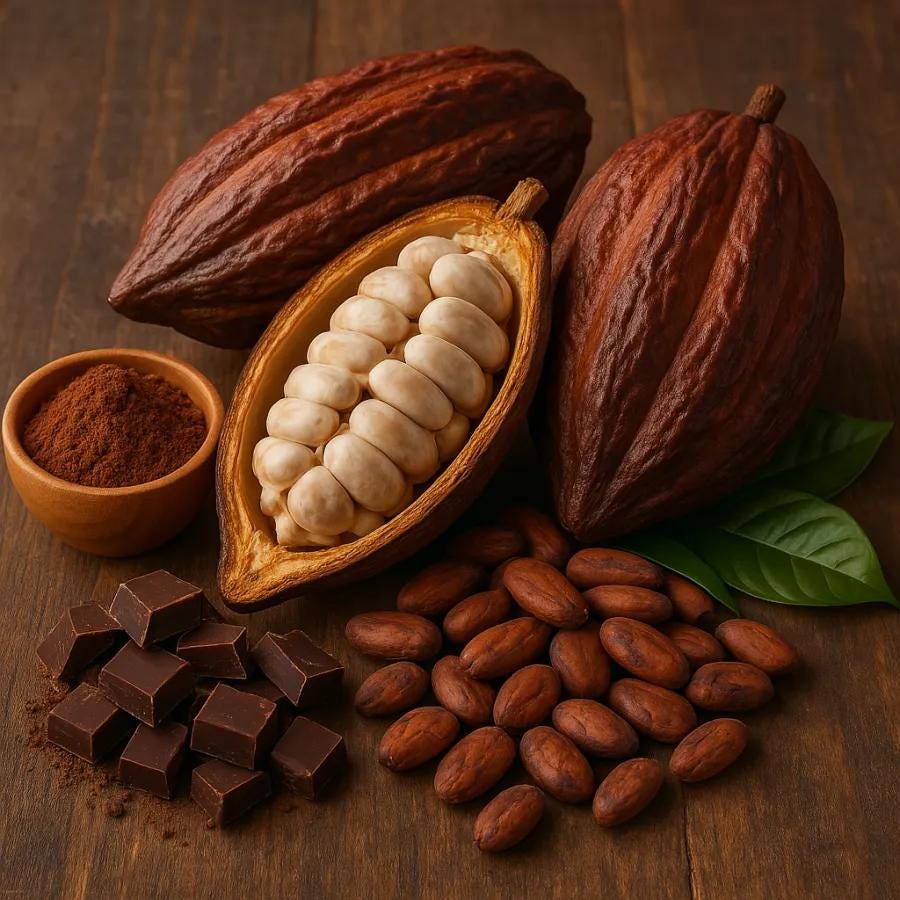
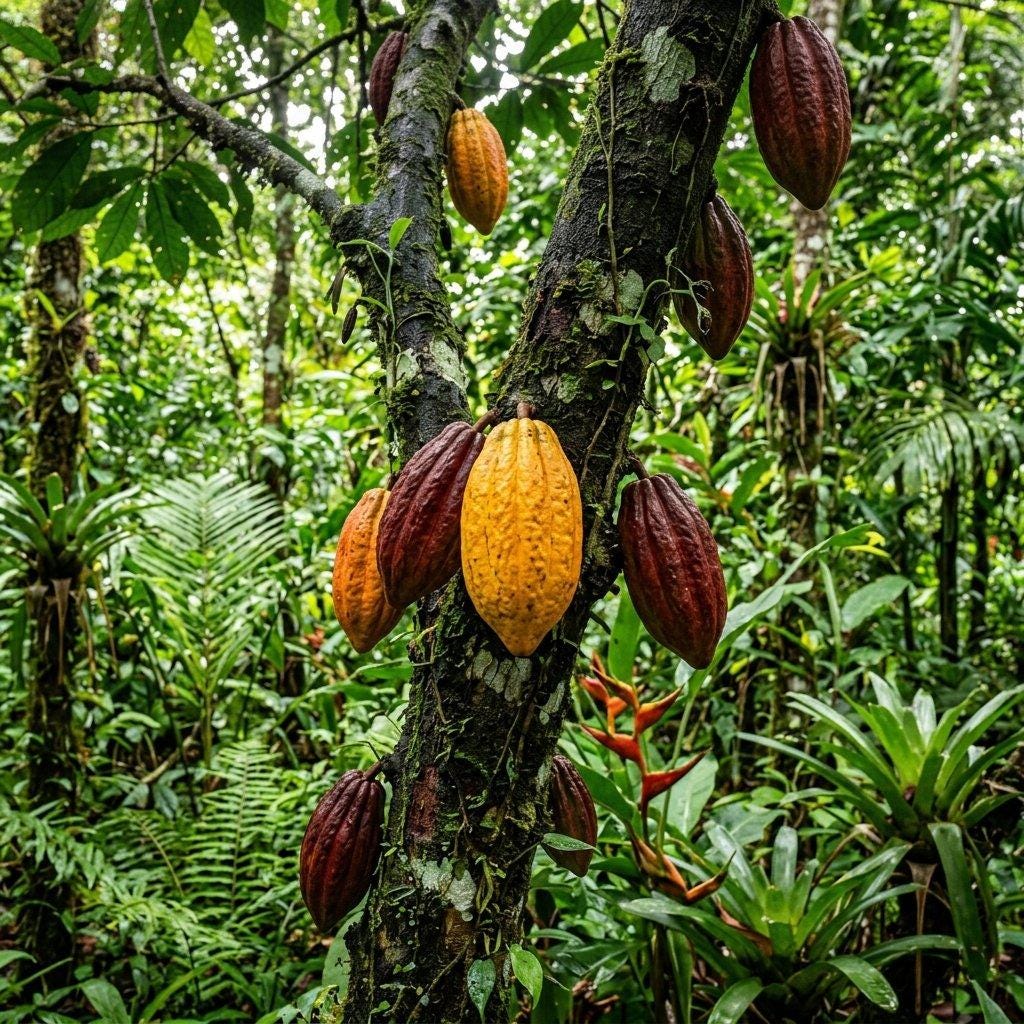
Football-shaped pods were cut from large branches of the Theobroma cacao tree. The pods are sliced open and have 30 to 40 seeds encased in a sweet, sticky white pulp. The seeds and pulp were scooped out and placed into piles or baskets covered in banana leaves to ferment for 3 to 7 days. During fermentation, yeasts broke down the pulp, killed the seed germ, and began developing the chocolate flavor.
After fermentation, the beans were spread on mats and left in the sun for about a week. Workers periodically turned them until they were dry and brown. At this point, the beans were shelf-stable, light, and portable. They were bagged and used as currency across Mesoamerica. Imagine growing your currency.
To make the cacao drink, the beans were toasted on a griddle over an open fire, which loosened the papery outer husks. They then crushed the shells and blew away the husk, revealing the inner cacao nibs.
These were then ground, like maize, by rubbing a stone rolling pin back and forth over the nibs. The friction and a small controlled fire under the stone would melt the natural cacao butter. As a result, the solid nibs transformed into a rich, glossy, flowing chocolate paste.
They mixed this pure cacao paste with water, cornmeal (to thicken it), spicy chili peppers, wild vanilla, allspice, and fragrant flowers.
To serve it, they would pour the liquid from jars into bowls until a thick, froth formed on top. That was considered the most prized part of the sacred drink.
The Maya used cacao in ceremonies, Aztecs collected cacao as tribute, and the beans were used as currency. Just like we used to use the Hershey’s bar as currency on the playground. Imagine using chocolate to pay taxes. That chocolate would be as bitter as taxes are today.
Europe Meets Chocolate
The first time Cortez drank cacao, they hated it, describing it as a drink fit for swine. But then they began to experiment with the recipe by removing the chili peppers and cornmeal and adding lots of cane sugar. Do we know what Cortez said exactly? Not really, although I think of him as one of the nastier characters on The Princess Bride.
Then they added cinnamon, vanilla, and anise, instead of using the local herbs. And they served it hot, instead of cold.
The Spanish court kept this sweetened "hot chocolate" recipe a state secret for nearly 100 years. By the 1600s, the recipe leaked to the royal courts of France, Italy, and England, becoming the ultimate luxury status symbol for the European elite, and Starbucks fans everywhere. It is a good story, and some even think it is true.
The difference between cacao and cocoa is sometimes described as the difference between the original cold Aztec drink and the modern Spanish one. But it was probably a misspelling by the English traders on ships manifests. But if you want to sound cool, you use cacao.
Mother’s Day, 1990
It was Sunday, Mother’s Day, and I was a surgical resident on the vascular service. I was thinking about driving down to Portland to visit my mom when I received a call from Dr. Raker.
There was a patient who needed vascular surgery to save his leg. There went my Mother’s Day plans. Over the course of the next six hours We operated, bypassed the aneurysm, and saved Charlie’s See’s leg.
Charlie had tasted more chocolate than probably anyone alive, and he didn’t like most American chocolate. Some Belgian choclolate, maybe.
He told me about the Guna people of Panama, who drank six cups of chocolate a day. And they didn’t have heart disease. He had tried, but didn’t like that drink. His expressed regret was that if he had consumed more chocolate, maybe he wouldn’t have needed vascular surgery. That is unlikely, but lets find out why the people in that area of Panama have lower blood pressure.
Chocolate Flavonols
The bioactive ingredient in chocolates is flavanols. These have several effects: they reduce blood pressure directly through nitric oxide, they have mild anti-clotting effect, and they are anti-inflammatory.
Nitric oxide causes the muscles in blood vessel walls to relax. When those muscles relax, your blood pressure goes down. The lower your blood pressure is, the less strain on your heart, the less risk of developing atherosclerosis, and the longer a person lives. Of course, we don’t want it too low.
All that from drinking chocolate. But not so fast. We often have mechanisms in biology that do not translate to eat chocolate and decrease your risk of heart attacks and strokes. But what a sweet experiment to try, so they did.
COcoa Supplement and Multivitamin Outcomes Study, aka COSMOS.
COSMOS followed 21,000 Americans for over 3.5 years to see if the cocoa flavonols decreased the risk of heart attacks and strokes. Subjects were fed either a placebo or 500 mg of flavonols daily.
They found that the group who took flavonols had a 27% lower risk of death from heart disease, and about a ten percent lower risk of all cardiovascular disease.
Perhaps had they had the content of the bean, as in a chocolate bar, or even received the drink that the Kana (Guna) people drank, it might have had a different result.
Is it Dessert or a Health Food
One way to describe nutritional information is those who are splitters - finding the ingredient in the food that causes the reaction and focus on that. And there are lumpers, but the food together in a matrix and see what that matrix does that a single ingredient might not.
We know that eating blueberries, seeds, nuts, other fruits and vegetables provide improved health outcomes across all studies that have examined these. That is the backbone of the Mediterranean diet. Building a diet around those healthy foods.
Chocolate has not been on the list for the Mediterranean diet. Again, just because chocolate originated in Mesoamerica does not mean it cannot be a part of a Mediterranean diet.
However, you can make chocolate an important part of the Mediterranean diet, and not be dessert. I will have a few of my favorite recipes below, like adding them to my son’s favorite “taco” soup.
When you get a chocolate bar that is 70 percent or more “dark” chocolate, that does not translate into the amount of active flavonols in the chocolate. How the chocolate is processed will determine the amount of flavanols in the chocolate, not the percent of dark chocolate. So if you enjoy chocolate as dessert, enjoy it. Don’t fool yourself into thinking it is a health food.
But you can add a healthy dose of chocolate to beans, stews, sauces, and add a richness to a dish that are perfectly healthy. This is much like the mole sauces of Mexico, rich, but with more of an Italian-Sardinian twist.
As for our people from Panama - they still drink the bitter cocoa. When they move from their village to the city, they drink less and tend to develop the same diseases as the city folk, high blood pressure, heart disease and stroke. I might add this confounding variable: while in their village, they eat more fish, almost no ultra processed food, and filled with other fruits and vegetables (kind of like a good Mediterranean diet - or if you want to rename it to the DASH or MesoAmerican diet, you can).
Now, what if I told you that one of my favorite ways to eat chocolate is with beans? Below, I'll show you how cocoa makes my son's favorite taco soup taste better, how I use chocolate with coffee to make a crust for tri-tip, and which cocoa you buy in the baking aisle matters more than you might think. Finally, why that really dark candy bar may not be as healthful as a Reese’s.
