

Debate Is Theater. Science Is a Paper Trail.
Recently, Dr. Mary Talley Bowden invited me to “debate” her—on a podcast. This was due to my conversations on X (twitter). What followed was not a disagreement about data, so much as a demonstration of how confused the public conversation about science has become.
The premise was familiar: If you’re right, debate me.
The insinuation was equally familiar: If you decline, you’re afraid.
This framing is wrong—and not accidentally so.
What Debate Is—and What Science Is Not
Debate is a rhetorical exercise. It rewards confidence, fluency, and the appearance of certainty. It is optimized for persuasion, not truth. A skilled debater can “win” while being entirely wrong, and history offers no shortage of such victories.
Science advances differently. It progresses through methods, data, replication, and—most importantly—correction. Its conclusions are provisional. Its errors are expected. Its arena is not a microphone, but the literature.
When scientific questions are forced into debate formats, nuance collapses. Anecdotes replace denominators. Narrative outruns evidence. “Both sides” are treated as equivalent, even when one is supported by randomized trials and population data, and the other by suspicion and testimonials.
That is not balance. It is theater.
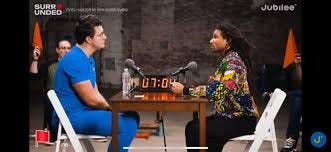
Jubilee-Style Debates: Entertainment, Not Epistemology
The rise of Jubilee-style debates and similar “both sides” formats has further blurred the line between inquiry and spectacle. These productions are carefully designed for engagement: sharp contrasts, compressed time, emotionally charged claims, and the illusion of symmetry between positions.
They are entertaining. They are not scientific.
These formats reward speed over accuracy, confidence over correctness, and narrative over nuance. A complex body of evidence built over years is flattened into minutes, while uncertainty—a central feature of honest science—is treated as weakness rather than rigor.
Most importantly, these debates invert the burden of proof. Instead of asking what does the evidence show?, they ask who sounds more convincing? The audience is invited to score points rather than evaluate methods. This is not how knowledge advances; it is how opinions harden.
Science does not progress because two people with opposing views receive equal airtime. It progresses when claims are tested against reality, data are interrogated, errors are corrected, and results are replicated. None of that happens on a stage.
Jubilee-style debates may succeed as cultural entertainment. They may even introduce audiences to topics they would not otherwise encounter. But they do not resolve scientific questions, and they should not be mistaken for doing so.
The danger is not that people watch them.
The danger is that they confuse performance with proof.
Science is not a spectator sport.
The Pattern That Repeats
The exchange surrounding Dr. Bowden, and her fans on X (Twitter), followed a predictable script:
Demand a debate
Reject peer-reviewed evidence as corrupt
Promote anecdotes as superior to population data
Dismiss unfavorable findings as “bought”
Pivot to ad hominem when challenged
Declare victory when the debate does not occur
This is not skepticism. It is ideology.
At no point were specific methodological flaws identified in large studies of hospitalization, ICU utilization, or severe disease. No counter-data of comparable quality were produced. Instead, there was insistence that science must happen live, under preferred rules, in a preferred format.
Science does not work that way.
Ivermectin, “Spike Protein,” and the Substitution of Testimony for Evidence
Dr. Bowden’s argument with me was not abstract. It centered explicitly on ivermectin and on claims she has made about “spike protein” levels in patients.
She asserts that ivermectin is effective, and that patients with “high spike protein levels”—levels she claims to measure—feel better almost immediately after treatment. These claims are offered primarily as testimonials: patients felt better, patients improved, patients recovered.
Testimonials are not evidence.
They cannot establish causation, cannot distinguish treatment effect from natural recovery, placebo response, regression to the mean, or selection bias, and they collapse entirely without controls. Every ineffective therapy in the history of medicine looked promising at the testimonial stage.
More importantly, the biological premise itself is flawed.
Vaccination does not produce persistent, circulating “high levels” of spike protein in the bloodstream. mRNA vaccines result in transient, localized spike expression, primarily at the injection site and regional lymph nodes, followed by immune clearance. This has been repeatedly measured.
By contrast, active SARS-CoV-2 infection produces far greater quantities of spike proteins over longer periods, in the context of viral replication and systemic inflammation. Conflating infection biology with vaccine biology is a category error.
When I asked what validated assay was being used to measure spike protein, with what controls and reference ranges, there was no methodological answer. Assertions replaced methods. Experience replaced evidence.
Modern medicine learned long ago that feeling better is not the same as being better. That lesson was paid dearly—with bloodletting, lots of cons, and antiarrhythmic drugs that felt right and killed patients.
That is why medicine demands trials, not testimonials.
Professional Standards Are Not Optional
The Texas Medical Board publicly reprimanded Dr. Bowden after she attempted to direct ivermectin treatment for a hospitalized patient at a facility where she did not hold clinical privileges.
This is not a technicality.
Hospital privileges exist to ensure credentialing, oversight, accountability, and patient safety. They define who may direct inpatient care and under what governance. Disagreement with guidelines does not confer exemption from professional standards.
Bypassing those standards is not dissent. It is a breach.
A Double Standard Worth Noting
In contrast, during COVID, I worked in a hospital caring for patients. The anti-vaccine activists on X repeatedly questioned my credentials.
Why was a bariatric surgeon involved?
What business did I have speaking on COVID?
What those critics did not know—or chose to ignore—is that I am first and foremost a surgeon, trained to manage critically ill patients, and that hospital care is not siloed by subspecialty during a public-health emergency.
They also didn’t know that before I was a physician, I was a virologist, published in the field. I traded Petri dishes for people and have not looked back. Never thought I would be a surgeon, but alas, it has been a fun career.
Yet while my credentials were challenged, Dr. Bowden—an outpatient ENT—was given a pass by the same crowd even after violating hospital protocol.
The objection was never about qualifications. It was about alignment.
A Moment in a Dental Chair
I was recently at an oral surgeon’s office awaiting a procedure when the surgeon began expressing doubts about COVID vaccines—their speed, their testing, their safety.
This is a highly educated man. He is not unintelligent. He also does not read primary scientific literature.
When I explained that mRNA vaccines did not appear “overnight”—that they were built on decades of work in mRNA stabilization, lipid nanoparticles, and viral spike protein research—he was surprised. When I offered references, he admitted he had never seen them.
I used an analogy he immediately understood: saying COVID vaccines came “too fast” is like saying the Tesla Model S appeared overnight. It didn’t. It was the visible endpoint of years of invisible technological development.
That conversation ended not with a debate, but with understanding.
That is how science actually spreads.
Common Anti-Vaccine Claims (and Where the Answers Live)
The same claims surface again and again:
“The vaccines were rushed.”
“They kill more people than they save.”
“Vaccinated children are worse off than unvaccinated children.”
“The vaccine schedule has too many vaccines.”
“Peer review is corrupt.”
“Debate is how science is done.”
Below are selected references addressing these claims. In the paid section, I answer them directly in FAQ form for readers who are undecided and genuinely curious.
Selected References
Polack et al., New England Journal of Medicine (2020): Safety and efficacy of BNT162b2
Dagan et al., NEJM (2021): Nationwide Israeli data on hospitalization and severe disease
López-Medina et al., JAMA (2021): Randomized controlled trial of ivermectin
Reis et al., NEJM (2022): COVID-OUT trial
Cochrane Review (2022): Ivermectin for COVID-19
Taylor et al., Vaccine (2014): Vaccines and autism—meta-analysis
Institute of Medicine: Vaccine safety reports
Vaccine Safety Datalink publications
Final Observation
“Trust the science” was never a slogan with a conclusion. Science is not a creed. It is a process—self-correcting, provisional, and indifferent to personalities.
It does not ask for blind trust.
It asks to be read.
Politics may pardon.
Debates may entertain.
Science leaves a paper trail.
🔒 Paid Section: Vaccine Questions, Answered
(This section is for readers who are undecided or curious. It is not written for those who have already decided that all institutions are irredeemably corrupt.)
