


On my podcast FORK U, I’ve been doing a series about foods that built civilizations. FORK U comes out on Thursdays. This episode we are talking about the potato.
It is difficult to imagine that thousands of years ago people constructed large buildings, managed rivers, built monuments, and created art. We have glimpses of these civilizations through stories, archaeology, and the structures they left behind, but much of their history has been lost. Imagine, we don’t even know where Cleopatra or Alexander the Great are buried, yet we know their stories.
As European powers conquered Indigenous peoples, their languages, cultures, and oral traditions were suppressed. When a language disappears, so are the stories preserved within it. Our clues come from archaeology when we uncover a monument, a building, or an ancient settlement.
In the Andes, the potatoes they cultivated were not the Russets, Yukon Golds, or fingerlings you find in the store today. Different colors, shapes and textures. Adapted to survive the elevations, temperatures, and growing conditions.
Biodiversity protected their food supply against frost, disease, and changing environmental conditions. If one variety failed, another might survive. The ancient wisdom of diversity that Andean farmers developed over thousands of years was lost when the potato eventually reached Ireland.
Preserving Potatoes
They even developed a method to freeze - dry the crop. They exposed the potatoes to repeated cycles of freezing and thawing. Then they pressed them and allowed them to dry. The result was called chuño.
The freeze-dried potatoes could be stored for years. When rehydrated, they were used in soups and stews.
I wonder if they ever thought about freeze-drying the coffee berry. Perhaps there was an ancient people called the Sanka.
Tiwanaku: Farming at the top of the world
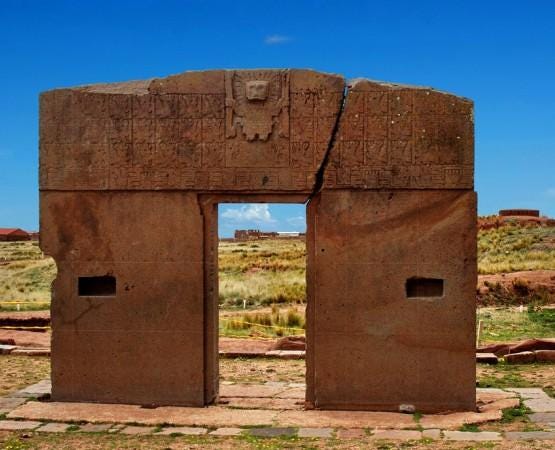
The civilization flourished for centuries, before it declined around the end of the first millennium CE. Near Lake Titicaca, in what is now Bolivia, the Tiwanaku civilization developed an agricultural system that allowed people to grow food in one of the most challenging environments on Earth. This pre-Inca civilization had monumental stone buildings, elaborate sculpture, and an extensive network of agricultural settlements. Its buildings and agricultural remains are still there. These people had an advanced civilization before the Inca. It is amazing to think the Inca were not the first to build a sophisticated society in the Andes.
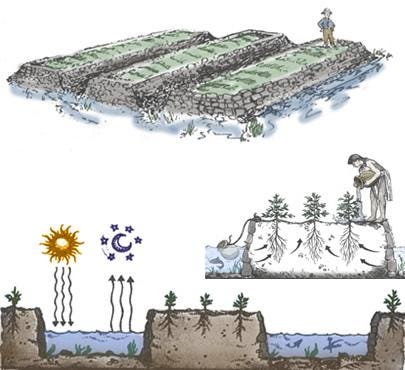
They developed raised agricultural fields, known today as waru waru. Water-filled channels surround these elevated planting beds. The channels helped moderate temperature fluctuations, reducing the risk of frost damage to crops, while the raised beds improved drainage and growing conditions.
The Inca: An empire built on agriculture
The Incas inherited thousands of years of agricultural knowledge
.
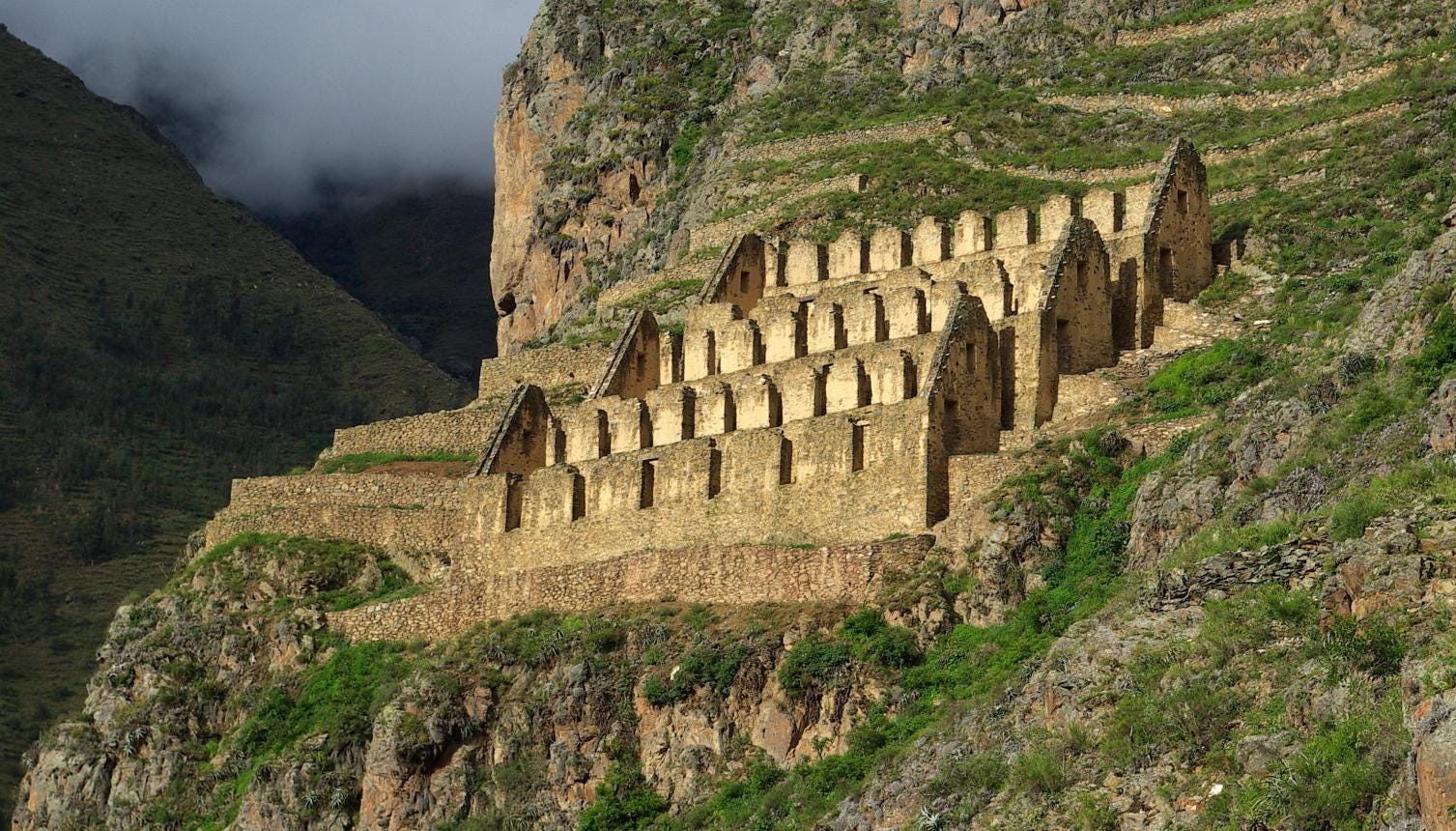
The empire depended on the ability of crops to grow at different elevations. Food was collected, stored, and distributed through their kingdom. Potatoes were important in the highlands, while maize, quinoa and other plants supported populations in different environments.
Machu Picchu sits high in the Andes. Its buildings, terraces, and water systems demonstrate advanced engineering. It is on most travelers bucket list.
When the Spanish arrived, they encountered an unfamiliar vegetable, a product of thousands of years of agricultural experimentation. They would carry that vegetable across the Atlantic.
The Irish Lumper: The Potato That Fed a Nation
The most famous potato, the Irish Lumper. When the Lumper arrived in Ireland, it thrived, even in poor soil, and produced enough food to sustain a family on a small plot of land. The Irish Lumper was a large, knobby, rather homely potato with pale skin and yellowish flesh. It wasn't known for its flavor. Historical accounts describe it as watery, bland, and sometimes soapy. It produced enough yield to feed your family. Add a little milk or buttermilk, and you had a diet that could sustain people doing hard physical labor.
Small land owners and sharecroppers throughout Ireland depended on the Lumper for their primary source of food. Then the blight came, crossing from America. It was Phytophthora infestans arriving in 1845, and harvests failed. Ireland's dependence on potatoes, combined with inadequate government relief, turned an agricultural disaster into a human catastrophe. Even while Ireland exported some grains to the UK. Approximately one million people died, and another million emigrated, many to America.
As with all waves of immigrants, they encountered discrimination, but ultimately helped shape the country's economy, literature, culture, and political life. Their wave of immigration led to a long sustained economic boon for America.
Today a group has reconstituted the Lumper, and you can buy one today. It is ok, not my favorite. For that, we have the simple boiled potato from Norway.
The French Fry: From Belgium to McDonald's
For generations, the French and Belgians have argued about who invented the French fry. A popular Belgian story claims that people living along the Meuse River traditionally fried small fish, but when the river froze, they cut potatoes into the shape of fish and fried them instead.
Fried potatoes became popular in Belgium and France during the nineteenth century. Belgians perfected the technique of cooking them twice: first at a lower temperature to cook the potato through, then again at a higher temperature to create that wonderful crisp exterior.
Belgian fry shops used animal fats, from beef tallow to horse fat from a horse’s kidneys. Yes, some will even tell you that horse fat from the kidney makes the best fries - I wouldn’t know.
The French fry eventually crossed the Atlantic and became an American institution. For decades, McDonald’s cooked its fries in a mixture containing beef tallow and vegetable oil.
In 1990, the company announced it would switch to vegetable oil, a decision influenced by growing concerns about saturated fat and a persistent Omaha businessman named Phil Sokolof. Many attribute this change to physicians, but it was really from this first food influencer. Taking out full page advertisements in major newspapers claiming saturated fat from the fries was bad for the heart. Alas, that “debate” continues.
But changing the frying fat didn’t change the fundamental technique. Commercial French fries are generally cooked once, frozen, and then cooked again before serving. That is why my favorite tip for making good fries at home is to buy the frozen ones that have already been partially cooked. Finish them in the oven or air fryer, and you can get that crisp exterior and fluffy interior without turning your kitchen into a Belgian fry shop. No horse required
Fear Not the Potato. Fear the Person Who Fears the Potato.
The potato wars: From carbohydrates to beef tallow
Today, the potato is at the heart of several nutritional controversies. From those who say it is one of the evil whites that leads to obesity, to those who think potatoes should be fried in beef tallow. These are the controversies we will address for our paid members.
Blood Glucose and the Potato
Potatoes are primarily starch, which your body will break down into glucose. Eating a potato will raise blood glucose, although the magnitude of that response depends on the type of potato, how it is cooked, how much you eat, and how well your pancreas works. It also depends on what other foods you eat with it.
