


Fish sauce. It sounds unappetizing, and if you open a bit and take a whiff, you might think the same thing.
How to make it - take some small fish, all of it, head, intestines. Cover with salt and put it into a container. Let it sit there for months. Then collect the liquid. Some say this is a great culinary invention, some say this is proof that we will eat anything. But before you run away in protest - Worcestershire.

Worcestershire - yes, I had to learn to pronounce it
Lea and Perris Worcestershire sauce is a mix of anchovies, vinegar, molasses, tamarind, garlic, onions and some spices. The anchovies are mixed with salt for two years. The garlic and onions are mixed with vinegar for 18 months. Those are blended together, and you have the sauce you put on steak or add to a Bloody Mary.
That is the same culinary principle behind Roman fish sauce. While Lea and Perrins started selling it in 1837, they are part of a longer history.
FORK U
My podcast, Fork U, will have this information on it. You can find it wherever you get your podcasts. Subscribe for our weekly podcast. This podcast will come out on the first Thursday in November.
Roman Times
The Romans called their famous sauce garum. It wasn’t just one sauce, there were many varieties. They put garum on everything dish you can think of. Vegetables, add garum. Made some nice lamb, more garum. Oh look at this fish, it needs fish sauce.
When the Romans ruled Britain, they built massive trade routes for garum. I mean, Britain had a lot of fish. We don’t know any particular recipe for garum. But the British palate retained a cultural love for salty, fermented fish condiments.
So why did the Romans love this sauce? Umami and salt. Two great combinations, one great sauce. Well, some of the sauces are great, some are well, fishy.
The Greeks Had It Before the Romans
Most of Rome was plagiarized from the Greeks. Not just the marble, but the food.
The Greeks appreciated salted and fermented fish products centuries before a wolf nursed the Roman Empire. Greeks called it garos.
The Romans were good at taking someone else’s idea, making it their own, producing enormous quantities of it, and distributing it across their empire. Think roads, aqueducts, architectural ideas, and food. And fish sauce tickled their palates.
Fish were abundant along the Mediterranean coast, and to preserve the fish, they used salt.
The Fish Sauce Millionaire of Pompeii
When Mount Vesuvius erupted in AD 79, it buried Pompeii beneath volcanic material. But it preserved a record of Roman life. From their version of fast food to brothels.
Among the people whose lives we can reconstruct from the evidence is a businessman named Aulus Umbricius Scaurus. Scaurus made his fortune selling fish sauce.
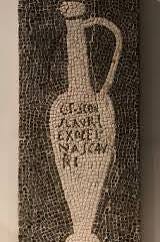
He was not a humble fisherman selling a few jars at the local market. Scaurus’ name has been found on containers, distributed throughout greater Pompeii.
In the atrium of his home, mosaics depicted containers of fish sauce, complete with labels advertising the quality of his products. In the atrium of his home (Casa di Umbricius Scaurus), a black-and-white mosaic floor featured his branding. At each corner of the central pool (impluvium), a mosaic depicts a single fish-sauce jug (urceus) inscribed with promotional copy praising his premium products.
And Romans loved their fish sauce.
A Brief Detour
I was in Jerusalem in the late 1990’s. The food scene in Jerusalem was either great Arab street food, and Israeli food that left nothing interesting. So when I heard about a restaurant that served Roman food, the kind served 2000 years ago, I was intrigued. No tomatoes, those were not introduced until a few hundred years ago from the Americas. But what they featured was fish sauce. Lots of fish sauce.
This was not Worcestershire. But it was on everything. If you submitted to the Roman empire, they would not make you eat your food with garum. If you resisted and they had to expend efforts to conquer you, they would salt your land like their fish (Carthage) and force you to drink garum. This is why they conquered the world. Death or garum - sounds like an old joke.
What Happens When Fish Becomes Sauce?
When fish are salted, the enzymes naturally present in the fish, along with some microorganisms, help break fish proteins into smaller peptides and free amino acids. The process is called proteolysis. No, these peptides are not for injection.
One of the important compounds released is glutamate, an amino acid, responsible for the tastes called umami. Umami is savory, or meaty. Think Parmesan cheese, mushrooms. ripe tomatoes and even Doritos.
Fish sauce contains a lot of glutamate. And if you ever have used a spice called Accent (or Ac’cent) you are getting the pure form of MSG. Which is the sodium salt of the amino acid.
Of course, food scientists examining Vietnamese fish sauce have identified the compounds responsible for its flavor.
But there is more to fish sauce than glutamate.
But Wasn’t This Just Rotten Fish?
When fish are left to rot, undesirable microorganisms multiply. But add salt, and you create an environment in which many bacteria can no longer grow.
That does not mean every ancient batch was safe. Even today, we can have spoilage under what we think are ideal conditions. Poorly controlled fish fermentation presents risks.
The Romans, and Greeks before them, probably with trial and error, found the secret sauce. Less the flavor and more the manner to use salt, time, and to create a valuable seasoning.
Garum Was Not Just One Sauce
Garum is generic for Roman fish sauce. Much like ketchup is generic for lots of different tomato sauces.
Some sauces were made with different fish, parts of the fish, and various production techniques.
And, of course, there were grades of quality. There were ordinary sauces for everyday meals and expensive products to impress dinner guests. One preparation even blended fish sauce with wine.
Roman Medicine: When a Condiment Became a Cure
Pliny the Elder described medicinal uses for garum. Like food he used it for everything from digestive complaints, dog bites, to earaches. Ancient medicine frequently blurred the line between food, medicine.
Pliny also believed plenty of things that would make me wince. And as many people want to look back for ancient cures, we don’t put fermented fish sauce into an ear because somebody recommended it two thousand years ago.
Although today claims are accompanied by beautiful websites, supplement subscriptions, and someone assuring you that doctors don’t want you to know the secret. Worcestershire might be good for a steak, but if you have a dog bite, see the doctor and take your antibiotics.
Fish sauce can be high in sodium, even a small amount may add tremendous flavor. Bea MacMillan learned that in the cooking show, where he added both fish sauce and soy sauce to some dish, and it was so salty, Simon Majumdar, one of the judges, almost spit it out. Simon and I have visited Beau at his restaurant, Elements in Paradise Valley, AZ. He doesn’t use fish sauce, his food is excellent, and he has forgiven Simon for eliminating him.
Monosodium glutamate, contrary to some, is not a toxin. It is a normal amino acid found throughout your body.
The Romans Were Not Alone
We don’t know who started fermenting fish and putting it on food, but it is everywhere.
In Southeast Asia, fish sauce is an essential ingredient in cuisine. In Vietnam Thailand, the Philippines Each has its own history, traditions, flavors, and techniques.
Travel throughout the ancient world brought the process and flavors everywhere. We don’t know where it started. We know Greeks, then Romans embraced the process along the Mediterranean. Asian cooks developed their own fish-sauce traditions, which remain central to many of the world’s great cuisines.
And Then the English Got Involved
Worcestershire sauce probably isn’t Roman garum rebottled.
The story is an Englishman returning from India who missed his sauce on his food. He went to Lea and Perrin’s shop and asked if they could reproduce it. They put together the ingredients and let it simmer. They tasted it, and banished the barrel to their basement. Two years later, they cleaned out the basement, and before tossing out the barrel, they tasted it. Bingo, the fermentation mellowed the flavors and we have a sauce
Worcestershire on a steak magnifies the flavors present. Too much can mask the flavor. I use Worcestershire sauce as a basis for a steak sauce. It is a simple sauce to make. No fermenting fish in salt.
Two Thousand Years Later, We Are Still Learning to Taste
Sometimes we imagine the history of food as a progression to sophisticated modern cuisine. But the story of fish sauce suggests man has been manipulating tastes for a long time.
Ancient cooks discovered that salt could preserve food. That if you preserved fish in salt time, would transform ingredients. Sometimes they got lucky and that liquid added amazing flavor.
Today, people like me love to explain the chemistry of the food, how it interacts with the tongue, and what effect it has on the body. But knowing that chemistry doesn’t mean I can create a great dish. I can explain why you like it.
Food can be a small enterprise with a restaurant, or a major industry. Scaurus became wealthy enough to advertise his fish sauce on the mosaic floors of his own home.
All because Roman cooks developed recipes using it with wine, oil, vinegar, herbs, and spices. Physicians even attempted to turn it into medicine, let thy food be thy medicine. Often it was a delicious remedy that didn’t cure. But simple concept to understand.
When you put fish sauce into a dish or shake Worcestershire sauce over a steak, you participate in an ancient culinary tradition. Knowing about glutamate receptors doesn’t make it taste better.
Let your taste be roaming.
My Three-Ingredient Steak Sauce
After all that talk about Roman fish sauce, I thought I should share the steak sauce I actually make at home. No need to collect anchovy intestines, pack them in salt, or wait for the fall of the Roman Empire.
