


One of the best lamb dinners I’ve ever had wasn’t in France, New Zealand, or even at one of the restaurants that prides itself on serving the perfect rack of lamb. It was in the Muslim Quarter of Xi’an, China, where a young man stood over a simple charcoal grill tending dozens of skewers dusted with cumin, chili, MSG, and salt. There wasn’t anything fancy about it. There were no sous vide circulators humming away in the background, no infrared thermometers, no induction cooktops, and certainly no Michelin inspectors wandering through the alleyways. There was simply a man, a fire, and centuries of accumulated knowledge passed from one cook to another.
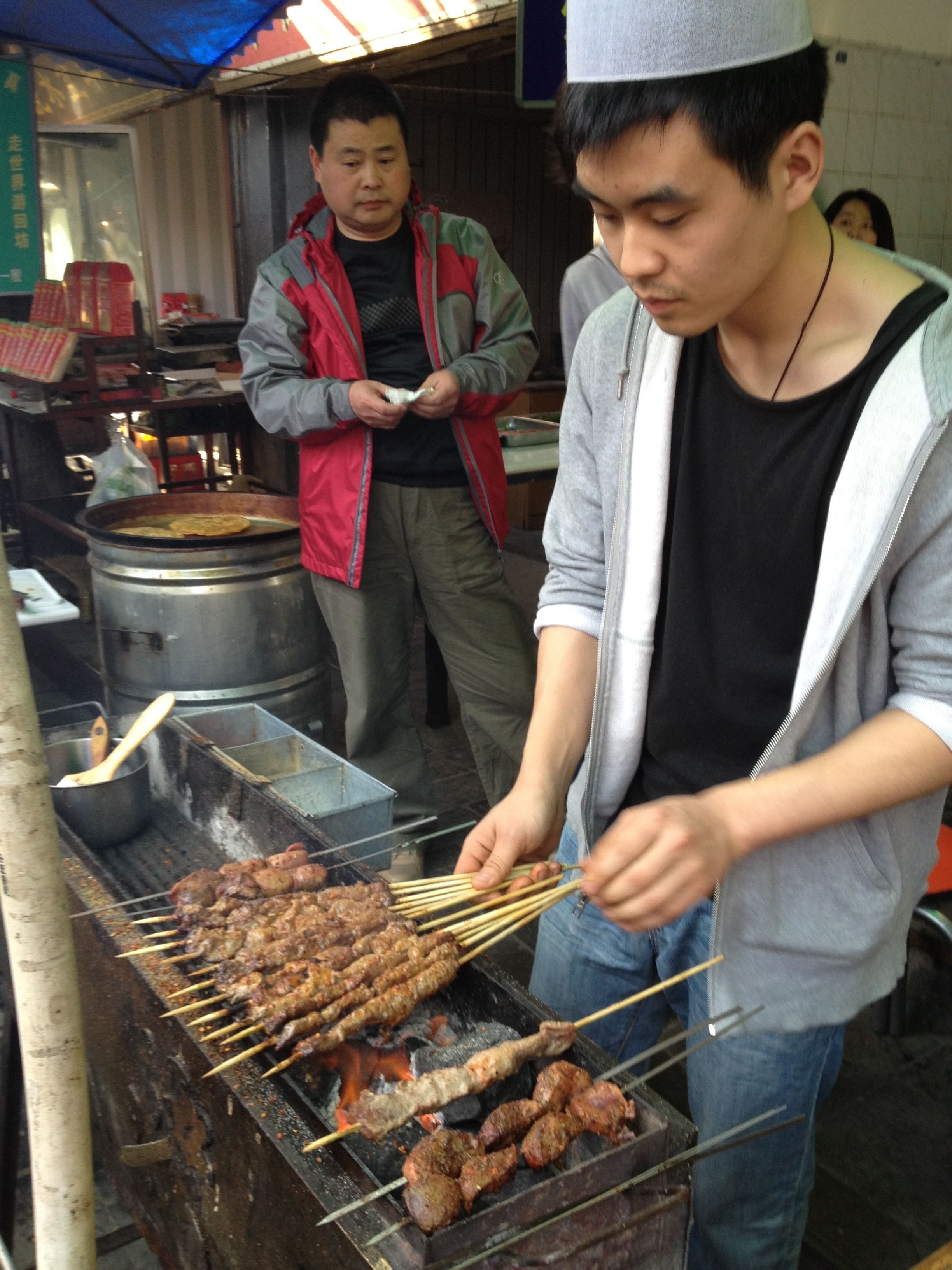
The lamb was extraordinary.
I’ve been fortunate to eat lamb prepared many ways. I’ve enjoyed it slowly roasting on a spit in Turkey, tucked into delicate meatballs in Stockholm. One of my favorite recipes is the rack of lamb I make at home—if you’re interested, you’ll find it on my website. I love lamb.
But there’s one way I’ve never really eaten it.
Raw.
Yes, out of curiosity, I’ve taken a tiny nibble before it reached the grill. It wasn’t terrible. It just wasn’t memorable. Then a few minutes later, that same piece of meat came off the fire transformed. The aroma filled the air. The texture softened. The flavors became deeper, richer, and somehow more complete.
That simple experience made me wonder whether cooking was doing far more than simply making dinner taste better.
What if cooking changed us?
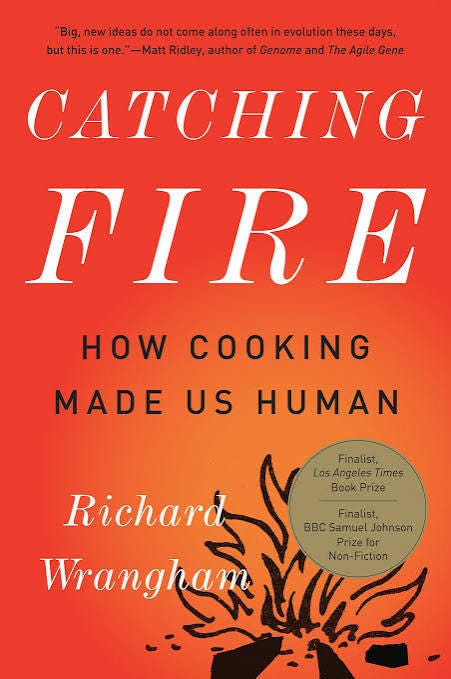
One of the strongest advocates for that idea is Harvard anthropologist Richard Wrangham, who has argued that learning to cook may have been one of the defining moments in human evolution. Not agriculture. Not writing. Not even the wheel. Cooking. I think he’s right about the importance of cooking, although, like every good scientific idea, the details continue to be debated and refined.
Unfortunately, that’s not what happened on social media.
Instead, the idea became flattened into a slogan.
“Humans evolved eating meat.”
“Therefore humans should only eat meat.”
That’s a shame, because the real story is so much more interesting.
The story isn’t steak.
The story is transformation.
Cooking Chemistry
When we cook meat, proteins unfold and connective tissue softens. Suddenly, our digestive enzymes don’t have to work nearly as hard because we’ve already started digestion before the first bite ever reaches the stomach. The same thing happens with carbohydrates. Heat gelatinizes starches, softens plant cell walls, and unlocks calories that were difficult—or in some cases nearly impossible—for our ancestors to obtain from raw foods. A raw potato is hard, chalky and uninspiring. Bake it and you’ve completely changed both its texture and the way your body can use the energy inside it.
Fire didn’t simply improve meat.
Fire improved almost everything.
That may be the real evolutionary story. Humans didn't discover the perfect food. We discovered how to make almost every food better. Meat became more tender. Tubers yielded more calories. Grains softened. Beans became digestible. Fire wasn't choosing sides in a dietary debate. Fire was expanding the menu.That adaptability, I suspect, is one of the reasons humans spread into almost every environment on Earth. We didn’t evolve because we found one perfect food. We evolved because we became extraordinarily good at transforming many different foods.
Then there is another benefit that, as a surgeon, I think may be even more important.
Cooking made food safer.
Our ancestors didn’t know bacteria existed. They had never heard of parasites, Salmonella, or E. coli. They didn’t need microscopes to understand the practical lesson. They simply observed that people eating cooked food often became sick less frequently. Heat kills many bacteria. Heat destroys many parasites. It reduces the chance that dinner becomes tomorrow’s dehydration and diarrhea.
Imagine two groups living side by side thousands of years ago. One regularly cooks. The other doesn’t. Which group raises more healthy children? Which group spends less time weakened by foodborne illness? Which group passes more knowledge to the next generation?
Natural selection doesn’t require understanding microbiology.
It simply favors survival.
Fire and Flavor
And then something happened that probably reinforced the whole process.
Cooking made food irresistible.
The smell of bread baking. Coffee roasting. Onions caramelizing. A steak developing a beautifully browned crust. None of those flavors exist without transformation. We often say we eat to live, but evolution has always known something we sometimes forget—we’re much more likely to eat foods we enjoy.
That’s why I always smile when someone points to steak tartare as proof that raw meat tastes just as good as cooked meat.
I enjoy a good steak tartare.
But let’s be honest.
Steak tartare isn’t simply raw beef. It’s raw beef elevated with egg yolk, mustard, capers, shallots, herbs and the skill of someone who understands flavor. Take away everything except the beef and compare it to a beautifully grilled steak.
Fire wins.
Every time.
The Science of Transformation (For Paid Subscribers)
Several years ago I was talking with my good friend Simon Majumdar about sous vide cooking, ceviche and why I find cooking endlessly fascinating. Simon listened for a while, smiled, and finally said, “You’re a protein denaturer.”
By the way - you can find Simon’s substack and he is worth following. If you don't know Simon, you probably recognize him as one of the toughest judges on the Food Network, when he first debuted on Iron Chef America, but I've been lucky enough to cook and teach with him around the country. Simon tells the history of food. I explain the science. Between us, dinner usually gets cold before the conversation does.
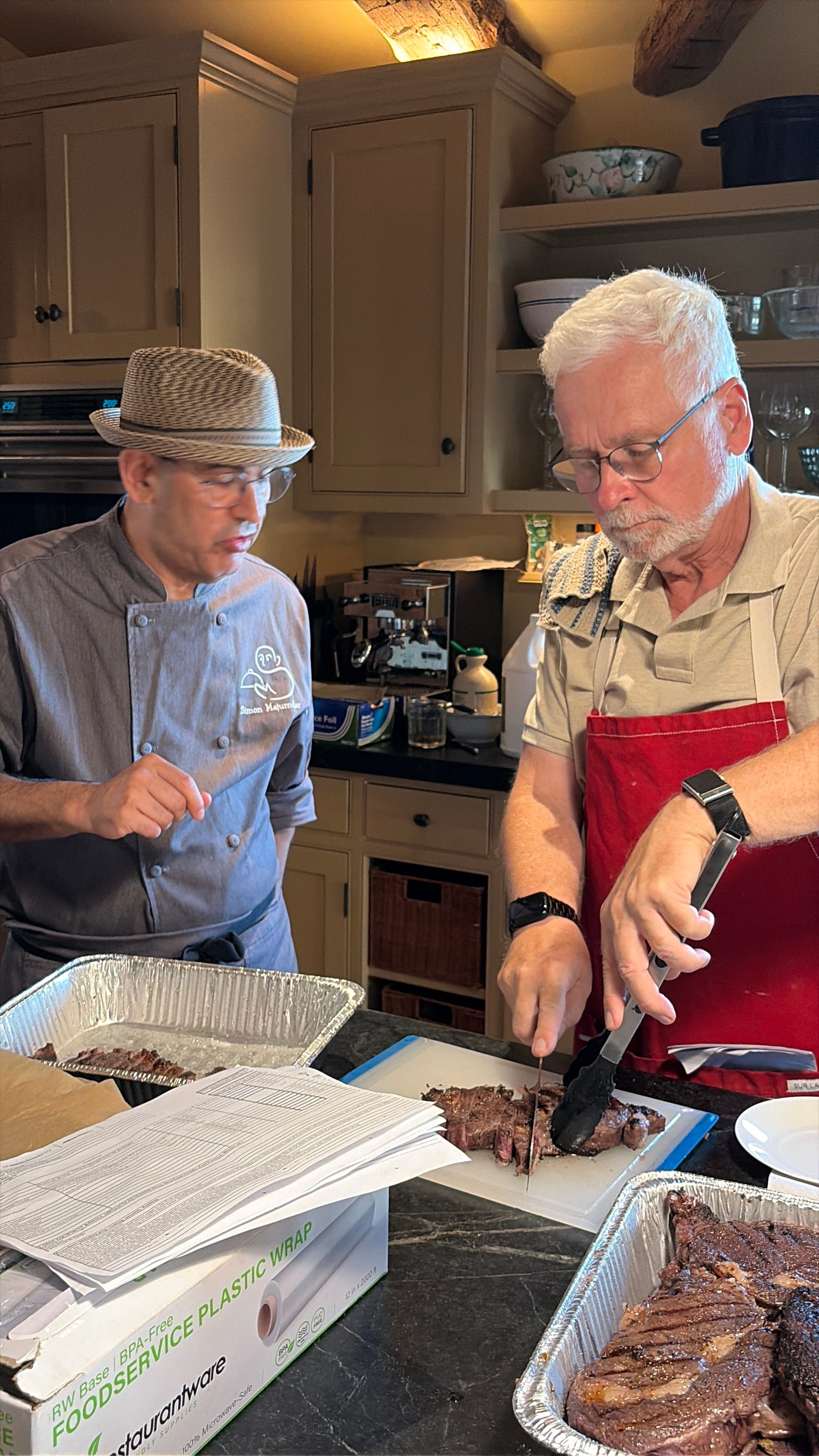
I laughed because he had accidentally summarized both my career and my hobby in three words.
He’s right.
Whether I was standing in an operating room repairing tissue or standing in my kitchen making dinner, I’ve spent most of my life watching proteins change.
That’s really what cooking is.
Protein denaturation.
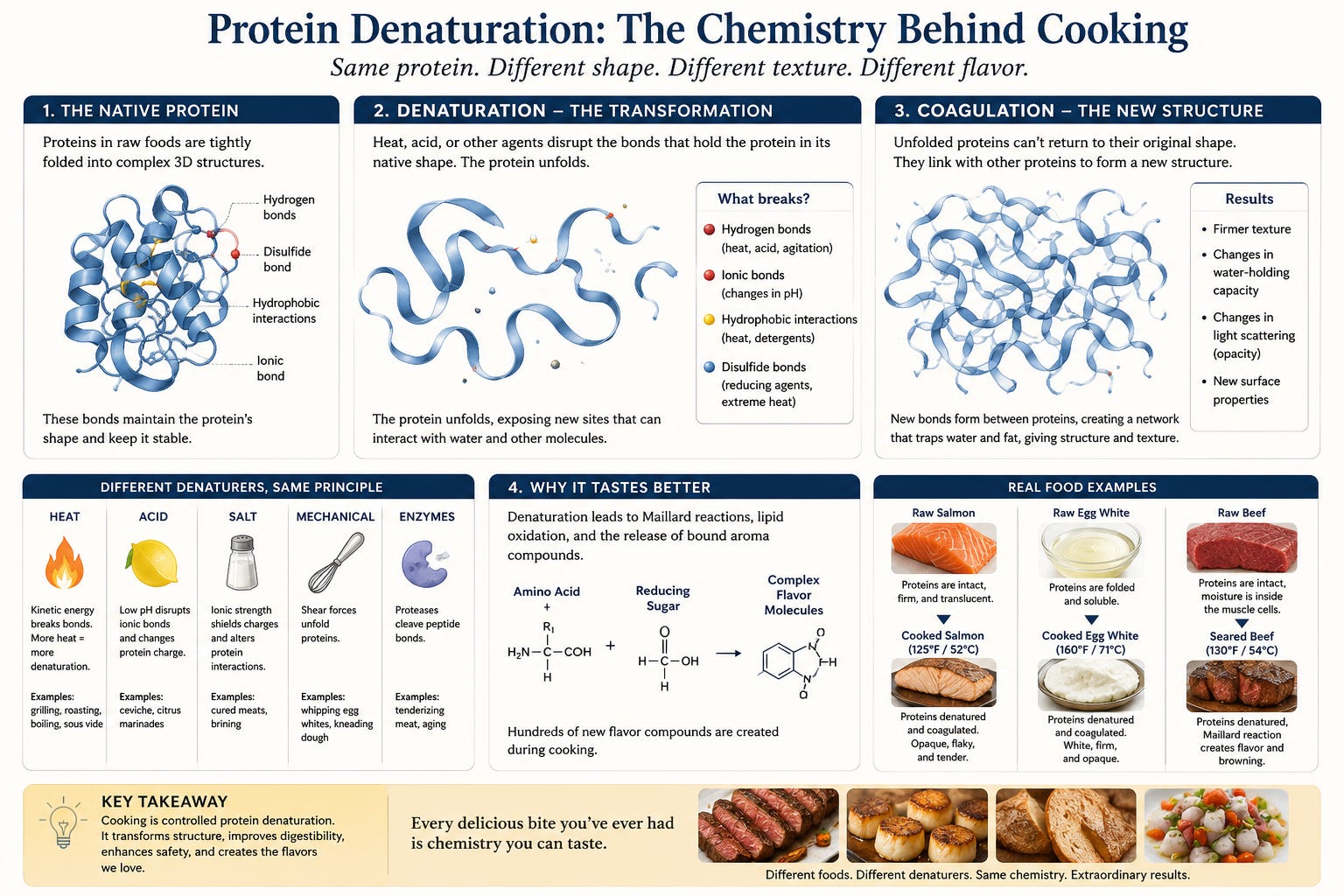
Now don’t let the term scare you. It sounds like something reserved for graduate biochemistry, but you’ve watched it happen thousands of times. Crack an egg into a pan. The clear egg white turns white because the proteins unfold and reorganize themselves. Put a steak on a grill and the muscle proteins change. Cook fish and it becomes opaque. Hold salmon at precisely the right temperature in a sous vide bath and those same proteins change more gently, giving you a texture that’s almost impossible to achieve any other way.
Heat is only one way to accomplish this.
Acid works too.
One of my favorite summer meals is ceviche. When I lived in Phoenix, turning on the stove in July felt like declaring war on my air conditioner. Instead, I’d make fish ceviche and pile it into tacos. Lime juice transforms the fish. The proteins denature, the flesh firms, the texture changes and the bright acidity creates one of my favorite meals.
I sometimes joke that ceviche is culinary cold fusion. We figured out how to transform proteins without fire centuries before physicists figured out cold fusion in the laboratory.
Score one for the biology majors.
But this is also where food science gives us an important teaching moment.
People often say the lime juice “cooks” the fish.
That’s true if we’re talking about texture.
It is not true if we’re talking about food safety.
Acid changes proteins beautifully, but it is not a reliable way to kill parasites or dangerous bacteria. If you’re making ceviche at home, the fish should either be commercially frozen for raw consumption or frozen according to FDA recommendations before you ever squeeze the first lime. That means temperatures of -4°F (-20°C) for seven days, or -31°F (-35°C) for fifteen hours. Most home freezers simply don’t get cold enough to do that reliably, which is why buying fish specifically intended for raw preparations matters.
People ask me whether I eat ceviche in Cabo.
The answer is yes.
But only in restaurants I know and trust.
I’ve spent too many years as a surgeon to confuse confidence with food safety. I want to know the fish has been handled properly before anyone starts marinating it.
The more I study culinary medicine, the more I realize my kitchen has quietly become my laboratory. If you walked into it, you’d notice something unusual. My measuring cups have largely been replaced by laboratory beakers. My favorite cookware sits on induction burners. I don’t even cook with fire very often anymore.
I cook with magnets (induction burners).
Take that, physics majors.
What’s funny, of course, is that the joke is only half a joke. Whether it’s a charcoal fire in Xi’an, a sous vide water bath in my kitchen, a squeeze of lime over fresh fish, or the invisible magnetic field beneath an induction cooktop, I’m doing exactly what cooks have been doing for tens of thousands of years.
I’m transforming food.
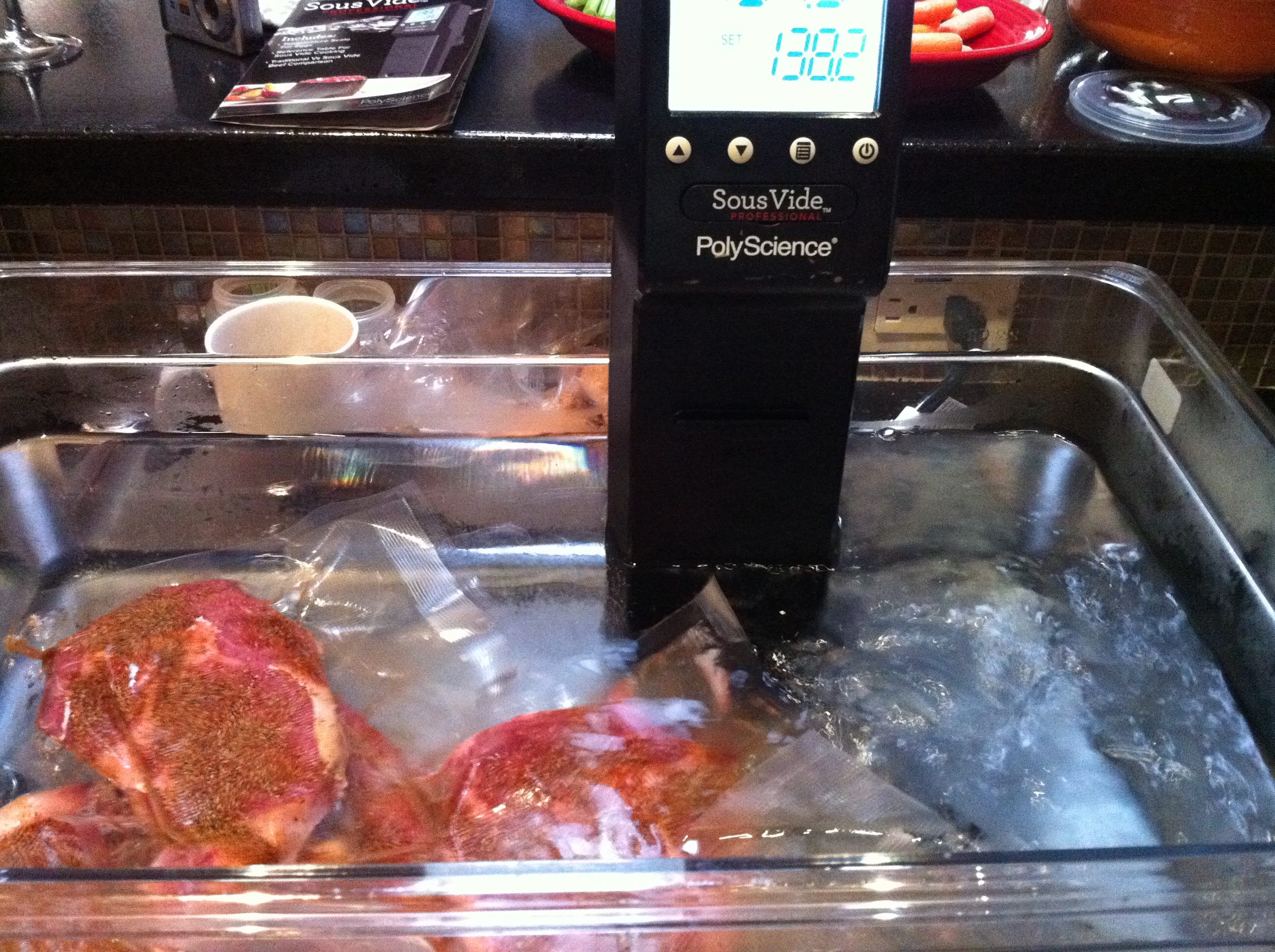
Our ancestors didn’t know words like denaturation, enzymes, collagen, or starch gelatinization. They simply noticed that transformed food tasted better, nourished them more effectively, and made them sick less often.
Science eventually explained why.
Cooking taught us how long before we understood the chemistry.
That’s one of the reasons I love culinary medicine. Every meal is really an experiment, every recipe is a hypothesis, and every kitchen is a laboratory where biology, chemistry and history come together three times a day.
Perhaps that’s why cooking fascinates me as much now as surgery once did.
In the operating room I spent thirty years helping the human body heal.
In the kitchen I spend my time understanding why it works in the first place.
A special thanks to my paid subscribers for making essays like this possible. I know many of you joined me because of discussions about medicine, vaccines, and the science behind the headlines. I hope you'll indulge me when I wander into the kitchen, because I've come to believe that some of the most interesting science in the world isn't happening only in research laboratories. It's happening every evening around a stove, a grill, or even an induction cooktop. As always, thanks for reading, thanks for your support, and I'll see you next week.
I love food science. Another serving please!