


Aortic Dissection: The Clue That Can Be Hidden in a Voice
The autopsy has now confirmed that Senator Lindsey Graham died from an acute aortic dissection associated with atherosclerotic cardiovascular disease. It is a devastating diagnosis, one that remains among the deadliest emergencies in medicine.
Listening to Senator Graham’s recent public appearances, I noticed that his voice had become raspy. We will never know whether that change was caused by the dissection, nor do we know whether he experienced chest pain before his collapse. But as a surgeon, it immediately caught my attention.
Why?
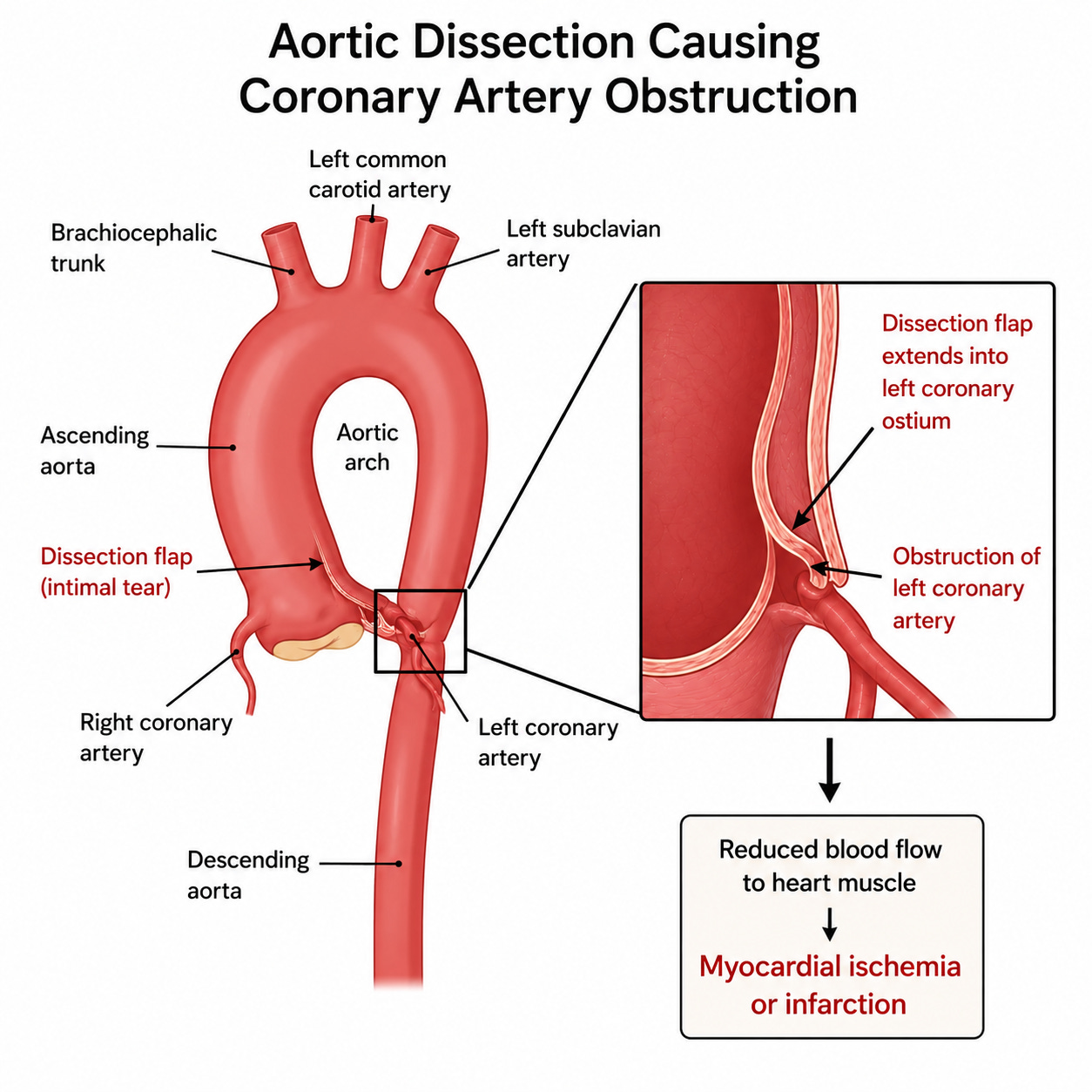
Because one of the classic—but uncommon—clinical clues to an ascending aortic aneurysm or dissection is new-onset hoarseness. As the enlarged or dissecting aorta expands, it can stretch or compress the left recurrent laryngeal nerve, producing a raspy voice. Most physicians will never encounter it. Surgeons are taught never to forget it.
During my surgical residency at Virginia Mason, we learned about another Washington senator, Henry “Scoop” Jackson, who died from an aortic dissection in 1983. One of the lessons passed down through generations of surgeons was to pay attention to a new raspy voice. Whether every detail of that story has been preserved over the decades is less important than the clinical lesson it taught us: sometimes the diagnosis is hiding in something as subtle as a change in the way a patient speaks.
These are the observations that don’t always make it into textbooks but become part of surgical training. They are drilled into residents because the consequence of missing an ascending aortic dissection is enormous.
Time matters.
For an untreated Stanford type A aortic dissection, mortality increases by approximately 1–2% for every hour that passes without treatment during the first day or two. Early recognition, rapid CT angiography, and emergency surgery save lives.
So why does a dissection happen?
The aorta is not simply a pipe that suddenly tears. Over years, atherosclerosis and aging change the structure of the aortic wall. Cholesterol-rich plaques, inflammation, and even relatively small areas of calcification are signs that the wall has been injured over decades. The elastic fibers that normally allow the aorta to expand and recoil gradually weaken. Hypertension adds constant mechanical stress. Eventually, a tear can develop in the inner lining, allowing blood to split the layers of the artery apart.
Not everyone with aortic calcification develops a dissection, and many dissections occur in people whose primary problem is longstanding hypertension or an inherited connective tissue disorder. But atherosclerosis is another marker that the artery has undergone years of damage.
This is one more reason prevention matters.
Lowering LDL cholesterol, controlling blood pressure, avoiding smoking, exercising regularly, and treating diabetes are not simply about preventing heart attacks. They are about preserving the health of the entire arterial tree—including the aorta itself.
The lesson from Senator Graham’s death is not simply that aortic dissections are deadly.
It’s that medicine often depends on recognizing subtle clues before catastrophe strikes. A change in a patient’s voice. Chest pain that doesn’t quite fit the usual story. A blood pressure difference between the arms. A patient who simply says, “This feels different.”
Sometimes those small observations make all the difference.
And they’re why, even in an era of extraordinary technology, careful clinical observation remains one of the most powerful tools in medicine.