

Making Sense of the Madness: Why Scientific Literacy Matters More Than Ever
Over the past week, Senator Rand Paul has again held up stacks of documents that he says explain the origins of COVID-19 and raise new questions about Anthony Fauci. Tulsi Gabbard has released a four-page presentation describing U.S.-funded laboratories around the world, and social media has been flooded with declarations that “the evidence is finally out.”
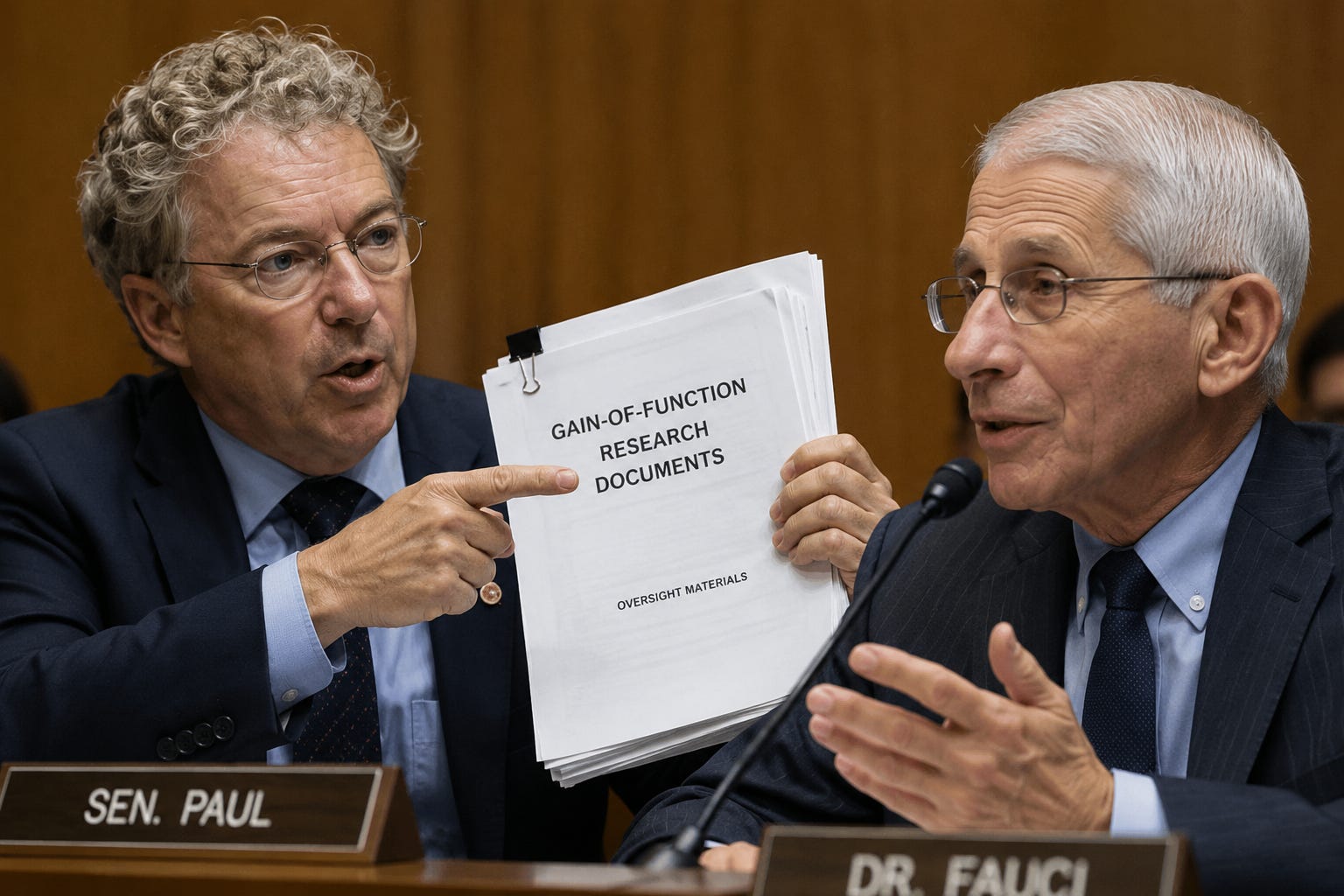
I did what I usually do when someone tells me, “Just read the documents.” I read them.
As I worked through the grant applications, presentations, and supporting material, I thought about something much larger than Anthony Fauci, Rand Paul, or Tulsi Gabbard. The real issue isn’t whether people are reading the documents. The real issue is that many people don’t have the scientific background to understand what they’re reading. That’s not a criticism. Reading a grant proposal isn’t like reading a newspaper article, and interpreting a molecular biology paper isn’t the same as listening to testimony before Congress. Scientific documents require context, and without that context, it is remarkably easy to mistake routine laboratory science for something sinister.
That, more than anything else, is why I started writing this newsletter.
My goal has never been to tell you what to think. My goal has always been to improve scientific literacy, so that you can look at a claim, examine the evidence, and decide for yourself whether the conclusion actually follows. The current controversy surrounding gain-of-function research is a perfect example of why that skill matters.
I should also tell you where I’m coming from. I’m a surgeon by training, not a career virologist. Before medical school, however, I spent three years as a graduate student at the Kovler Viral Oncology Laboratories at the University of Chicago studying herpes simplex virus. I published basic science research, learned molecular biology at the laboratory bench, and then spent the next forty years reading medical literature while taking care of patients. I haven’t worked in a virology laboratory for decades, but I still know enough molecular biology to distinguish between a biological experiment, a grant proposal, and a political talking point.
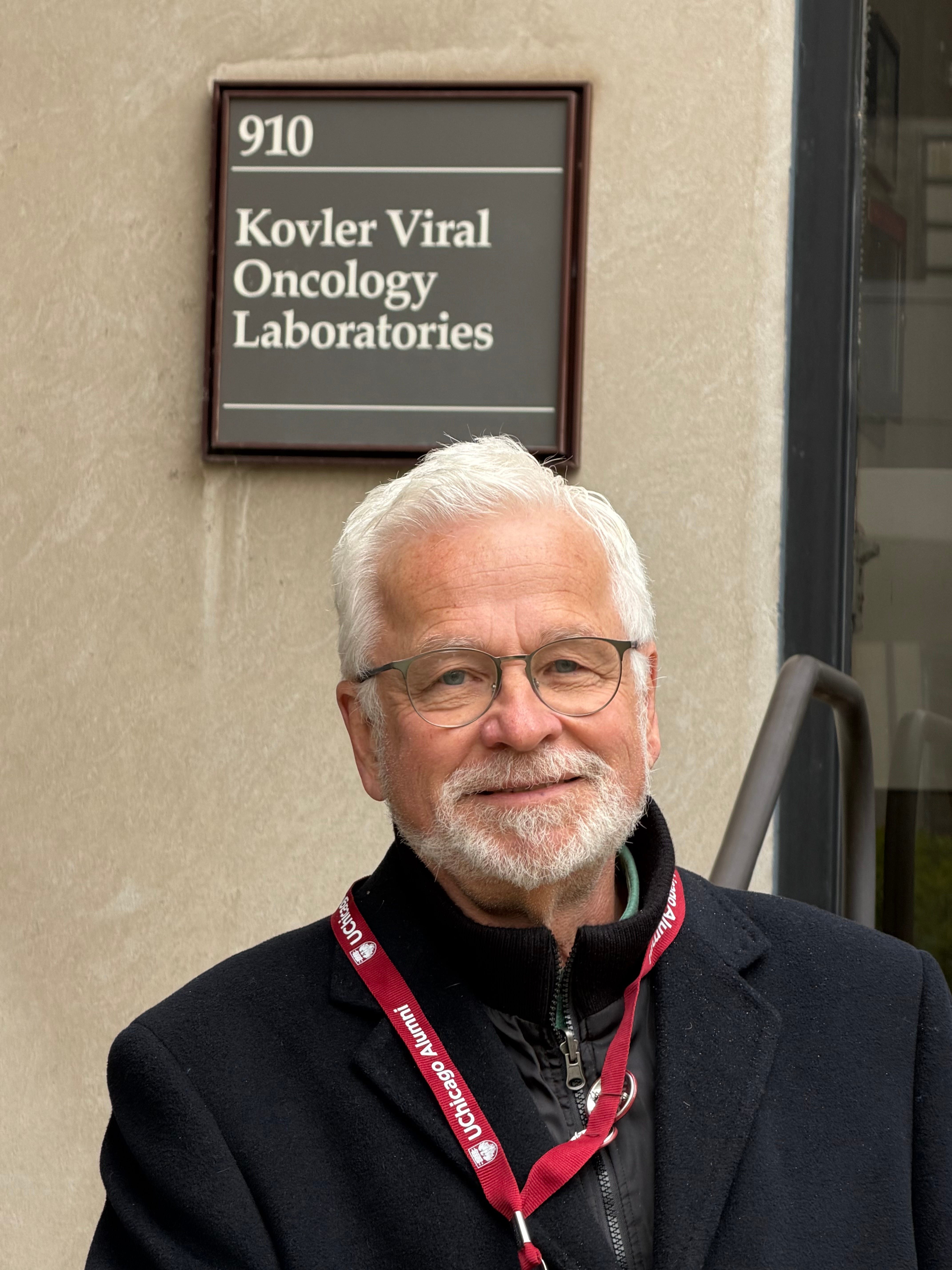
That background probably explains why my reaction to these documents was so different from what I’ve seen on social media.
Before We Talk About COVID, Let’s Talk About Smallpox
Every young virologist of my generation learned the story of Janet Parker.
In 1978, Parker was a medical photographer at the University of Birmingham Medical School. She wasn’t a virologist and wasn’t conducting research on smallpox. Yet she became infected with the smallpox virus and ultimately died, becoming the last person in the world to die from smallpox. The official investigation concluded that the virus likely escaped from a research laboratory one floor below through deficiencies in laboratory containment. The laboratory director, Professor Henry Bedson, devastated by the tragedy, died by suicide before the investigation was completed.
Remember, this happened before our modern biosafety level classifications even existed. The Birmingham laboratory was built and operated according to the standards of its time, but the Janet Parker tragedy demonstrated that those standards were not sufficient for work with smallpox. That accident became one of the events that helped shape the modern biosafety practices we take for granted today.
The story stayed with me because it taught an important lesson. Laboratory accidents can happen. Scientists have known that for decades. The Birmingham accident became one of the events that transformed laboratory biosafety. Engineering controls improved. Air-handling systems improved. Containment procedures became more rigorous. Oversight became more formal. None of those changes occurred because politicians demanded them. They occurred because scientists understood that dangerous organisms require extraordinary care.
So when someone asks me whether a laboratory leak is possible, my answer is simple: of course it is. History already answered that question. The real question has never been whether laboratory accidents can occur. The question is whether there is evidence that a particular laboratory accident occurred. Those are very different questions, and they require very different standards of proof.
What Scientists Actually Mean by Gain-of-Function
If there is one phrase that has caused more confusion than almost any other during the COVID era, it is “gain-of-function research.”
To many people, the phrase now means scientists deliberately trying to create more dangerous viruses. That’s understandable, because that’s how it is often described in political speeches and social media. Unfortunately, it isn’t an accurate description of what the term historically meant in molecular biology.
A gain-of-function experiment simply means an organism acquires a new biological property. That property may have nothing whatsoever to do with becoming more dangerous. A virus could be modified so that it produces a fluorescent protein, allowing researchers to watch infected cells under a microscope. A mutation might help scientists understand why one strain grows differently from another. Researchers may alter a promoter to learn how genes are turned on and off during infection. The overwhelming majority of these experiments are designed to answer basic biological questions, not to create pathogens with greater pandemic potential.
The real controversy concerns a much smaller subset of experiments involving pathogens that could reasonably become more transmissible or more virulent. Those experiments deserve careful oversight, because they involve organisms capable of causing widespread disease. Unfortunately, the broad scientific meaning of gain of function and the much narrower regulatory concern have become blended together in public discussion until they are almost indistinguishable.
That confusion is one reason today’s debate often generates more heat than light.
A Little History From My Own Laboratory
One reason I smile when people speak about gain-of-function research as though it were something entirely new is that I participated in what many people today would place under that umbrella more than forty years ago.
As a graduate student, our laboratory published a paper titled “Chicken Ovalbumin Gene Fused to a Herpes Simplex Virus Alpha Promoter and Linked to a Thymidine Kinase Gene is Regulated Like a Viral Gene.” The question we asked was straightforward. Could a cellular gene be placed under the control of a herpes simplex virus alpha promoter and be regulated like one of the virus’s own genes?
The answer was yes.
What had we accomplished? We hadn’t made herpes simplex virus more virulent. We hadn’t made it spread more efficiently. We hadn’t helped it evade the immune system or created a virus with greater pandemic potential. What we had done was learn something fundamental about viral gene regulation. The experiment helped us understand how herpes simplex virus controlled gene expression, knowledge that contributed to our understanding of basic virology.
Today, someone unfamiliar with molecular biology might hear that description and conclude that we had performed gain-of-function research. Technically, they wouldn’t be entirely wrong. The virus was directing the expression of a gene it normally would not express. But the purpose of the experiment was never to make herpes more dangerous. It was to understand how viruses regulate genes.
That distinction is not academic. It is the difference between using molecular biology as a research tool and deliberately trying to create a pathogen with increased pandemic potential.
Reading Rand Paul’s Documents
With that background, I sat down and carefully read the documents Senator Rand Paul has highlighted.
I understand why he has questions about oversight. I understand why Congress wants to know how grants were reviewed, how collaborations were managed, and how agencies defined gain-of-function research over time. Those are reasonable questions, and taxpayers deserve transparent answers.
What I did not find, however, was the smoking gun many people claim is hidden in those pages.
I found grant proposals describing research objectives. I found collaborations with scientists in Wuhan. I found studies involving bat coronaviruses and discussions about viral surveillance. I found funding flowing through EcoHealth Alliance and disagreements about terminology. All those subjects deserve scrutiny. None of them, by themselves, establish that a particular funded experiment produced SARS-CoV-2 or demonstrate a direct chain of evidence linking those grants to the COVID-19 pandemic.
That distinction matters, because the strength of the conclusion should always match the strength of the evidence.
Reading Tulsi Gabbard’s Presentation
I had much the same reaction to Tulsi Gabbard’s presentation.
The slides show laboratories. They show funding relationships. They identify dangerous pathogens studied in those facilities and describe collaborations between American agencies and institutions overseas. I don’t dispute those facts.
What surprised me was how many people treated the existence of those laboratories as proof of misconduct.
If you are studying Ebola, your laboratory will contain Ebola.
If you are studying tuberculosis, your laboratory will contain tuberculosis.
If you are developing influenza vaccines, you will be working with influenza viruses.
Those facts are not revelations. They are prerequisites for doing the science.
The important questions are different. Were the laboratories operating under appropriate biosafety standards? Were the experiments independently reviewed? Did funding agencies provide adequate oversight? Were the public and Congress given accurate information about the work being performed? Those are questions worth asking, and I hope they continue to be asked.
I kept expecting the presentation to move from “here are the laboratories” to “here is the evidence linking a specific laboratory to the emergence of COVID-19.”
I never found that bridge.
What Would Change My Mind?
One habit medicine teaches you is to decide in advance what evidence would change your mind. If you don’t answer that question before reading controversial material, confirmation bias can fill in the gaps.
If compelling evidence eventually demonstrates that a laboratory accident caused SARS-CoV-2, I’ll accept it. That evidence would need to establish a chain of events through laboratory records, viral sequences, epidemiologic investigation, and independent confirmation. That’s how science has always worked.
The Birmingham smallpox tragedy wasn’t accepted, because people pointed at a laboratory and declared victory. Investigators painstakingly reconstructed what happened.
Evidence came first.
Conclusions followed.
That’s still the standard we should use today.
Making Sense of the Madness
Science isn’t about defending Anthony Fauci, attacking Rand Paul, or criticizing Tulsi Gabbard. It isn’t about choosing political teams.
Science is about asking whether the evidence supports the conclusion.
After reading the documents for myself, I came away believing there are important conversations about biosafety, transparency, and oversight. Those conversations should continue, and evidence should inform them rather than assumption.
If stronger evidence emerges tomorrow, I’ll read it with an open mind.
Until then, I remain unconvinced that the documents currently circulating demonstrate what many people claim they demonstrate.
The problem isn’t that people aren’t reading the documents.
The problem is that scientific literacy has become one of the most important—and rarest—skills of our time.
If this newsletter accomplishes anything, I hope it helps a few more people make sense of the madness.
Subscriber Notes: How to Read a Scientific Controversy
One of the privileges of spending time both at the laboratory bench and at the bedside is that I’ve learned that the same habits apply in both places. Good clinicians and good scientists ask the same question: What does the evidence actually tell me? Over the years, I’ve developed a simple framework that has saved me from chasing more than a few exciting headlines.
In the paid section I go into that process.
