


GLP-1s Keep Expanding, Alcohol Keeps Retreating, and Prevention Continues to Win
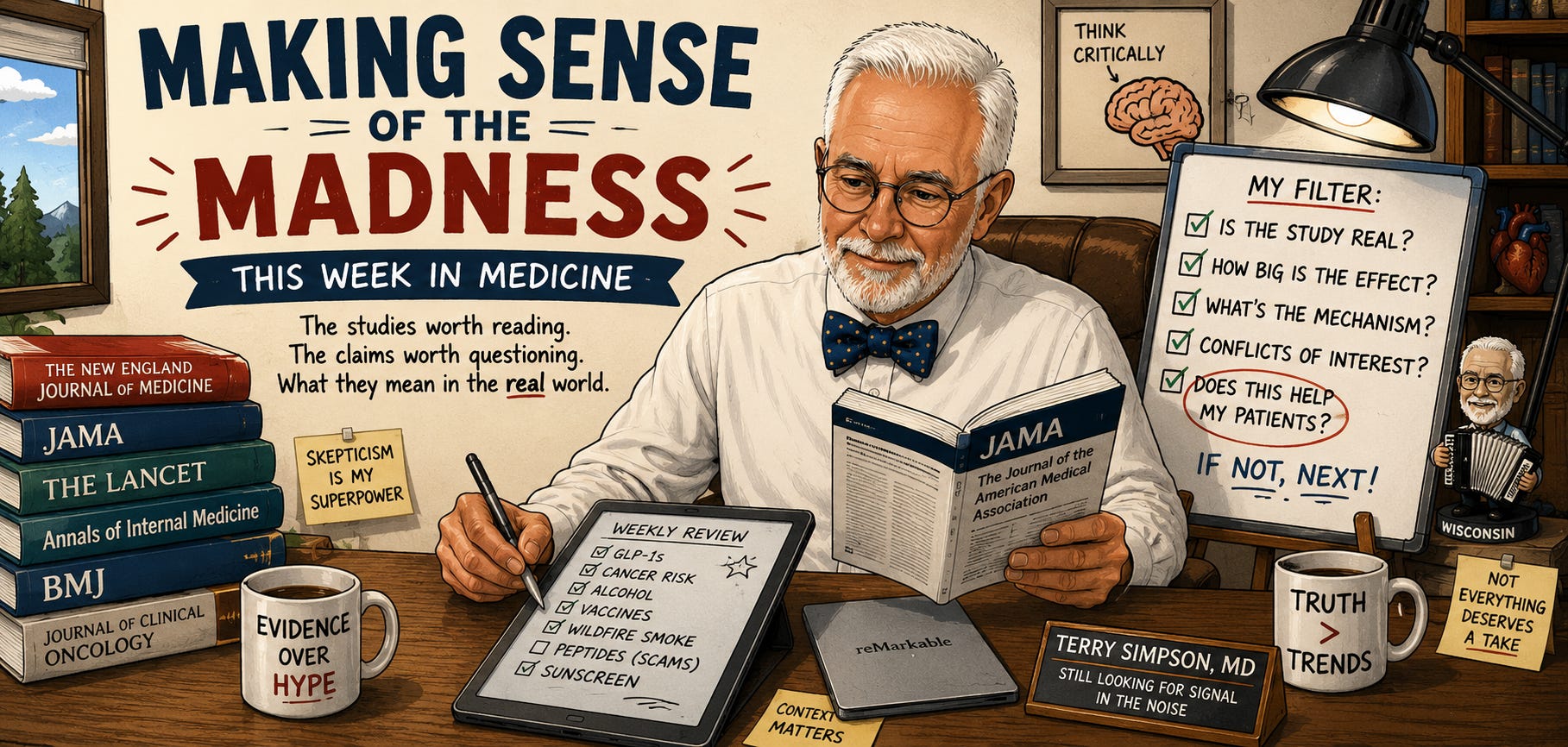
Every week, I look through a pile of studies, press releases, and medical journals, so you don’t have to. Sometimes I am searching for a common thread. Sometimes there isn’t one. This week there was.
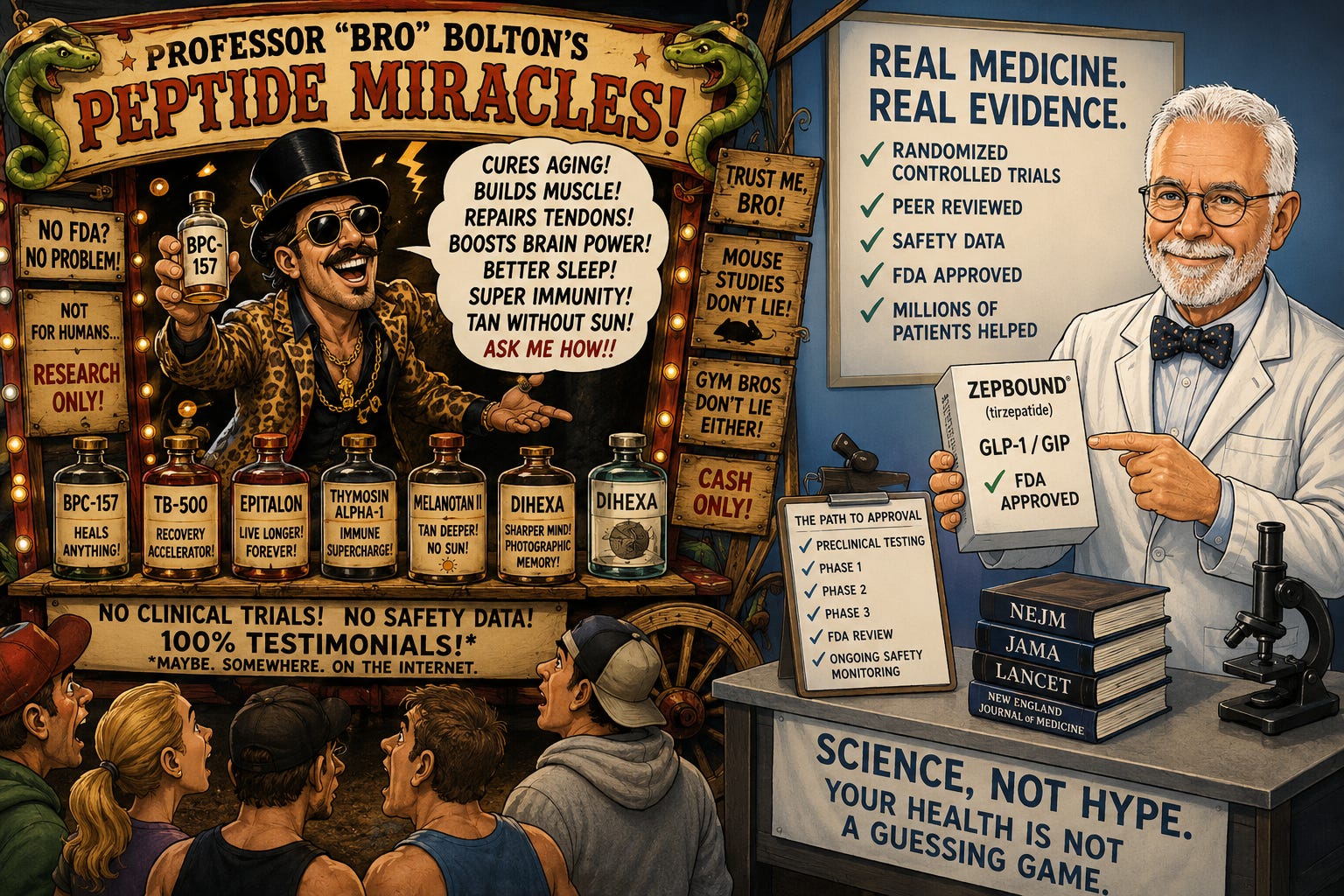
We have the new exciting peptides like GLP-1 that are reducing inflammation, decreasing cancer risks, and autoimmune disease, and then we have the other peptides that are scams.
The more we learn about chronic disease, the more everything seems connected.
Obesity affects cancer risk. Inflammation affects arthritis. Alcohol affects cardiovascular disease. Vaccines prevent illnesses that most people never realize they avoided. Wildfire smoke affects lungs, hearts, and long-term health. Pull on one thread and three others start moving.
The biggest story this week continues to be GLP-1 medications. And on the other side are the scammers - the con men selling peptides that are not approved, not tested, and sold to unsuspecting customers.
GLP-1s Continue to Surprise
When semaglutide and tirzepatide first arrived, most of us thought of them as diabetic and then weight-loss medications. That description and what these drugs can help with expands every month.
GLP-1 and Obesity-Related Cancer
Researchers publishing in Annals of Oncology reported that patients receiving GLP-1 receptor agonists had significantly lower rates of obesity-related cancers compared with matched controls.
The largest reductions were seen in several cancers strongly associated with obesity, including colorectal cancer, pancreatic cancer, endometrial cancer, and multiple myeloma. In addition to breast cancer.
It is too early to claim these medications prevent cancer. However, the findings fit a pattern we continue to see repeatedly: when metabolic health improves, many downstream consequences of obesity improve.
For decades, we viewed obesity as cosmetic, then a potential heart issue with increased blood pressure. Evidence increasingly suggests obesity is one of the central drivers of chronic disease.
GLP-1 and Psoriasis
A review published in Frontiers in Immunology examined the growing evidence that GLP-1 receptor agonists may improve psoriasis severity.
This finding makes biological sense. Psoriasis is not simply a skin condition. It is an inflammatory disease. Obesity is also associated with chronic inflammation. Reducing that inflammatory burden may help explain why improvements are being observed.
The evidence remains preliminary, particularly for psoriatic arthritis, but it is another example of these medications affecting systems far beyond appetite regulation.
GLP-1 and Chronic Kidney Disease
Researchers presenting findings at the European Renal Association Congress reported that semaglutide improved quality-of-life measures among patients with type 2 diabetes and chronic kidney disease. Kidney disease is one of the top ten causes of death in the United States.
Physicians often focus on laboratory values and hard outcomes. Patients care about something equally important.
How they feel.
The reported improvements involved mobility, daily activities, discomfort, and overall health status. Those outcomes matter because they are felt by patients, rather than measured solely by statisticians.
GLP-1 and Knee Replacement Surgery
One of the more interesting studies this week appeared in Regional Anesthesia & Pain Medicine, where investigators reported lower rates of total knee replacement among patients with osteoarthritis treated with GLP-1 receptor agonists.
The obvious explanation is weight loss. Less weight means less force across an already damaged joint.
However, the story may be more complicated. Improvements appeared earlier than weight loss alone would fully explain, raising the possibility that the anti-inflammatory effects of GLP-1 medications also contribute.
We increasingly recognize osteoarthritis as more than simple wear and tear. Inflammation appears to play an important role in symptoms and disease progression. If GLP-1 medications reduce that inflammatory burden, they may help knees in more ways than one.
As with many GLP-1 stories, what began as a weight-loss medication increasingly looks like a metabolic medication.
GLP-1 and Pregnancy
Researchers publishing in the Annals of Internal Medicine examined nearly 3,600 pregnancies and compared outcomes among women who continued GLP-1 therapy into the first trimester with those who discontinued treatment.
Reassuringly, investigators did not identify major increases in pregnancy loss, abnormal fetal growth, or major congenital malformations.
This study does not change current recommendations regarding pregnancy and GLP-1 medications. However, it provides useful information for women who discover they were pregnant while taking one of these drugs. If you are taking these drugs and become pregnant, please talk with your OB physician.
The FDA and Unproven Peptides
And speaking of peptides, let’s talk about the shady side of peptides. Just this week, a nurse asked me about peptides.
A coworker had injured himself and was told injecting a peptide would speed healing and recovery. That is how many of these products are marketed. The problem is that marketing is not evidence.
For most of these compounds, we do not know whether they work. We do not know the correct dose if they do work. We do not know the long-term side effects. In many cases, we don’t even know what is actually in the vial.
This week, delegates at the American Medical Association called for stronger FDA oversight of synthetic peptides and similar products marketed without adequate evidence of safety or effectiveness.
To be clear, some peptides are legitimate medicines. Insulin is a peptide. GLP-1 medications, such as semaglutide and tirzepatide, are peptides. Those drugs went through rigorous testing, dose-finding studies, safety evaluations, and large clinical trials.
The peptides being promoted online are different.
Many are sold as “research chemicals,” which is often a legal way to say they have not been approved for human use. They are manufactured overseas, sold through websites, gyms, wellness clinics, and social media influencers, and frequently marketed with claims that far exceed the evidence.
Some of the most common peptides sold without evidence or studies include:
BPC-157 — promoted for tendon healing, ligament repair, gut health, and inflammation. Human evidence is extremely limited. Probably the most common you will hear about. And being “common” does not mean we have good data showing they work - we do not.
TB-500 (Thymosin Beta-4) — marketed as a recovery and regeneration compound for athletes. Despite enthusiastic claims, there is little quality human evidence supporting these uses.
Epitalon — sold as an anti-aging and longevity treatment that supposedly preserves telomeres and extends lifespan. If it actually did what the advertisements claim, I would already be standing in line.
Thymosin Alpha-1 — promoted as an immune booster. While used in some countries for selected conditions, it remains unapproved for most of the claims made by wellness clinics.
Melanotan II — marketed as a tanning peptide. It can darken skin pigmentation but also carries risks including nausea, elevated blood pressure, and other adverse effects.
Dihexa — advertised as a cognitive enhancer. Claims range from improved memory to neuroregeneration.
At present, the evidence remains far behind the marketing. Because these substances have not undergone rigorous, multi-phase clinical trials for consumer use, their long-term effects, optimal dosages, and safety profiles are largely unknown.
If you are exploring peptide therapies, it is highly recommended to speak with a board-certified physician to understand safety profiles and regulatory statuses.
Those peptides above are currently promoted with extraordinary claims and very little data. Some have mouse data, some have small human studies.
A peptide is not a magic spell. It is a drug. And should not be sold by a gym bro trying to increase their revenue stream.
And drugs deserve evidence.
Alcohol: The News Keeps Getting Worse
A government review published in the Journal of Studies on Alcohol and Drugs concluded that health risks from alcohol begin at levels many people still consider moderate.
The old story that a daily drink improves longevity continues to lose support as larger and more sophisticated studies accumulate. According to the report, the lifetime risk associated with alcohol rises steadily, even at relatively low levels of consumption. One drink a day isn’t improving longevity, it is decreasing longevity while increasing risks of cancer and heart disease.
Market researchers simultaneously project that global alcohol consumption will decline over the next decade.
Several forces appear to be driving the change. Younger adults drink less than previous generations. Health awareness continues to increase. Alcohol has become increasingly expensive. And growing evidence suggests that GLP-1 medications reduce interest in alcohol for many users.
As someone who enjoys wine, I find this trend fascinating. The issue is not prohibition. The issue is preference. Many patients describe the same thing: they still enjoy alcohol when they choose it, but they think about it less often.
That distinction may prove important, as researchers continue to explore how GLP-1 medications influence reward pathways in the brain.
In the meantime, many restaurants have noticed how much wine sales and alcohol sales continue to decline. That is bad for the restaurants, but good for population health.
Cancer Prevention Is Often Boring
A pooled analysis published in JAMA Network Open followed more than 1.5 million adults and found that sugar-sweetened beverages were associated with increased risks of hepatocellular carcinoma and intrahepatic cholangiocarcinoma.
No, this does not mean a single soda causes cancer. Medicine rarely works that way.
The concern is cumulative exposure. Excess sugar contributes to obesity. Obesity contributes to fatty liver disease. Fatty liver disease contributes to inflammation and fibrosis. Over decades, those processes increase cancer risk.
The lesson is not new, but evidence keeps accumulating. Which means it is time to talk to my 15 year old son about his daily Dr. Pepper.
Another study published in the American Journal of Gastroenterology found significantly lower rates of colorectal cancer among adults aged 40 to 49 who underwent colonoscopy compared with those who did not.
The producer of my social media had a colonoscopy a few months ago. They found a large polyp, the kind that would become cancer if it had been left to grow. Her stool test the year before showed everything was fine, but alas, she listened to me (for once) and got a colonoscopy. The stool test would have been positive much later and it might have meant she had cancer instead of a polyp.
Colorectal cancer remains one of the more concerning cancers rising in younger adults. Studies like this will continue to shape the debate about when screening should begin. I think earlier is better and most surgeons also believe we should begin screening earlier.
Vaccines Continue Delivering Quiet Victories
Researchers publishing in JAMA Network Open reported that maternal RSV vaccination reduced infant hospitalizations by nearly seventy percent.
RSV is respiratory syncytial virus, which is the leading cause of bronchiolitis and hospitalization for infants and young children. We recently approved a vaccine for it and it has reduced hospitalizations among children, as well as prolonged hospitalizations for older adults.
This is exactly what preventive medicine should do.
The baby never knows what illness was avoided. The parents never know what hospital stay never occurred. The vaccine succeeds by making something fail to happen.
Meanwhile, investigators publishing in PLOS One found lower rates of new-onset atrial fibrillation among vaccinated individuals following COVID infection compared with those who were unvaccinated.
The benefit was observed across multiple high-risk groups, including patients with diabetes, obesity, hypertension, coronary disease, and chronic kidney disease.
These studies rarely generate headlines, because prevention lacks drama.
Yet prevention remains one of medicine’s greatest achievements.
Measles Continues Its Comeback
According to the CDC, the United States has now surpassed 2,000 measles cases this year.
More than ninety percent of cases occurred among unvaccinated individuals.
The virus has not changed. Human behavior has.
Measles remains one of the most contagious infectious diseases known. Its resurgence should surprise no one who follows vaccination trends. The issue with measles isn’t death, it’s the two year immunology amnesia, hospitalizations, pneumonias and long-term neurologic consequences. So when someone shows how death rates are low, and we haven’t had a death in 2026, remember we have had many hospitalizations, quarantines, lost days of school and work, and it has cost millions of dollars.
Viruses remain remarkably indifferent to politics, ideology, and internet debates.
Public Health Notes
A New Sunscreen Ingredient Finally Arrives
The FDA approved bemotrizinol, the first new sunscreen ingredient approved in the United States in more than twenty-five years.
The compound has been used in Europe and other countries for years and provides broad-spectrum protection against ultraviolet radiation.
Dermatologists have been waiting for this approval for a long time.
One of the biggest concerns with traditional chemical sunscreens (like avobenzone or oxybenzone) is that they seep through the skin and can be detected in the bloodstream at higher rates. Bemotrizinol is a larger molecule, meaning it sits safely on top of the skin and has very low systemic absorption.
Bemotrizinol holds its ground against UV rays, so if you accidentally stretch your reapplication time slightly past the standard two-hour mark, you will still have significantly more active defense left on your skin compared to traditional chemical sunscreens.Stabilizes Other Filters: In a formulation, bemotrizinol actually acts as a bodyguard for other weaker ingredients, helping prevent the entire sunscreen blend from prematurely degrading.
Why You Still Need to Reapply
Even though the chemical itself does not break down easily, you still must reapply it every two hours when outdoors for a few mechanical reasons:
Physical Friction: Activities like wiping your face, changing clothes, or rubbing against towels physically scrape the product off your skin.
Sweat and Water: Even water-resistant formulas naturally lift off the skin over time when exposed to heavy perspiration or swimming.
Skin Oils: Your skin’s natural sebum production gradually breaks up the even film of sunscreen, causing it to pool or separate over several hours.
Essentially, bemotrizinol solves the problem of the sun destroying your sunscreen, but it cannot solve the problem of daily movement that inadvertently wipes away the sunscreen.
There is a trend these days for some to say we need sunshine, and sunscreen is bad for people, more than sunlight. That is false. To be clear, the basic science has not changed - sunlight can cause DNA damage, leading to mutations. This leads to, at worst, melanomas, other skin cancers, and at best premature aging of the skin. Just find a lifeguard from California over 60 and see their skin.
A bit of sun is great - getting sunburned is not, especially for children.
Wildfire Smoke Is Becoming a Chronic Health Problem
Researchers publishing in Science reported that wildfire smoke is reversing years of progress in air quality and contributing to increased illness and mortality.
For those of us in California, this hardly feels like news. Sadly, I live next to an area that ten years ago led to an evacuation of my neighborhood.
The important point is that the health effects are measurable. Wildfire smoke increases respiratory illness, cardiovascular risk, and overall mortality.
For many Californians, preparation for wildfire season should probably be viewed the same way we view preparing for earthquakes.
Not exciting. Just necessary.
Below is the paid section where we expand about alcohol and air purifiers, but here are the references for those who want to read the studies themselves.
References and Further Reading
GLP-1 Medications and Obesity-Related Cancers
Annals of Oncology (2026)
Sugar-Sweetened Beverages and Liver Cancer
JAMA Network Open (2026)
Alcohol and Mortality Risk
Journal of Studies on Alcohol and Drugs (2026)
GLP-1 Receptor Agonists and Psoriasis
Frontiers in Immunology (2026)
Semaglutide in Chronic Kidney Disease
European Renal Association Congress Presentation (2026)
Maternal RSV Vaccination
JAMA Network Open (2026)
COVID Vaccination and New-Onset Atrial Fibrillation
PLOS One (2026)
Wildfire Smoke, Ozone, and Mortality
Science (2026)
Measles Surveillance Data
Paid Subscriber Section
Two areas here: Alcohol and Air purifiers this week
