


November 22, 2026 | Dr. Terry Simpson
This week in the medical news.
Medicine of the Week is supported by our subscribing members at drsimpson.com.
Measles: From 59 cases to 5,838 in three years
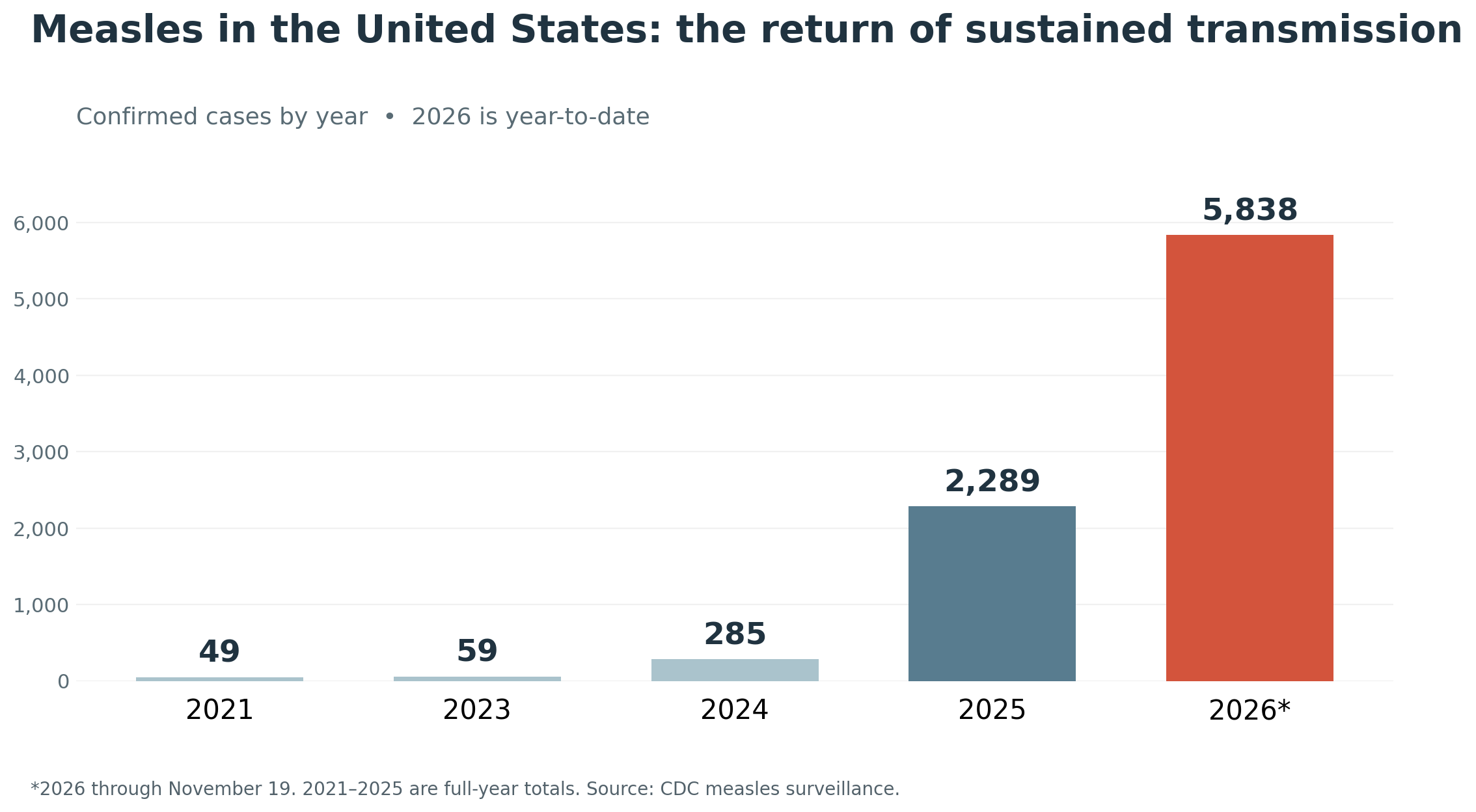
As you can see from the graph, measles has increased 100 fold. In 2023, the United States reported 59 cases of measles, and last Friday, November 19, the CDC confirmed 5,838 cases.
The loss of measles elimination status on November 17, means that measles have been circulating continuously in the country for more than a year. That single measles case in Texas has been traced to outbreaks in Canada and throughout the United States.
Measles is not just a rash. It can cause pneumonia, which is the main reason for hospitalization of nearly 20 percent of the 1589 cases in Pennsylvania. severe dehydration, encephalitis, and death.
Then there is the inflammation of the brain that can leave permanent neurological damage. That encephalitis is present in 1 in 1000 cases. Then years later, some children will develop subacute sclerosing panencephalitis a fatal condition.
The other favorite anti-vaccine trick is to say we decreased measles deaths before vaccination. Ignoring the pneumonia, hospitalizations, and 400 preventable deaths a year. This year, we have twelve deaths, although the CDC uses a different classification for deaths, per RFK Jr’s direction. No matter how you classify a preventable death, it is still a preventable death. Two doses of MMR vaccine provides 97% protection against measles.
Most American parents still vaccinate their children. But measles is so contagious that communities with small clusters of susceptible people can sustain outbreaks. And even with an outbreak, we will see vaccinated people develop measles. Consider how our current vaccination rate for kindergarten students is 92 percent, below the 95% we need to keep measles at bay.
This trend of vaccination hesitancy is largely brought about by one paper, which I wrote about this week on this blog. Andrew Wakefield MMR-autism paper, which was retracted, and the research that found no relationship between MMR vaccination and autism. Still, despite showing Wakefield made up data and lost his license, people believe that paper with 9 people vs the many articles since then involving over a million children with no increase in autism from measles.
The practical advice,check your children’s vaccination records and discuss any questions with your pediatrician. The American Academy of Pediatrics maintains evidence-based childhood vaccination recommendations.
Sources: CDC measles surveillance, Pennsylvania Department of Health, and Associated Press reporting on Virginia’s measles death.
Nearly five tons of unstable lead azide in Iowa
The U.S. Army plans to blow up approximately 9,500 pounds of lead azide near Middletown, Iowa. The problem isn’t just the army blowing up old detonators. The lead will enter the atmosphere, and put children at risk.
Those lead-containing particles enter the atmosphere and then settle on soil, or enter the water supply
The projected cloud will start near the Mississippi River, and the concern is it could reach Chicago. Stay tuned for that.
Even though a federal appeals court temporarily blocked the EPA permit. The Army announced it will use emergency authority, possibly by Tuesday. Not a great Thanksgiving gift for those affected.
Lead can interfere with neurological development in children, affecting their brain. Developmental delay and learning disorders from lead has been documented for years. There is no known safe blood lead level in children.
We have reduced lead pollution before
The removal of lead from gasoline produced a reduction in atmospheric lead pollution. Airborne lead concentrations declined approximately 98% between 1980 and 2005.
The Iowa situation reminds us that lead pollution has declined enormously, but it has not disappeared.
Sources: U.S. Army, Illinois Department of Public Health, and EPA lead and air-quality information.
Updated COVID vaccines: New evidence from more than 900,000 veterans
A new study about COVID vaccine among 931,943 U.S. veterans showed that those who received the COVID vaccine had a 32 % lower risk of COVID ER visits and 44% lower risk of COVID hospitalizations.
Source: Published study in Vaccine.
Agent Orange and Parkinson’s disease: Evidence from 4.4 million veterans
A study published November 16 in JAMA Neurology examined more than one million vets with documented Agent Orange exposure.
Exposed veterans had a 44% higher relative risk of Parkinson’s disease. They also identified increased risks of Lewy Body dementia.
The study adds evidence to the literature about the long-term neurological consequences of Agent Orange and other exposures.
Source: JAMA Neurology, November 16, 2026.
Pancreatic cancer: A drug that may change treatment
=
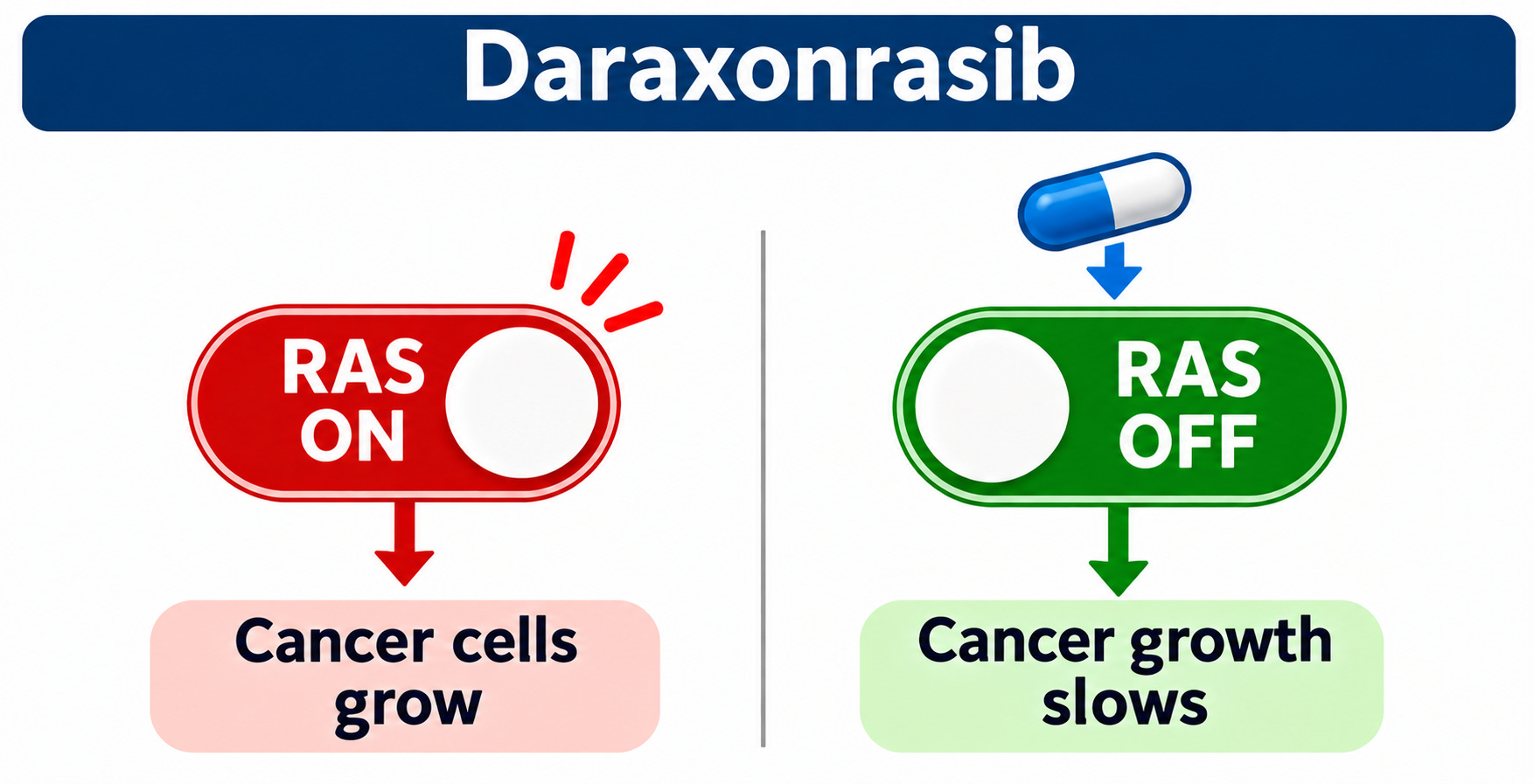
Finally, good news in our fight against pancreatic cancer. A new drug, Rasonque (Daraxonrasib), approved in August, has been shown to increase survival, and even complete remission, in some patients.
How does the drug work?
Most pancreatic cancers have mutations that affect cell growth. If that signal is on, the cells grow. In the cancer cells, that switch is stuck to “on.”
The new drug binds to that switch, and because the growth is stopped or slowed, it allows the body to clear the mutated cells.
This is not conventional chemotherapy. It is a targeted effort to interrupt a molecular pathway driving cancer growth.
The new combination study
Here are the results when the drug is combined with chemotherapy.
They had over 8 percent complete response, meaning they could not find a tumor at all. Over ninety percent had disease control, and one year survival was estimated to be over 75 percent. Far better than anything so far. And this is the first drug of this class. More drugs like this are in development, and more studies will be coming.
Sources: FDA approval and November 19 study results.
