


Medicine has always had a temptation it struggles to resist: heroes.
Every generation seems to want a singular figure — the doctor who figured it out, who saw what others missed, who escaped the system and came back enlightened. It’s a compelling story. It’s also rarely how medicine actually works.
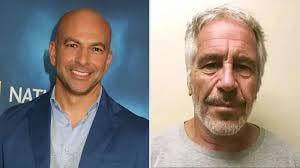
This week, a lot of attention has been focused on Peter Attia. I addressed this briefly on TikTok, and the response made it clear that people wanted a deeper, more thoughtful take — not gossip, not pile-ons, but context.
Some of the emails that have surfaced were inappropriate. He has apologized for them. Apologies matter. People should own their words.
But what you cannot apologize away is arrogance.
Arrogance in medicine isn’t just an attitude problem — it’s a duty problem.
As a surgeon, and as someone who ran a surgical residency program, I want to be clear about something that matters deeply to me: training is a gift. Surgical residency is brutally hard, humbling, and demanding — but a training position is also finite. That spot at Johns Hopkins could have gone to someone who would have dedicated their life to surgery, to patients, to service. Medicine is not a stepping stone or a branding exercise.
There are no shortcuts to a good reputation in medicine.
Not through podcasts.
Not through exclusivity.
Not through proximity to power or wealth.
Medicine is not about being impressed by billionaires. It is about being accountable to patients.
And medicine has a special duty to children.
The Epstein story matters not because of celebrity, but because it reminds us of something fundamental: children and young women were abused. That is established fact. While individuals may deny being present for specific acts, medicine has always understood that we are the company we keep. Being enthralled with power or status is not what medicine is about.
At the end of our lives — and especially at the end of our medical careers — we do not remember the dollars we made. We remember the good we did. That principle is sacred in this profession.
This is not about supplements, either. Selling AG1 is fine. Disclosure matters. I even take it myself. This is not an argument against commerce.
It is an argument for humility.
Medicine does not advance because of personalities. It advances in small, incremental steps made by people you will never hear about — clinicians, nurses, lab techs, public health workers — doing the work day after day.
And when trust in medicine erodes, the consequences are not theoretical.
They show up in children.
Which brings us to measles.
We have already seen hundreds of measles cases this year, and the largest outbreak — centered in South Carolina — did not begin in 2026. It stretches back into last year, with sustained transmission in undervaccinated communities.
That matters, because measles elimination status is not about whether measles exists somewhere. It’s about whether a country can stop ongoing spread.
When trust collapses, vaccination rates fall. And when vaccination rates fall, measles doesn’t politely infect adults who made poor choices. It infects children — including those too young to be vaccinated and those with compromised immune systems.
This week was also a reminder that flu still kills children, that COVID never truly left, and that heart disease continues to claim men years earlier than most realize. The answers to longevity and healthspan remain boring, inconvenient, and consistent:
Move more.
Take your medications.
Control blood pressure.
Stop drinking alcohol.
Stop smoking.
Sleep.
Vaccinate.
No capes required.
Measles elimination status is one of the quiet public-health victories of modern medicine — and it is far more fragile than most people realize.
Elimination does not mean measles is gone. It means there is no sustained community transmission. When outbreaks occur, they are small, quickly contained, and extinguished. That status protects everyone, especially children.
The current South Carolina outbreak is concerning not just because of case numbers, but because of duration. Sustained transmission across multiple months is exactly what threatens elimination status when international public health organizations review U.S. data.
If the U.S. loses elimination status, the implications are real:
More frequent outbreaks
Longer outbreaks
Increased hospitalizations
Greater risk to immunocompromised individuals
More strain on public health systems
This is not about politics. It is about math and biology.
The MMR vaccine is highly effective. Two doses provide durable protection for the vast majority of people. Communities with high vaccination rates stop measles. Communities without them do not.
A note for adults:
If you live in an area with ongoing measles transmission, even if you had measles as a child, it is reasonable to discuss MMR vaccination with your physician. Immunity can wane, documentation is often unclear, and the risk of vaccination is extremely low compared with the risk of infection during an outbreak.
If you are unsure of your vaccination status, a booster is often the simplest and safest path.
Vaccination is not just self-protection. It is community protection. And in medicine, protecting the vulnerable — especially children — is not optional.
That is the duty we inherit when we call ourselves physicians.
Oh, I had measles as a child and I have had got the MMR a few years ago.
