


The Tagine Skeptic Learns Patience
Drumsticks never tasted so good and the sauce
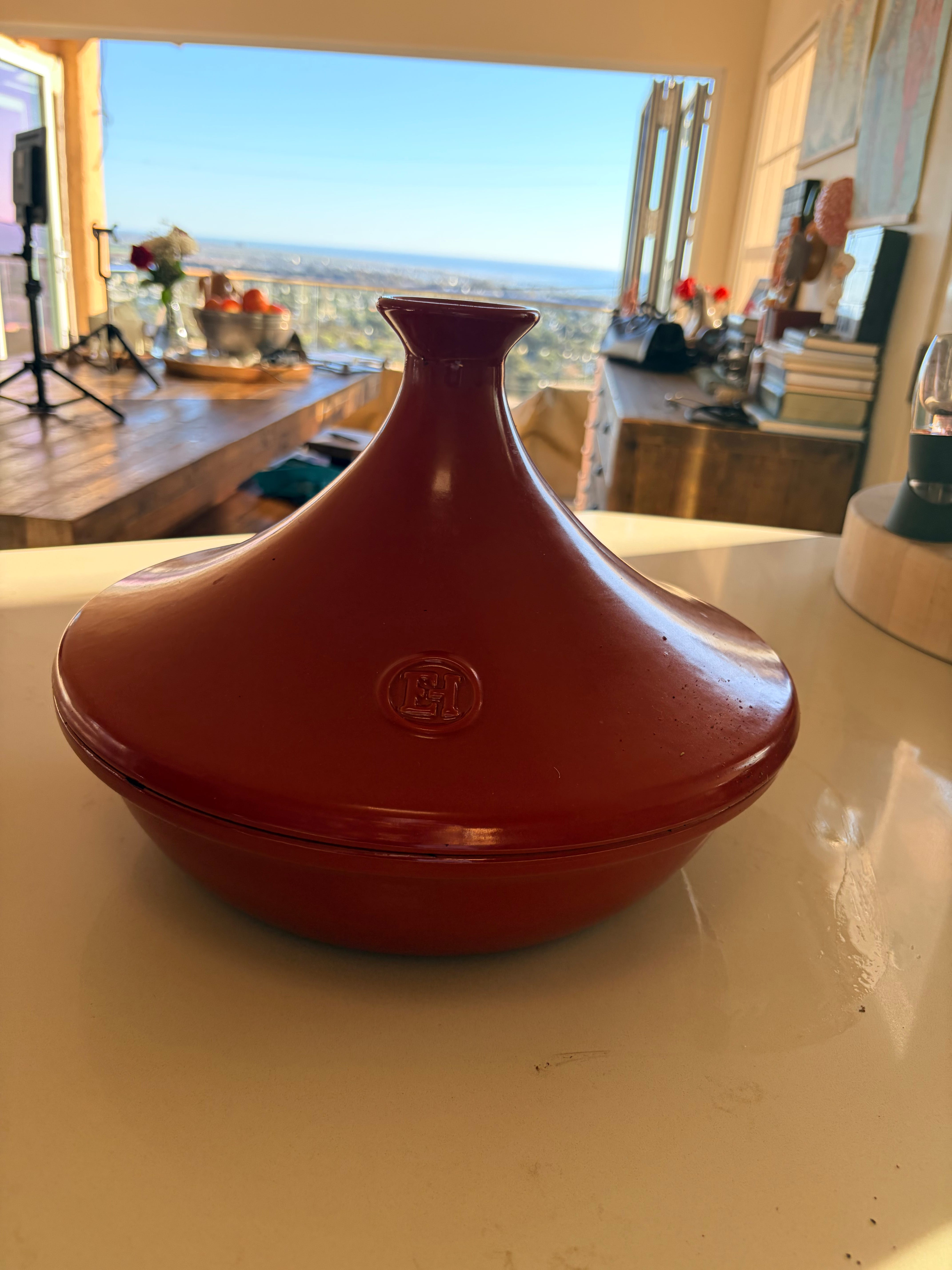
Normally, I’m skeptical of another way to do chicken.
We have grills.
We have cast iron.
We have sous vide.
We have ovens that work perfectly well.
While YouTube has never been my medium, turkey and chicken sous vide have been staples.
And my friend Zach got a tajine.
He told me it was transformative.
Years ago, a friend who spent time in Morocco loved chicken this way.
Then it was mentioned on a podcast (Skeptics Guide to the Universe).
Then Instagram.
At some point — around the 1,000th person telling me how good this clay cone was — I did what any rational adult does.
I bought one. Okay, I am not rational when it comes to things for the kitchen. If someone says a tool is great, I will get it. Many of these end up at good will and well - here we go.
I would love to do a live cooking show with it.
But this is slow cooking at its finest — not “set it and forget it” slow cooker food. This is controlled, deliberate, collagen-converting, moisture-recycling cooking. Which means we could do the prep - then come back in a few hours to taste the food.
So instead of a live, I’ll give you the recipe I used, some photos, and a bit of history.
Because this tool deserves context.
The Tagine: Clay, Empire, and Slow Fire
The word tagine — Arabic ṭajīn (طاجين) — likely descends from the Ancient Greek tágēnon, meaning “frying pan.” Before hashtags, before food influencers, there were trade routes. Language traveled with cumin and coriander. The Mediterranean has always been one long argument conducted over dinner.
By the 9th century, tagine-style cooking appeared in One Thousand and One Nights, and during the Abbasid era, under Harun al-Rashid, slow-braised, spice-laden stews were already cultural currency. In the 13th century, Ibn al-Adim described simmering meat with coriander, onion, garlic, fennel hearts, and sheep’s tail fat until the broth reduced and clung to the flesh. Read it slowly. That’s not rustic improvisation. That’s technique.
The distinctive conical clay vessel most associated with Morocco likely arose in the Anti-Atlas Mountains — elegant engineering disguised as peasant cookware. The lid traps steam, condenses it, and returns it to the stew below. In arid climates where fuel mattered, waste was not an option. Perfected over years, this method provides a great way to cook meats that are high in collagen, inexpensive cuts.
Nineteenth-century European travelers found them everywhere in Algeria and Tunisia — red clay, varnished with pine resin and olive oil, shaped by women who understood thermodynamics long before the word existed.
The tagine endures because it works. Low heat. Patience. Spice. Time.
And like most things worth eating — or believing — it was perfected slowly.
What a Tagine Actually Does
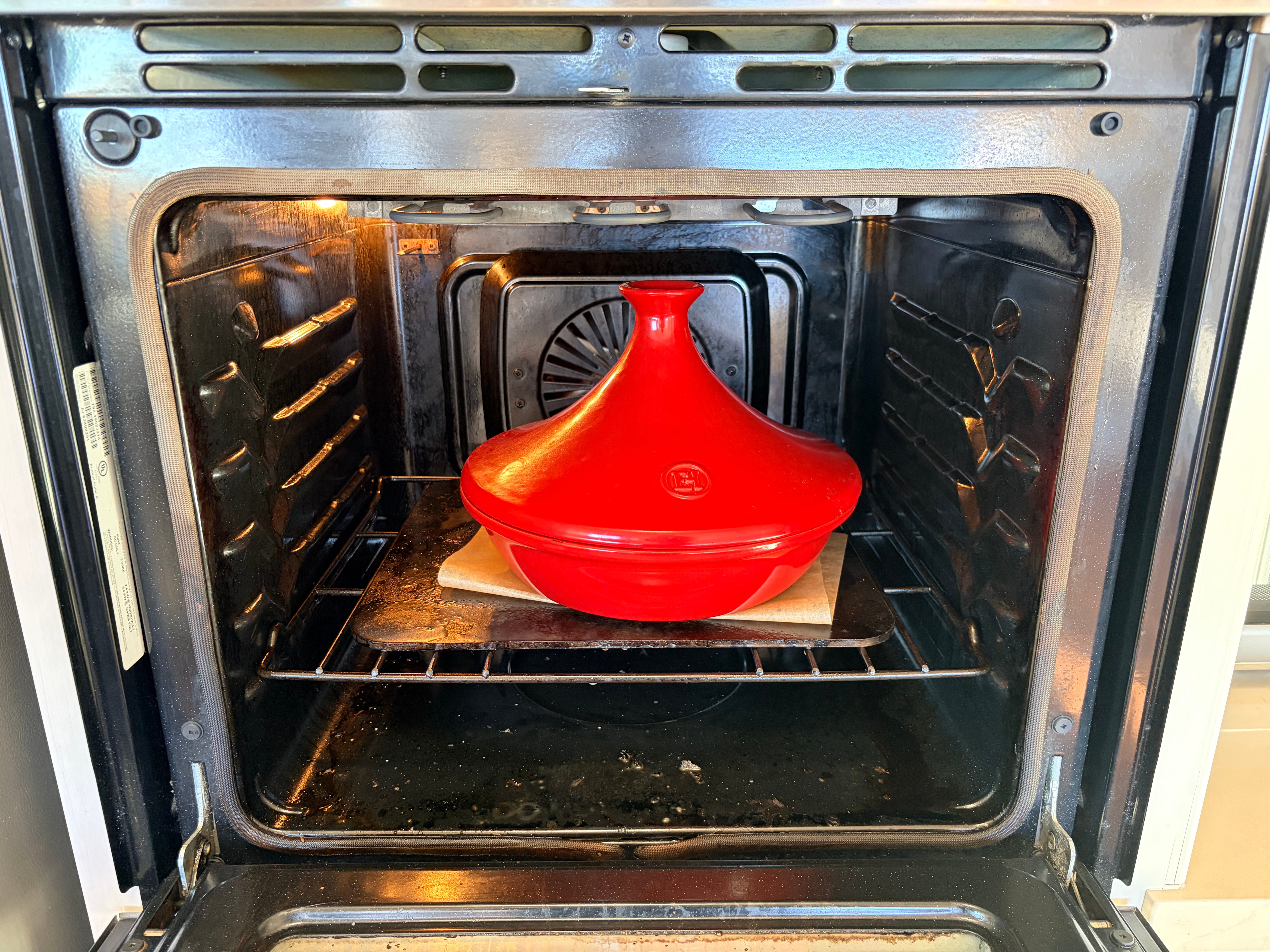
The tagine isn’t magic.
It’s physics.
The tagine is both the vessel and the dish cooked in it.
Wide base.
Conical lid.
That cone is the engineering.
As food simmers:
Steam rises
Condenses along the interior
Drips back down
Moisture is recycled.
Flavor concentrates without drowning the food in liquid.
This matters in arid climates. Water is precious. Cooking methods that preserve moisture are practical, not decorative.
The tagine allows you to use less liquid than a Dutch oven, while still preventing drying.
It’s elegant thermodynamics — developed long before stainless steel and temperature probes.
The tajine (I know, I’m spelling it both ways) has to warm in the oven. You don’t want to put hot liquids in a cold ceramic. Some use the tagine on a stove top - but I have an induction stove top, so ceramic won’t heat. But think about it - in North Africa, this is buried with coals around it. The best way to imitate that is with a nice warm oven.
The First Cook: Drumsticks
I kept it simple. I wanted skin on, bone in chicken - the best way. Thighs were not available that day, so drumsticks it was.
Twelve air-chilled drumsticks (Costco).
Carrots.
Onion.
Preserved lemons.
Preserved lemons are whole lemons cured in salt — sometimes with their own juice — and left to soften and ferment gently over weeks. In Moroccan cooking, they’re less about sharp acidity and more about transformation. The flesh becomes mellow and almost jammy, but it’s the peel that matters: intensely aromatic, floral, saline, and deeply citrusy without the bite of fresh lemon.
They don’t shout “sour.” They murmur complexity.
In a tagine, preserved lemon dissolves into the sauce, lifting spices, brightening olives, and cutting through slow-cooked richness. It’s citrus that has learned patience — which may be the most Mediterranean quality of all.
I bought mine from Amazon.
Dried apricots.
Cumin. Coriander. Turmeric. Classic spice
A touch of cinnamon.
Dark meat only.
Because dark meat contains collagen.
And collagen, or that grisle or fascia is the entire point.
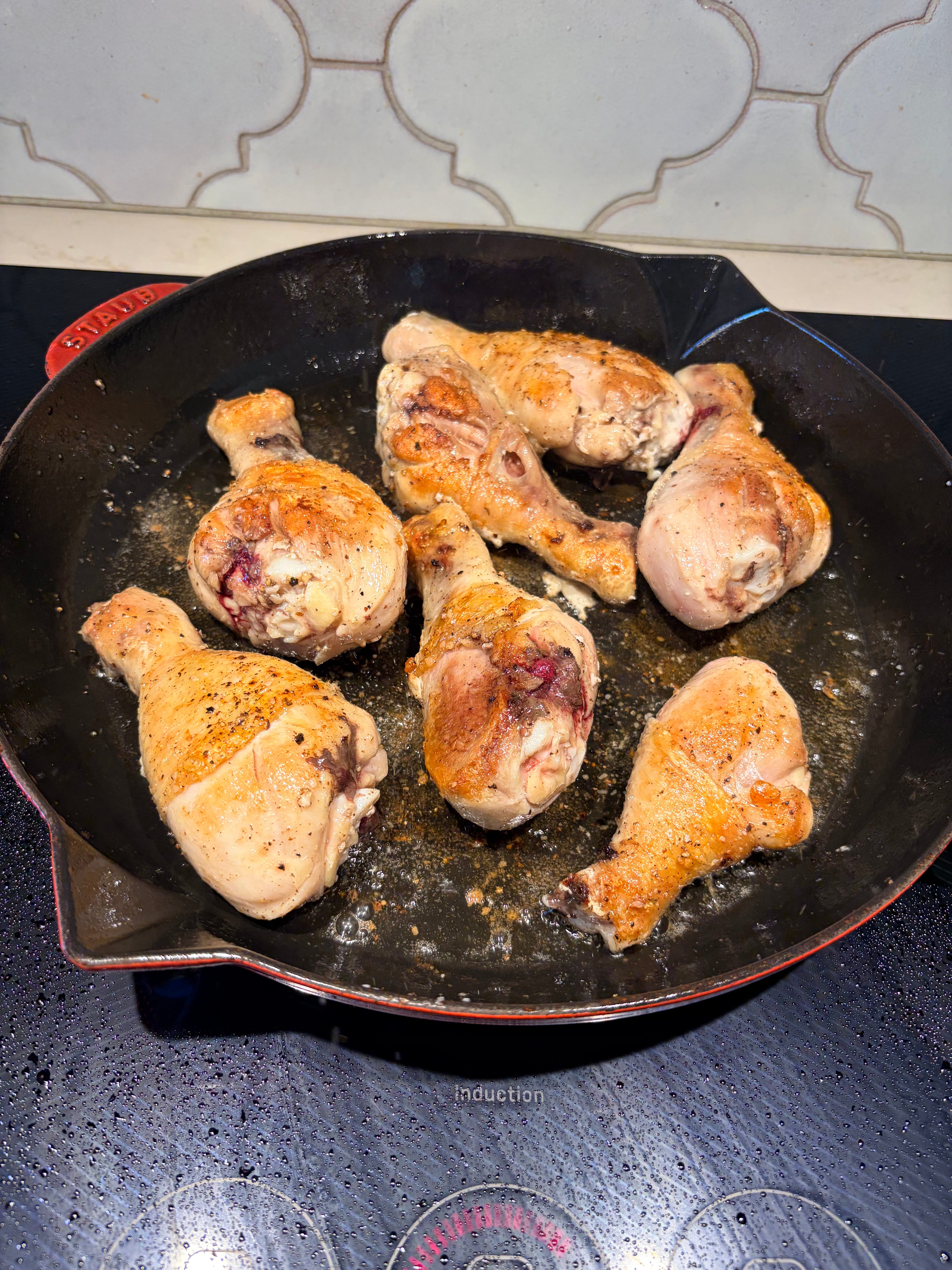
After browning the chicken hard — real color, not polite tan — I built the base in the same pan, scraping up the fond (the stuff that sticks to the pan) with onions and stock.
That liquid becomes the foundation.
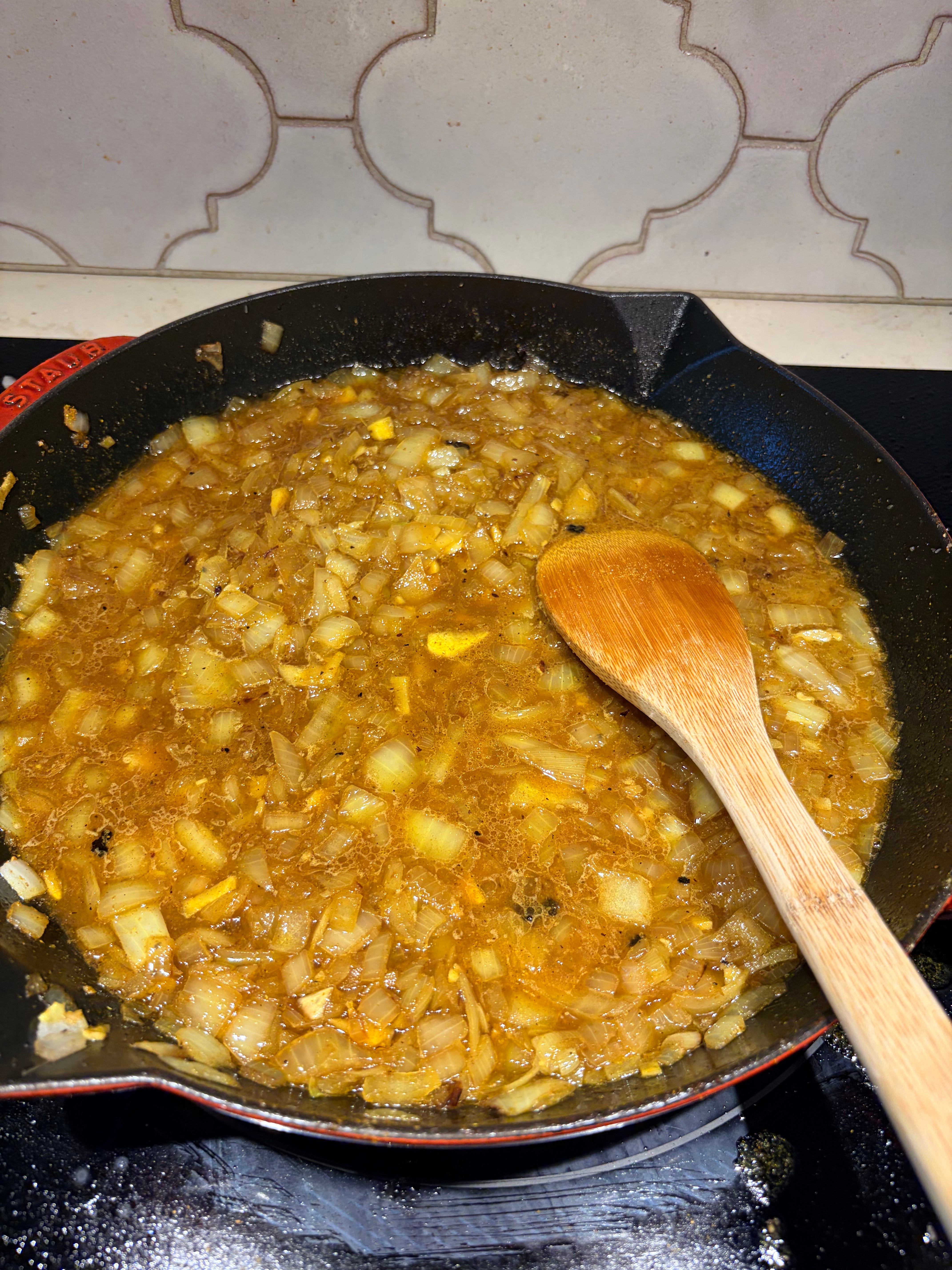
Carrots went into the warmed tagine.
Chicken nestled on top.
Liquid poured around, not over.

Lid on.
325°F.
Two hours.
The result:
Fall-off-the-bone tender meat
Carrots soft but intact and they soaked up all those spices and are delicious.
Sauce glossy, not soupy
Preserved lemon bright but integrated
Finished with sumac, za’atar, fresh herbs, and olive oil.
It wasn’t “diet chicken.”
It was layered, structured, and deeply satisfying.
The Recipe
Preserved Lemon & Apricot Chicken Tagine
Serves 4 generously
Ingredients
12 chicken drumsticks
4 large carrots, thick diagonal chunks
1 large onion, diced
1½ tsp kosher salt (I don’t measure it, I just sprinkle)
1 tsp black pepper (just grind it baby)
1½ tsp cumin
1½ tsp coriander
¾ tsp turmeric
½ tsp cinnamon (optional)
2 tbsp olive oil
¾–1 cup chicken stock
1½ tbsp finely chopped preserved lemon rind
8–10 dried apricots
3 cloves of garlic sliced
1 inch of ginger root, dice it
Finish
1–2 tsp sumac
1–2 tsp za’atar
Fresh herbs
Olive oil drizzle
Method
Warm tagine in cold oven set to 325°F. Meaning - set the tagine in the oven, then turn the oven to 325 degrees.
Season (just salt and pepper) and brown drumsticks in batches. You do not want to cook them through but you do want them to be browned to get that nice fond.
Sauté onion in same pan, scraping up fond. The onions release water and then you can scrape up the fond and incorporate it.
Add garlic and ginger, stir for a few seconds then. Just enough to smell it then
Add the spices to the onion. This forms a nice sticky bit of onion and wonderful smells. Once you have that then add the stock- here is a trick, if you don’t have stock, just add water - its ok. But you want to add it before the spices burn.
Add stock, preserved lemon, and apricots. For the lemon, I use a spoon to remove the fruit. What you want is the lemon peel -where the essential oils are.
Layer carrots in tagine, place chicken on top, pour liquid around.
Lid on, 325°F for 2–2½ hours.
Rest 15 minutes. Finish with sumac, za’atar, herbs, olive oil.
No rushing.
No stirring every five minutes.
Let physics work.
🔒 Collagen Physics & Why the Tagine Is Special
Now let’s talk about what’s actually happening inside that cone.
This isn’t nostalgia.
It’s protein chemistry. Ok, I am a nerd in the kitchen, and everywhere else.
