


COVID and Denial
The pandemic did not end when the ventilators quieted. It simply moved online.
What began as a novel virus became a second contagion — denial. From “it’s just the flu” to “the hospitals were empty” to “the vaccines did nothing,” the arguments evolved even as the evidence accumulated. A biological event became a rhetorical war. And long after the oxygen lines were dismantled and the surge wards closed, the fight continued — not over policy, but over memory itself.
There is something uniquely cruel about telling the people who stood in those wards that the fire never burned.
It is not skepticism.
It is erasure.
In the last few days on X (formerly Twitter) I have been seeing the people who were once COVID deniers (some still are) and are now moving to Anti-vax types arguing with me about what happened during COVID.
And Some of Us Are Still Smelling the Smoke
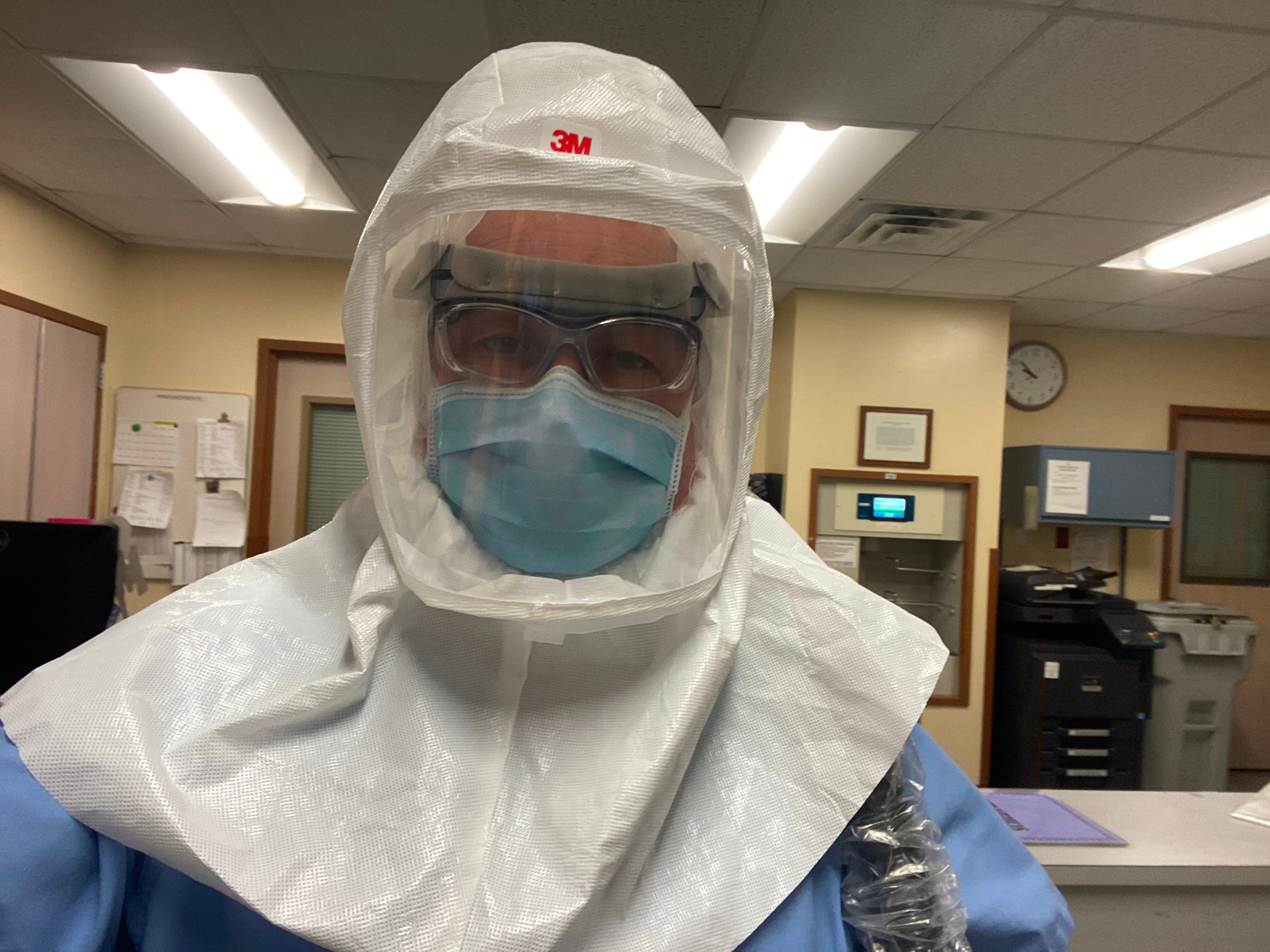
There is a particular cruelty in being told that what you lived through did not happen.
During the worst waves of COVID, I worked in two hospitals. In one, we reopened an older, previously closed facility to accommodate the surge. Beds were added. Oxygen lines were extended. Staffing was stretched beyond anything I had seen in my career.
That was not theater. It was capacity management during a respiratory disaster.
Years later, people circulate videos of someone wandering through a shuttered hospital in Chicago — a building long decommissioned — and declare it proof that hospitals were “empty.”
An abandoned structure proves only one thing: the building was abandoned.
It does not negate:
ICU occupancy data
State-reported bed utilization
Oxygen consumption spikes
Excess mortality curves
Surge expansion protocols
Major Chicago institutions such as my alma mater, The University of Chicago or Rush University Medical Center and Northwestern Memorial Hospital publicly reported surge strain during peak waves, consistent with statewide reporting from the Illinois Department of Public Health.
Hospitals are ecosystems. When elective surgeries were canceled, OR schedules collapsed. PACUs emptied. Outpatient clinics paused. Some nurses took PTO. Some were furloughed. Revenue plummeted.
At the same time, ICUs in hotspot regions were running continuously.
Both realities can exist simultaneously.
The mistake — or the manipulation — is presenting a quiet surgical floor as evidence that no surge occurred.
The Workforce That Did Not Come Back
After the acute waves passed, something else happened.
Healthcare workers left.
Nurses moved to outpatient clinics.
Respiratory therapists transitioned to non-hospital roles.
Some left medicine entirely.
Hospitals across the country later offered substantial sign-on bonuses to bring experienced bedside nurses back.
Many declined.
Burnout does not come from boredom.
It comes from sustained exposure to suffering.
During 2021–2023, workforce surveys documented elevated rates of anxiety, depression, and intent-to-leave among frontline clinicians. The moral injury of prolonged crisis care does not evaporate when case counts fall.
If hospitals had truly been “empty,” there would not have been a nationwide staffing crisis in acute care that followed.
The labor market tells the story.
“Dancing Nurses”
The dancing nurse videos are frequently used as rhetorical ammunition.
They prove nothing.
During surges, visitor restrictions made hospitals visually quiet in hallways. Staff recorded brief morale clips during breaks. A 30-second video does not erase weeks of ventilator management.
When you have spent hours watching oxygen saturations fall despite maximal support — when you have held phones for final goodbyes — a moment of levity is not denial.
It is coping.
Humans require oxygen. So do souls.
The Trauma Reopened
Every time someone claims:
“Hospitals were empty.”
“It was just flu.”
“Doctors lied for money.”
Those who worked those wards relive it.
Excess mortality data reported by the Centers for Disease Control and Prevention and independently analyzed by academic institutions, including Johns Hopkins University documented historic death surges during pandemic waves.
Excess deaths do not arise from choreography.
They do not appear because a nurse made a TikTok.
They do not manifest because someone filmed an empty lobby in a closed hospital.
They arise because people died in numbers beyond seasonal norms.
The Part That Needs Saying
There is something uniquely indecent about telling a firefighter there was no fire.
About telling a combat medic there was no battlefield.
About telling ICU nurses that the wards were “empty” because someone filmed a quiet lobby in a decommissioned building.
Excess deaths were real.
Ventilators were real.
Reopened wards were real.
The attrition of the workforce was real.
What is unreal is the fantasy that millions of clinicians across political parties, hospital systems, states, and countries simultaneously hallucinated the same catastrophe.
The people who say “it wasn’t that bad” were not there at 3 a.m. adjusting oxygen for the fourth crashing patient of the shift.
And every time the denial resurfaces, so does the memory.
You are free to dislike public health policy.
You are not free to rewrite the lived experience of those who bore the cost.
History will not remember the TikTok clips.
It will remember the mortality curve.
🔒 Subscriber Section: The Receipts
For those who want data rather than rhetoric:
