
“Didn’t know how serious it was when me and all my friends had the measles as kids! Cheated death I guess 😒… this guy is why I don’t trust Western doctors anymore.”
That single comment, under a post about measles, says everything about how we make bad decisions.
We remember our own story. We ignore everyone else’s.
The Problem: When Memory Replaces Math
Our brains aren’t wired for large numbers. We evolved to understand a village, not a country. So when someone says “the measles vaccine saves hundreds of thousands of lives each year,” it doesn’t feel real. But when a neighbor says, “I had measles and I was fine,” that feels true — because it’s vivid, personal, and close.
That’s how anecdotes become data in people’s minds. It’s why so many believe measles isn’t dangerous — because they survived it. They forget that before vaccination, hundreds of American children died every year, and thousands more were hospitalized. Once the disease disappeared, so did the memory of what it could do.
The COVID Parallel
We saw the same psychology during COVID.
Hospitals were overwhelmed. Millions died. But if someone’s own infection was mild, that became their truth: “It’s just a cold.”
The inability to see beyond personal experience blinds us to scale. A 1% fatality rate doesn’t sound large — until you realize that in a population of 330 million, that’s 3.3 million lives. Numbers that size are hard to imagine, so we stop trying. We see what’s in front of us and call it reality.
Overreacting to the Rare, Ignoring the Common
Ironically, the same minds that dismiss millions of deaths will demand sweeping reform after a single plane crash. And that’s not wrong — aviation learns from tragedy. One crash leads to a redesign, a new checklist, and policies that prevent the next disaster.
That’s how safety works: small numbers teaching big lessons.
But in health, we do the opposite.
We dismiss the large numbers because we can’t see them — and treat small personal anecdotes as if they’re universal truth.
The Success Paradox
The success of vaccines has made us forget the horror of illness.
We don’t see children in iron lungs from polio anymore, or a president who couldn’t walk because of it. We don’t walk through cemeteries and see row after row of children lost to diphtheria, measles, or whooping cough.
Today, people credit longer lives and smaller families to “better hygiene” or “clean water” — and those help — but it was vaccination that broke the cycle of constant child funerals.
Public health succeeded so completely that people now doubt they ever needed it. They mistake the absence of disease for proof that disease is harmless.
Science Is Complex — and That’s Hard for Stories
Science is never without risk. Every intervention carries one.
Yes, a few people develop myocarditis after an mRNA vaccine — but ten times as many develop myocarditis from COVID itself.
The problem isn’t that risk exists; it’s that complexity doesn’t make a good story.
“Ten times more myocarditis from the virus than the vaccine,” loses to “My cousin’s friend got sick after a shot.”
Most people don’t understand immunology, probabilities, or denominators. They understand a story — and the more emotional the story, the faster it spreads. By the time facts arrive, the story has already gone viral.
When the Story Becomes the Agenda
And then there are those who exploit this human weakness.
They don’t just misunderstand data — they manipulate it.
They cherry-pick, exaggerate, or fabricate.
Remember the so-called “Stanford study” that was distorted to claim that mRNA vaccines caused widespread myocarditis? It didn’t. But that didn’t stop it from being shared millions of times. Each repost is framed as “the truth they don’t want you to know.” By the way, the Stanford study gave a mechanism of how myocarditis can form from viral protein, and you get the most viral proteins from a COVID-19 infection, not from a vaccine. And the myocarditis we saw in young men after the vaccine, we didn’t ignore it. We reported it. We have studied it. We followed every case and know what happened to them.
Or the ghoulish ritual after every young athlete’s sudden death — the immediate question: “Did they get the jab?” — as if correlation and causation are the same thing, as if curiosity were evidence.
Those with an agenda don’t add data; they add drama. They turn isolated anecdotes into “patterns” and declare emergencies that don’t exist.
They demand “action” based on emotion — while ignoring the actual numbers that contradict their beliefs.
It’s not skepticism. It’s storytelling in service of ideology.
And the tragedy is that once trust is broken, even honest data looks suspect.
That’s how science loses to narrative — not because the data failed, but because the story won.
When Feelings Write Policy
This is where emotion overtakes evidence:
A person reacts badly to a vaccine → the vaccine must be dangerous.
A neighbor “had measles and was fine” → the disease must be harmless.
A friend’s COVID case was mild → “the pandemic was overblown.”
Each feels true. None are statistically true.
And yet policies — from vaccine rollbacks to public health cuts — are built on these feelings.
That’s how we end up replacing epidemiology with opinion.
It’s not malice — it’s math blindness amplified by manipulation.
The Real Lesson
We’ve built safety into aviation, engineering, and traffic design by trusting data over dogma — by letting numbers, not narratives, guide reform. We didn’t make airplanes safer, because one pilot said, “It worked for me.” We made them safer, because every crash was studied, every variable analyzed, and every lesson institutionalized.
That’s what public health must do — and what too many forget.
Every vaccine, every mask, every preventive measure comes from that same philosophy: study the failures, protect the next generation.
When we forget that, stories replace statistics — and preventable deaths return.
Reader Takeaway:
When stories beat statistics, people die. When data guides policy, people live.
📖 Further Reading — Training the Brain to Beat the Bias
These are three books I recommend to help you train your brain. From the Nobel winning Daniel Kahneman, who revolutionized this field, to denser work about statistics in general. If you want to understand why stories beat statistics and how you can train your brain to see through them, start with these:
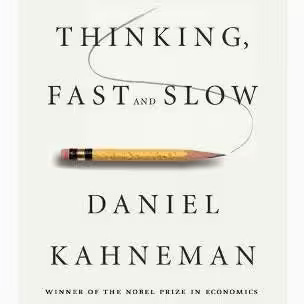
Thinking, Fast and Slow — Daniel Kahneman
The foundational guide to how our “fast” emotional brain and “slow” analytical brain constantly collide. It explains why what feels true so often isn’t.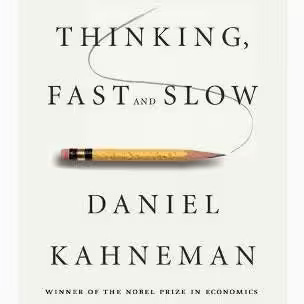
The Undoing Project — Michael Lewis
A brilliant narrative of Kahneman and Tversky’s partnership — showing how friendship, argument, and curiosity reshaped the science of judgment.The Art of Statistics — David Spiegelhalter
A masterclass in seeing through misinformation — how to read risk, interpret evidence, and stay rational in a world run by headlines