


Good morning.
As I write this, I am drinking a cup of Nespresso Stormio. For years, my morning coffee was Peet’s Major Dickason’s Blend. It still shows up regularly in the rotation, but this morning the Nespresso machine won the argument.
The coffee is black, of course.
Partly because I like it that way, and partly because after spending thirty years helping people lose weight, I learned that if you put enough cream and sugar into coffee, eventually it becomes a milkshake with a caffeine problem.
This week brought one of the stranger collections of medical stories I have seen in a while.
A flesh-eating fly has returned to Texas for the first time since Lyndon Johnson was in the White House. GLP-1 medications continue to rack up benefits that nobody predicted when they were developed for diabetes. Researchers are questioning whether BMI is missing millions of people with obesity. Ebola remains in the headlines. A new COVID prevention drug has arrived. And pancreatic cancer patients may finally have reason for optimism.
Let’s get into it.
This Week in Obesity Medicine
When GLP-1 medications first appeared, many people dismissed them as weight-loss drugs.
That description becomes less accurate every month.
A new study found that patients taking GLP-1 medications were less likely to require knee replacement surgery. The simple explanation is weight loss. Less weight means less force crossing the knee joint every time you walk.
However, obesity is not simply extra weight.
Fat tissue is biologically active. It releases inflammatory molecules that affect blood vessels, joints, the liver, and nearly every organ system. Reducing that inflammation may help protect the knee as much as reducing body weight.
Do you know what else is anti-inflammatory and helps people with “bone on bone” osteoarthritis? Walking. We used to think that people with osteoarthritis of the knee should not walk, use non-weight bearing exercise. We were wrong. That is the beauty of science and medicine - we learn new things and move forward. Turns out people with bone-on-bone arthritis who walk keep their own knees a few years longer than those who don’t.
Another study followed more than 111,000 women and found that GLP-1 users had a significantly lower risk of breast cancer. By one third!
Before anyone starts claiming GLP-1 medications cure cancer, take a breath.
This was an observational study, not a randomized trial. Yet the finding makes biological sense. Obesity increases inflammation, insulin resistance, and estrogen production. All three are associated with increased breast cancer risk. When you improve those factors, risk may fall.
The larger story is becoming difficult to ignore.
Every month, we discover another disease influenced by excess adipose tissue.
Obesity may not be the final domino.
It increasingly looks like the first one.
Maybe BMI Isn’t Telling the Whole Story
One of the most interesting studies this week received far less attention than it deserved.
Researchers applied the new Lancet Commission definition of clinical obesity to Americans across multiple BMI categories.
The surprise?
More than one-quarter of adults with a “normal” BMI met criteria for clinical obesity. Read that sentence again.
According to BMI, these individuals were not obese. They were obese according to body fat distribution, metabolic dysfunction, organ impairment, and health consequences.
As surgeons, we have seen this for years. Two patients can be the same height and weight. One has a healthy liver, normal blood pressure, excellent glucose control, and good muscle mass.
The other has fatty liver disease, sleep apnea, insulin resistance, and visceral fat packed around the abdominal organs.
BMI sees twins. Biology sees strangers.
I suspect we will spend the next decade redefining obesity based less on weight and more on function. And if you have a scale that measures fat and muscle mass, that helps even more.
Viral Update
The disease making the biggest headlines is Ebola.
The disease that worries me most is measles.
The Bundibugyo strain of Ebola continues to spread in Central Africa. Public health officials are responding aggressively, and the risk to Americans remains extremely low. What is interesting is now we are getting solid numbers, meaning we have laboratory confirmation. So to some, it might appear Ebola has fewer cases than originally reported. While we have confirmed 86 deaths from Ebola, the number is likely double that. Remember, many were buried without a laboratory diagnosis, but a clinical diagnosis, and those are not being counted. Just like now, we have fewer cases of “confirmed” Ebola, but we have many cases that were not confirmed. In the Congo, it takes four days to get blood to a lab for testing, and many clinics don’t have the ability to get a test and send it off.
Meanwhile, the hantavirus continues to make occasional appearances in the United States and remains under surveillance following the cruise-related cases that received attention last month. In the US it is not person-to-person transmission but comes from mouse droppings. This is seen in New Mexico, Arizona, and California. If you live in these areas and see mouse droppings please don’t clean them up with a dust buster. To clean mouse droppings safely in a potential hantavirus area, your main goal is to avoid stirring up dust. NEVER sweep or vacuum dry droppings. Instead, soak the area thoroughly with a bleach solution (1.5 cups of bleach per gallon of water) and wipe everything up while wearing protective gloves. In the paid section, I go into detail about how to clean mouse droppings in a Hanta virus infected area (Arizona, New Mexico, and California)
However, when I look toward the coming months, I keep coming back to three familiar viruses.
Measles.
Influenza.
COVID.
The upcoming World Cup will bring millions of international travelers together. Southern Hemisphere flu season is already underway. Measles outbreaks continue to appear anywhere vaccination rates fall. COVID remains with us, even if most people would rather stop talking about it.
Sometimes the biggest infectious disease threat is not the exotic virus making headlines.
It is the familiar virus we stopped worrying about.
The Flesh-Eating Fly Returns
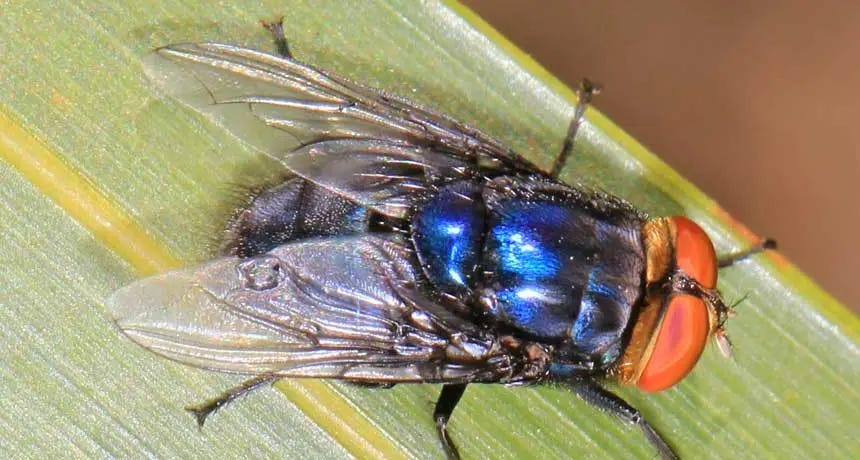
There are few creatures whose name sounds like the nightmare they are.
Screwworm is one of them.
Texas recently reported its first cases since 1966. Screwworm is not actually a worm. It is a fly. Unfortunately, it is a fly with terrible parenting skills.
A female lays hundreds of eggs into an open wound. When the larvae hatch, they do something unusual.
Most maggots feed on dead tissue. Screwworm larvae feed on living tissue.
Cattle are the most obvious victims, which is why ranchers pay close attention. However, the fly does not care whether the victim has hooves, paws, or opposable thumbs.
Dogs can be infected. Cats can be infected. Wildlife can be infected. And if you haven’t figured this out, humans can be infected. Yes, photos in the paid section.
The United States eradicated screwworm in 1966 using one of the most successful biological control programs in history.
Now it is back.
And if you think that sounds like the opening scene of a horror movie, you’re not wrong.
Drug Watch
The FDA approved ensitrelvir, marketed as Xocova, for prevention of COVID following exposure.
Think of it as the next step beyond treatment. Instead of waiting until someone becomes sick, the goal is to prevent illness after a household exposure.
The medication reduced the risk of developing COVID by more than half in clinical trials. This may prove especially useful in nursing homes, assisted living facilities, and households caring for vulnerable family members.
Another encouraging COVID story involved MIS-C, the inflammatory syndrome that frightened parents during the pandemic. Cases continue to decline.
The most striking finding was that nearly eighty percent of cases occurred in vaccine-eligible children who had not been vaccinated. All four deaths reported during the study period occurred among unvaccinated children.
The lesson is not political. It is biological. Immunity works and that is how the vaccine works.
Pancreatic Cancer Finally Gets Good News
For decades, pancreatic cancer has been one of the most frustrating diseases in medicine. I operated on my fair share of pancreatic cancer cases and often we would see no evidence of spread when we looked at a CAT scan or MRI, and then we would open the patient and find it was spread throughout the abdomen.
Patients often present late. Treatments frequently disappoint. Outcomes remain poor.
That is why a study presented this week generated so much excitement.
An experimental medication called daraxonrasib doubled survival among patients with previously treated metastatic pancreatic cancer.
Researchers have spent decades trying to target KRAS mutations. Many scientists referred to KRAS as “undruggable.”
Medicine has a habit of making fools of anyone who uses the word “never.”
This may be one of the most important cancer stories of the year.
Paid Subscriber Section
Today in the paid section:
Photos of screwworm infections and what pet owners should know
Why veterinarians are taking the Texas cases seriously
The astonishing story of the sterile-fly program that eradicated screwworm in America
Why the new obesity definition may change medicine more than most people realize
What the pancreatic cancer breakthrough tells us about the future of cancer treatment
Why I believe GLP-1 medications follow the same path statins did thirty years ago
Paid subscribers make this work possible. Thank you for supporting independent medical journalism and helping me make sense of the madness, bust a few myths, and teach a little medicine along the way.
