


The Future Soup Drawer
Everyone seems worried about Cyclospora. Or E. coli. And a month ago I had norovirus - oh what a great week to be stuck in a hotel room. Then again, maybe what people are worried about is the explosive diarrhea that comes with them.
I’ve spent the past few weeks reading comments from people who suddenly don’t trust vegetables anymore. They’re wondering whether it’s still safe to shop at the farmers market. The answer is usually yes—with one important caveat. Many farmers market vendors are exactly that: farmers. Others, however, are simply reselling produce from the same distributors that supply large grocery chains. So “farmers market” isn’t automatically a guarantee of where the produce came from.
Then there are the home gardeners. Relax. Your tomatoes are still your tomatoes. Your basil is still your basil. Most of you use city water, which is safe to water your garden.
But all this anxiety reminded me that our ancestors figured out an answer to this problem thousands of years ago. They made soup.
Imagine it. A little fire. A pot of water. Whatever vegetables they could gather. Some tubers. Wild onions. Maybe a little garlic mustard. A few herbs. Perhaps the leftover deer the lions graciously decided not to finish. Into the pot it all went. Ah garlic-mustard - something to saute with the onions to build great flavor with a potato soup, or fish chowder. Ah, garlic mustard. Today, we think of it as an invasive weed. Put it in a potato soup or a fish chowder, and suddenly you've forgiven it for invading the neighborhood.
Why did they make soup? Why throw everything together into a pot, add water and heat it? What magic is this? At first, they probably did it because it stretched the meal. For most of human history, Homo sapiens lived one bad season away from hunger. Stretching food wasn’t clever—it was survival.
I suspect they also discovered something by accident. The old deer that was too tough to chew suddenly wasn't. Those roots that tasted like chewing on a stick became soft. Yesterday's leftovers became tomorrow's dinner. Soup didn't just stretch food—it rescued food.
That wasn’t magic. It wasn’t a witch standing over a cauldron. It was transformation. Heat changed proteins. Vegetables softened. Flavors blended together. Just as importantly, many of the bacteria, parasites, and viruses that wanted to eat us more than we wanted to eat them were left behind.
Soup wasn’t just comfort food. It was one of humanity’s first public health interventions.
It may also have been one of humanity's first community meals. It's hard to eat soup by yourself around a campfire. A pot naturally gathers people.
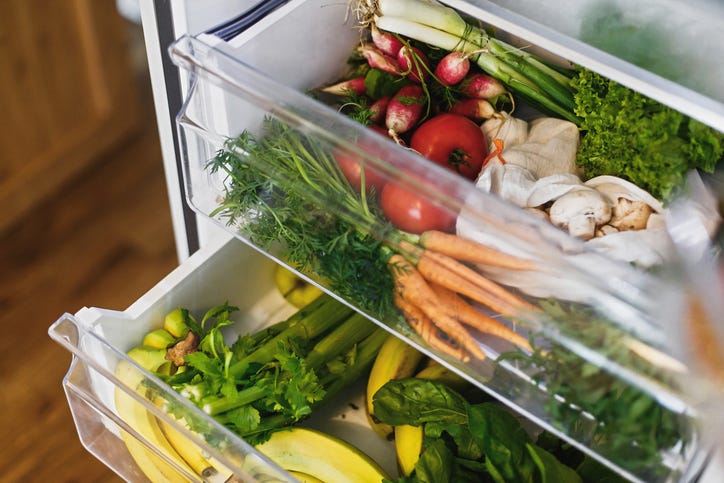
Which brings me back to that refrigerator drawer. You’ve got parsley that’s looking a little tired. Cilantro that’s lost its enthusiasm for life. Celery that’s flopped over like it just watched one too many Viagra commercials. The spinach has wilted. The carrots are beginning to wonder whether anyone still loves them.
Don’t throw them away.
Pour a little olive oil into a pot. Dice an onion. Let it soften. Add garlic, herbs and spices. Pour in some water or broth. Chop up those vegetables and let them join the party. Then bring it all to a boil.
The heat does something remarkable. It destroys organisms like Cyclospora, kills disease-causing bacteria, softens vegetables, releases flavors, and transforms ingredients that looked destined for the compost into tomorrow’s lunch.
That’s the thing about soup. It doesn’t ask for perfect vegetables. It rewards imperfect ones.
Maybe that’s why every civilization eventually invented it. Long before anyone understood microbiology, proteins, antioxidants, or fiber, people noticed something simple. Food that spent time in a pot over a fire tasted better, made people sick less often, and somehow turned a handful of leftovers into a meal worth sharing.
Thousands of years later, we’ve given those ideas impressive scientific names. Our grandparents just called it soup. It nourished generations before Pasteur, Koch, or anyone else had ever seen a bacterium through a microscope.
Soup provided hydration and electrolytes long before they were sold by the shirtless salesmen of supplements and scams.
Oh, and those people who say bone broth is good - well, make soup, much better than bone broth, less expensive. Ever notice most bone broth tastes like someone overcooked the meat and is selling us bad broth? Don't misunderstand me. A properly made stock is one of the foundations of good cooking. In fact, one of the greatest soups in the world is consommé, where French chefs use egg whites to clarify a stock until it's crystal clear. That's culinary science at its best. My problem isn't with stock. My problem is paying twelve dollars for a cup of something that tastes like someone forgot to season the soup.
And here’s one more thing about soup. It ages well. The next day it will taste better. One of the best examples came after dinner at the Ritz in London. I couldn’t finish the soup, so I took it back to my room at the Shard. The next afternoon, I heated it up for lunch.
It was better.
Not different.
Better.
That’s one of the remarkable things about soup. It spends the night improving itself.
Dr. Terry Simpson's Substack is a reader-supported publication. To receive new posts and support my work, consider becoming a free or paid subscriber.
