


We’re going to take 14,000 newborn babies in West Africa and put them into a lottery. Half get a vaccine at birth that prevents liver cancer. The other half has to wait six weeks. And in those six weeks, if they are exposed to one of the highest levels of hepatitis B in the world.
Why?
We will start with RFK Jr. and the anti-vaccine people he panders to. For years, he has objected to the infant dose of hepatitis B. He has claimed this vaccination leads to autism - it doesn’t. RFK Jr. also claimed it increases the risk of chronic diseases like autoimmune diseases - again, no evidence. And he has had friends, including researchers in Denmark, who agree with him.
Those researchers in Denmark were awarded a grant of $1.6 million of your tax dollars to test it.
The test is being done in West Africa, Guinea-Bissau, where hepatitis B is common. To be clear, when an infant becomes infected, there is a 90 percent chance they carry that virus for life.
Babies have a particular problem with this virus. While most healthy adults clear an acute hepatitis B infection about 88 percent of the time, the infant immune system cannot fight this virus off well.
That child may appear healthy for years, even decades, before developing cirrhosis or liver cancer.
The researchers want to know whether the hepatitis B vaccine has additional effects on health beyond preventing hepatitis B. Their entire field of study is other effects of vaccines.
To be clear, I have no objection to studying vaccine safety. We want to know not only short term effects, but long term effects. But there is one long term effect we know about with hepatitis B - chronic infection.
But why do this by assigning newborns to wait six weeks for a vaccine the WHO recommends within 24 hours of birth?
The researchers argue that six weeks is already the routine schedule in Guinea-Bissau. They’re not taking away a vaccine those children would otherwise receive. In fact, half the children in their trial would get a birth dose they wouldn’t ordinarily receive.
That’s their argument. Except Guinea-Bissau decided to join WHO recommendations for getting the vaccine the first day of life, as 115 other countries, including the United States.
Their logic is similar to finding we have an effective drug to treat something and it will come to market, and we know it will come to market, but we decide to investigate delaying that effective treatment just to see what happens. That is unethical.
The WHO has raised substantial objections to the study, including whether the additional scientific questions justify the risks. The researchers have modified their protocol to screen mothers for hepatitis B and exclude babies born to infected mothers. It shocks me they had to include that and such was not in the original proposal.
Here is the problem: maternal screening doesn’t eliminate household transmission, nor does it prevent a child from acquiring hepatitis B from someone else during those first six weeks. Like the caregivers of that child.
Caregivers were responsible for over half the transmission of hepatitis B to infants in the Alaska study. The auntie, grandmother, sister, cousin, or friend who will love and handle that infant, can transmit it. While adults transmission of hepatitis B is blood borne or sexually transmitted, infants immune system are undeveloped and transmission to them is far easier.
And the children who become chronically infected won’t necessarily show the consequences during the study. Liver cancer can develop twenty or thirty years later. By then the grant will be over and the researchers will have moved on.
The children won’t have.
How They Got the Money
If you’ve ever applied for a federal research grant, it is a multi-step process where lots of people examine your proposal. They then rank your ideas, your previous work, and score your proposal. If you reach above a certain score, your grant is funded.
This one didn’t go through an open competition. The Danish researchers submitted an unsolicited proposal to the CDC. Meaning the CDC didn’t ask for people to send in proposals, and they didn’t submit it through normal channels. According to the agency’s own Federal Register notice, the university received a single-source, noncompetitive award of $1.6 million over five years.
The CDC says it performed an objective review and determined that the proposal was meritorious. It is odd that the two people granted this proposal are from The University of South Denmark, in Denmark. Further, these research scientists have been highly praised by RFK Jr.
This, out of the box grant, given to a foreign university, happens when the NIH, under RFK Jr decision, terminated over 2000 grants. Many of those grants involved research of diseases that happens to Americans.
Let me introduce you to the researchers, Peter Aaby and Christine Stabell Benn. Their research focuses on the broader health effects of vaccines. Kennedy has praised their work, and Benn has participated in American discussions about hepatitis B vaccine policy.
Every drug, vaccine, and medical device undergoes initial phase 1-3 testing but continues ongoing vigilance. In this case, they are denying a vaccine that has proven ability to work and are testing it against - nothing. No provision to protect the child against hepatitis B.
Besides, there is a better way this can be done. But to do that let me tell you about Alaska and hepatitis B.
What About Alaska?
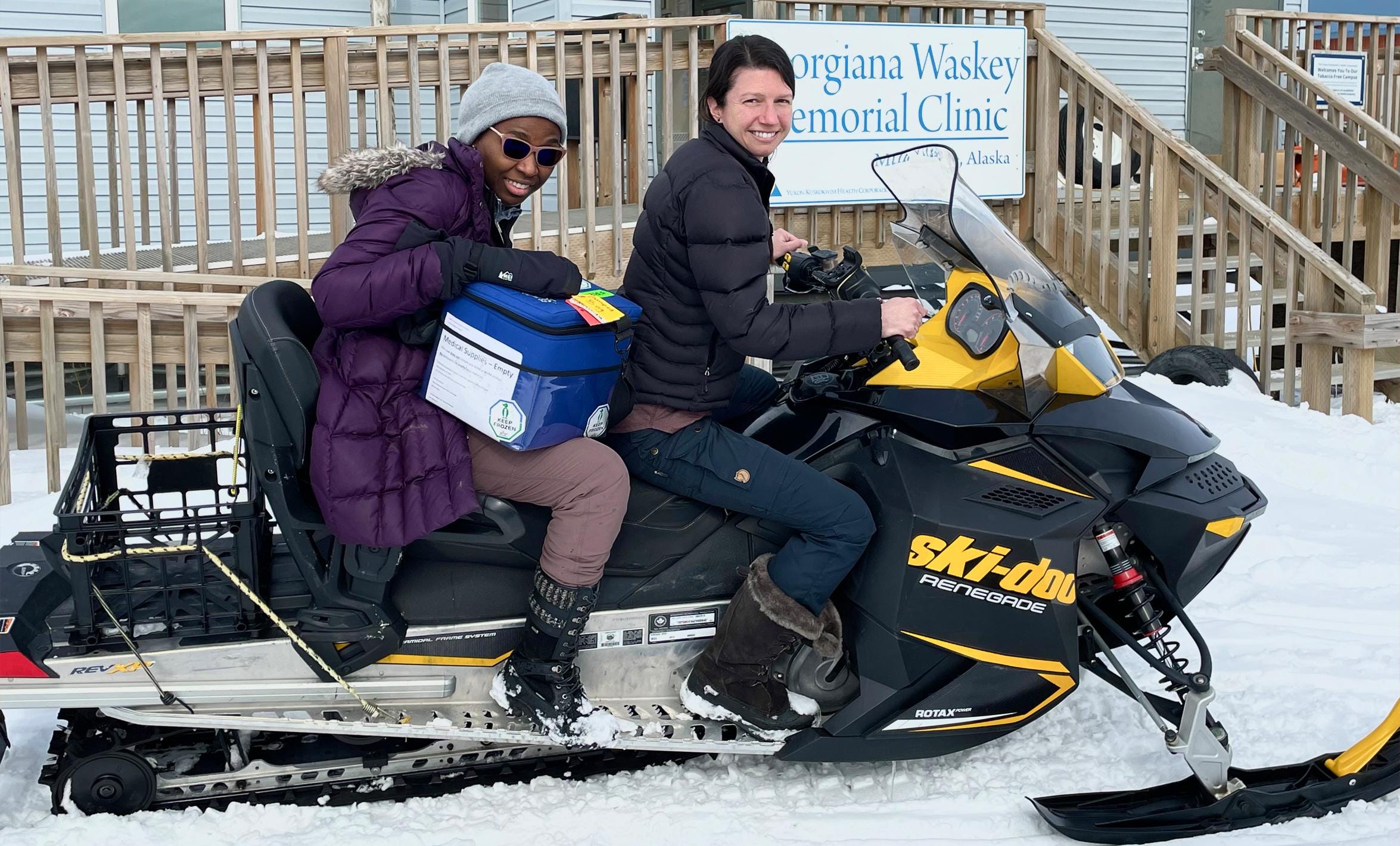
Hepatitis B outbreak in Alaska was discovered in 1973 during a medical study in remote Alaska Native villages.
Doctors went into two remote Alaskan Eskimo villages to figure out why so many people were getting sick with liver issues. They took blood samples from 418 residents and used a brand-new, highly sensitive lab test to look for the virus. The results shocked the medical world. They found over half the village (54.8%) had been infected with hepatitis B at some point in their lives. Even more concerning, 14% of the population were “active carriers,” meaning they were contagious.
We used to believe hepatitis B spread through blood transfusions, sex, or shared needles. These studies in Alaska showed that if one person in a house had the virus, almost everyone else in the house got infected too. The worrisome discovery that children could get the virus just from playing with things in the household. This is because the virus can live on surfaces (like toys, tables, or cups), little kids were accidentally passing it to one another while playing or sharing things.
Alaskan Emergency
The discovery of the epidemic of hepatitis B led to the CDC having a permanent outpost in Alaska. Cooperation between my Alaska Native community and the CDC led to the vaccination campaign and awareness.
Hepatitis B among Alaskans led to some of the highest rates of childhood liver cancer in the world. Children were acquiring hepatitis B, developing chronic infections, and sometimes dying from liver cancer before they had much chance to live.
In the early 1980s more than 53,000 Alaska Native people were screened, tens of thousands were vaccinated, and newborn vaccination became part of the program. But it didn’t stop there. We have continued to follow people who were screened and those who were vaccinated. This has been ongoing for more than 40 years.
The early results were spectacular, Hepatitis B infections declined dramatically. Childhood liver cancer nearly disappeared. A 2025 study reported no hepatocellular carcinoma among Alaska Native people aged 20 or younger since 1999 in the population under surveillance.
Another study examined people vaccinated in 1981 and 1982. Forty-one years later, approximately 91% still showed evidence of protection, and none of the participants with documented breakthrough infections developed chronic hepatitis B.
Those are extraordinary results, and they’re not based on a computer model or predictions. They’re what happened after we vaccinated an actual population and followed it for decades.
Our own CDC participated in documenting those outcomes.
Then There Are the Ethics
Suppose investigators came to us and proposed a study in a community with endemic hepatitis B. They wanted to assign newborns to receive a proven vaccine at birth or wait six weeks, in order to investigate possible unrelated effects of the vaccine.
Having served on both ethics committees and Institutional Review Boards such a study would not be approved in the United States.
Guinea-Bissau’s own health minister initially suspended the trial over ethical concerns. There are also questions about the longstanding relationships between the researchers and Guinea-Bissau’s public health establishment. Oddly, when that official had the appointment at the University of Southern Denmark the suspension was overturned. But I’d like to know what changed between the suspension and the approval, who reviewed the revised proposal, and how possible conflicts of interest were handled.
It is of no surprise that four members of the Danish university’s ethics committee reportedly resigned in protest.
The WHO’s has also protested the study, stating it was unethical. The reason is pretty straightforward. Withholding Proven Care: Hepatitis B is highly prevalent in Guinea-Bissau, affecting nearly 1 in 5 adults. The WHO strongly mandates a birth dose of the vaccine because it is up to 95% effective at preventing mother-to-child transmission. Denying it to 7,000 infants risks giving them lifelong, incurable chronic infections that lead to liver cancer and cirrhosis.
Violation of the Declaration of Helsinki: The researchers defended the trial by stating that Guinea-Bissau’s under-resourced local healthcare system doesn’t routinely offer the birth dose anyway (relying instead on a 6-week dose), meaning no child would get “worse care” than local standards. However, international bioethics rules state that human trials must provide the best proven global intervention, regardless of local poverty or resource shortages
And the fact that an intervention isn’t routinely available in a poor country doesn’t automatically make it ethical to withhold it in a research trial.
We have American taxpayer money, researchers from a wealthy European country, and newborn babies in West Africa bearing the risks. We should all find that arrangement deeply troubling. Would we approve the same experiment if these were newborns in the United States, or in Denmark?
Medical ethics don’t become less important because the research subjects live in a poorer country.
The children in Guinea-Bissau deserve nothing less than the best protection the world can afford them. Because long after RFK Jr leaves office, and the study is over, those infants who develop hepatitis B will be suffering the consequences.