

From the trial of Socrates to The Lion King, and perhaps the latest season of The Lincoln Lawyer, we return to the same story over and over. A respected figure becomes the embodiment of a society’s anger. A lifetime of work is reduced to a list of accusations. Complex events are distilled into a simple tale with a hero, a villain, and a satisfying ending.
Anthony Fauci has become that figure for our generation.
You probably only know Anthony Fauci as the quiet man standing behind the podium during the COVID pandemic. The bespectacled physician, who calmly explained why we were asking people to stay home, why hospitals were filling, why we needed to flatten the curve, and why scientists were racing to develop a vaccine. He was rarely the loudest voice in the room, but for months he became the public face of American medicine, trying to explain a frightening new virus while the world seemed to be coming apart.
If that’s all you know about Anthony Fauci, you know only the final chapter of a remarkable career. This is a bit more about him, and to discuss why some make him a villain in the story.
AIDS and the virus
When I began graduate work in virology, we didn’t even know what caused AIDS. Healthy young men died from infections we had previously seen only in profoundly immunocompromised patients. The idea that a retrovirus caused AIDS was still controversial, because there were no known human retroviruses. We weren’t arguing about treatments. We were still trying to identify the enemy.
By the time I entered medical school, the mystery had become heartbreak. I remember the married man with children whose diagnosis revealed a life he had hidden for years. While drawing his blood, I accidentally stuck myself with the needle.
Medicine and HIV
The HIV antibody test itself was new. We had no effective treatment. We didn't know the true risk of transmission after a needlestick. As best we understood it, I was only the ninth documented healthcare worker to sustain an occupational HIV needlestick exposure. Every few months, I returned for another blood test, wondering whether my own future had changed forever. Years later, a letter finally arrived telling me I no longer needed testing. I still remember the relief.
Fauci Rises
For most Americans, COVID is their first pandemic. Wall to wall coverage, from a little outbreak in China, carried to Italy, and then to the world. But back in the late 1970’s-80’s we had another one. And Fauci was there.
There was no cable news, no social media. My personal computer was a Radio Shack TRS-80, and my internet connection—when I eventually had one—was through CompuServe.
A new disease. Frightened patients. Frightened physicians. A medical community trying to understand a virus before it claimed even more lives. Young men wasted away from Pneumocystis pneumonia and Kaposi sarcoma. Families struggled to reconcile love with fear. Every week seemed to bring another discovery, another setback, another funeral.
A Deadly Disease without A Cure
Those of us who trained during that era remember what uncertainty feels like. We remember making decisions without complete answers, because waiting for certainty meant watching more patients die. Medicine wasn’t practiced from the comfort of hindsight. It was practiced one patient at a time, using the best evidence available that day.
Even as a surgical intern, one of my fellow interns came down with HIV. Later he almost died, but for an experimental treatment of AZT. He is alive today, some 30 plus years later, but he almost became a casualty of a disease that we didn’t know well.
A Service in Public Health
I also know something else.
Early in my career, I served as a physician in the Indian Health Service. I know what federal service looks like. It isn’t glamorous. Bureaucracy is real. Recognition is rare. When things go well, nobody notices. When something goes wrong, everyone suddenly knows your name.
I eventually chose a different path.
Anthony Fauci stayed.
For more than forty years he devoted his career to infectious diseases. HIV. Anthrax. SARS. Influenza. Ebola. COVID. Long before the public ever heard his name, physicians already knew it.
Every medical student did.
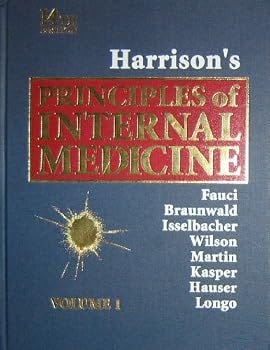
His name appeared on Harrison’s Principles of Internal Medicine. Harrison’s wasn’t simply another textbook. It was the textbook.
Long before America met Anthony Fauci at a White House podium, physicians had already spent decades learning from him—page by page.
Then COVID ARRIVED
Anthony Fauci didn’t suddenly become a different man.
America simply discovered the man physicians had known for decades. To most Americans, Anthony Fauci was born in 2020. To those of us in medicine, he'd already spent a lifetime preparing for that moment.
He spoke the same way he always had—carefully, probabilistically, acknowledging uncertainty, changing recommendations when better evidence emerged. That’s how scientists speak. It’s how physicians think.
It was a frightening time. The very breath of a person could kill you. Businesses were shut down, the world was told to shelter in place, masks were scarce, and distance was a proper Norwegian six feet.
As the pandemic wore on, another epidemic of misinformation spread alongside the virus. Social media rewarded certainty over evidence. Every revised recommendation became proof of deception. Every email became a smoking gun. Every government grant became a conspiracy. Every scientific debate became evidence of a cover-up. After spending hours caring for ICU patients with COVID, I would come home to find on social media that people said the hospitals were empty, and it was all a conspiracy.
Probably because Fauci was the face of science, information, and medicine, he became a villan. It didn't take long before social media accounts, podcasters, and political activists began accusing Fauci of creating COVID, funding Wuhan, and lying to Congress. Soon, the accusations took on a life of their own. Today many insist he belongs in prison.
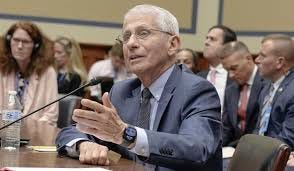
During the pandemic, Dr. Anthony Fauci appeared before Senate committees time and again. Senator Rand Paul repeatedly accused him of lying to Congress, funding dangerous research in Wuhan, and covering up the origins of COVID-19. Those exchanges became political theater, replayed endlessly on cable news and social media.
Senator Paul is not an uninformed commentator wandering into a field he doesn’t understand. He is a physician. He knows how scientific evidence is weighed. He knows the difference between a hypothesis and a conclusion, between association and causation, between a regulatory definition and a scientific one.
That should concern every physician, scientist, and citizen. Because we can tell you for certain, there will be another pandemic. But there is good news, because somewhere today, a young student decides whether to become a microbiologist, virologist, or infectious disease physician. They’ll spend decades studying diseases most of us hope never to encounter. They’ll work in government laboratories, universities, and public health agencies. They’ll prepare for disasters that may never come.
If our message to them is this—“Dedicate forty years of your life to public service, and if politics changes, we’ll rewrite your career as a conspiracy”—we shouldn’t be surprised when fewer choose that path.
Anthony Fauci doesn’t need my defense. But our future will need physician-scientists like him.
The paid section will go through the case against Fauci - answering those accusations.
