
Shredded Lettuce from a Single Farm

It was the shredded lettuce responsible for a major outbreak in five states, Michigan, Ohio, Illinois, Indiana, Kentucky, and West Virginia. It does not explain all the outbreak.
Why “One Source” Doesn’t Mean One Batch of Lettuce
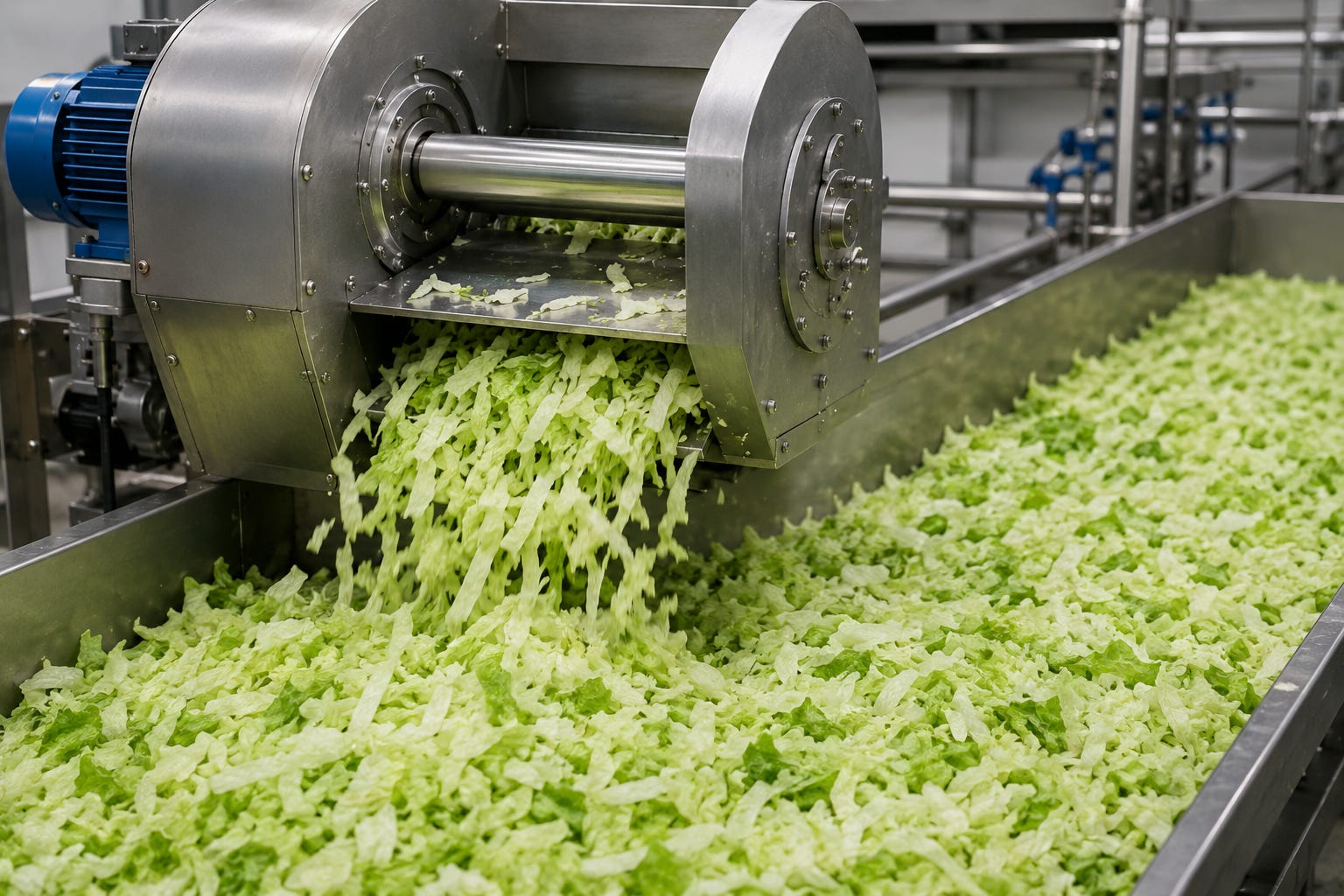
When investigators say they traced the outbreak to a single supplier, they are not saying there was one contaminated pallet or truckload of lettuce that went to one group of restaurants. Modern lettuce processing is far more complex than that. After harvest, lettuce from multiple fields and multiple deliveries is often washed, chopped, and blended together in large, highly automated processing lines capable of handling enormous volumes every hour. By the time shredded lettuce leaves the facility, each bag may contain leaves from many parts of the production stream.
That creates two important problems for epidemiologists.
First, contamination does not remain neatly confined to the original head of lettuce. If a small amount of lettuce carrying Cyclospora enters a processing line, fragments can become mixed with a much larger volume of otherwise clean lettuce. Although the contamination may be diluted, it is also dispersed over many more bags, boxes, restaurants, and ultimately customers.
Second, once the lettuce has been mixed together, reconstructing exactly where the contamination began becomes extraordinarily difficult. Investigators are no longer looking for a single bad head of lettuce. They are trying to unwind a manufacturing process that intentionally combines produce from many sources before distributing it across multiple states.
Cyclospora is like Glitter - it gets everywhere
Think of glitter at a birthday party. Open one small container, and before long it seems everywhere—on your shirt, your hands, the carpet, even places you don’t remember touching. The original source was tiny, but the act of mixing spreads it far beyond where it started. Contaminated shredded lettuce behaves much the same way. The processing line doesn’t create more parasites, but it can distribute a small amount of contamination across an enormous amount of product, making both the outbreak and the investigation far more complicated.
Taco Bell and Partnering with State and Federal Health Investigators
The biggest story this week wasn’t that federal investigators traced a major Cyclospora outbreak to shredded iceberg lettuce. It wasn’t even that the lettuce came from a single supplier in Mexico. The biggest story is that Taco Bell quietly removed lettuce from affected restaurants about a week before the FDA publicly announced its investigation results.
That should make you ask a question.
How did Taco Bell know?

The answer is probably not what many people imagine. There is no evidence of a cover-up, no whistleblower, and no secret laboratory that found parasites on a head of lettuce. Instead, the most likely explanation is also the most reassuring one: public health agencies and responsible companies often begin working together long before the public hears about an outbreak.
That partnership rarely makes headlines.
This week, the FDA announced investigators had traced one major cluster of Cyclospora infections to shredded iceberg lettuce served at Taco Bell restaurants in Indiana, Kentucky, Michigan, Ohio, and West Virginia. By following invoices, shipping records, distributor logs, and grower information backward through the food supply, investigators identified a single supplier in Mexico. Taco Bell had already removed lettuce from restaurants in those states before the public announcement, suggesting the company was acting on developing information, while investigators continued to confirm the source.
That is exactly how a healthy food safety system is supposed to work.
Public health is often portrayed as a battle between regulators and industry. Sometimes it is. We saw that recently during California’s raw milk outbreak, where the producer publicly resisted state and federal investigators instead of working alongside them. When companies refuse to cooperate, investigations become slower, recalls become more difficult, and consumers remain at risk longer than they should.
Most of the time, however, responsible companies behave differently.
Once epidemiologists begin narrowing an investigation, they frequently contact manufacturers, distributors, and restaurant chains before making any public announcement. The companies begin collecting invoices, identifying suppliers, reviewing distribution records, and, when appropriate, voluntarily removing products while the scientific investigation continues. The public usually sees only the press conference. The real work began days or even weeks earlier.
That brings us to the second story hidden inside this outbreak.
We found one outbreak. We probably did not find all of it.
The FDA has been remarkably careful with its language. Officials have described the Taco Bell illnesses as a subset of the national Cyclospora outbreak. That single word tells us something important. A subset is not the whole picture. It is one branch of a much larger investigation that continues today.
If you’ve ever assembled a thousand-piece jigsaw puzzle, you’ll recognize what happened this week. Finding one corner is exciting, because it finally tells you where to begin. It does not mean you’ve finished the puzzle.
Modern epidemiology works the same way.
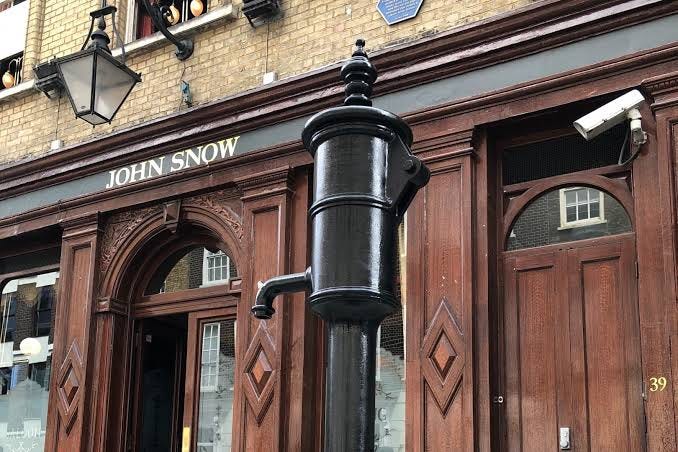
Most people know the story of John Snow and the Broad Street pump in London. By mapping cholera cases, he showed that contaminated water—not bad air—was responsible for one of history’s most famous epidemics. What is less often remembered is that not every cholera case fit his map. Some patients had never drawn water from the Broad Street pump. Snow had identified one important outbreak, but not every outbreak.
One hundred seventy years later, epidemiologists still ask the same question: Which cases belong together?
However, the tools have changed beyond recognition.
That part of this story is personal for me. Before I became a surgeon, I spent time in a virology laboratory studying herpes simplex virus. We performed restriction endonuclease mapping of viral DNA, cut DNA into fragments, separated those fragments on agarose gels, and compared the resulting patterns. It was painstaking work, but the question was beautifully simple: were two viruses related, or were they different? Long before the public heard the phrase DNA fingerprinting, molecular biology was already helping epidemiologists connect cases that looked alike—and separate those that only appeared connected.
The CDC now asks the same question of Cyclospora. Scientists cannot routinely sequence the parasite’s entire genome because it is difficult to culture, and stool samples often contain very little usable DNA. Instead, they examine multiple genetic markers that together create a molecular fingerprint. Those fingerprints are compared across patients. If many patients share closely related genetic signatures, investigators gain confidence that they belong to the same outbreak. If they do not, investigators may be looking at several outbreaks unfolding simultaneously.
That possibility is what makes this week’s announcement so interesting.
The headlines suggest the mystery has been solved. The science suggests the mystery has only become more precise.
In the paid section, I want to take you inside that investigation. We’ll go from John Snow’s hand-drawn maps of London to glowing DNA bands on agarose gels, and finally to the molecular fingerprinting techniques the CDC uses today. Along the way, you’ll see why epidemiology is still one of medicine’s greatest detective stories—and why the most important word in this week’s announcement may have been subset.
John Snow’s Greatest Discovery Wasn’t the Pump