


The Longevity Illusion: How VO₂max Became a Marketing Metric

You may have seen the recent 60 Minutes segment where Norah O’Donnell interviewed Peter Attia.
The interview aired before the Epstein files were opened, and it framed Attia as a leading figure in longevity medicine. After the Epstein files, that segment was pulled by the company.
That framing deserves scrutiny.
A leading figure in medicine is someone who produces research—clinical trials, laboratory work, or foundational methods that move a field forward. Attia does not do that. He does not run trials. He does not produce primary data. He does not publish original longevity research.
What he does—very effectively—is self-promotion.
And self-promotion matters, because it determines who gets airtime, who gets trusted, and who shapes how the public thinks about health.
Attia is good at positioning himself. He promoted himself into Stanford Medical School, and finished. Then he got into one of the best surgical residency programs. He has done so repeatedly—despite not finishing a surgical residency, despite drifting across multiple professional identities, and despite never anchoring his claims in a sustained body of original scientific work. He has nonetheless landed in a position where he functions as a “longevity doctor” for people who pay extraordinary sums for advice that often amounts to exercise testing, dietary guidance, and risk stratification—services widely available in mainstream medicine at a fraction of the cost.
When people overpay for something, they often conclude it must be valuable.
Whether his clientele emerged from his past social connections—including those now under scrutiny—is not something we can assess. That is a separate story.
Today’s story is narrower and more important.
The claim: VO₂max as the single most important longevity factor
In that interview, and more fully in his book Outlive, Attia makes one of his boldest claims:
Peak aerobic cardiorespiratory fitness, measured by VO₂ max, is perhaps the single most powerful marker for longevity.
He then goes further, citing large observational studies showing that people with low fitness have higher mortality—sometimes higher, he notes, than smokers.
This sounds devastatingly persuasive.
It is also where discipline in reading data matters.
VO₂max shows where you are, not what to do
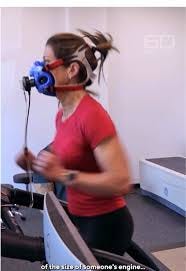
VO₂max is a surrogate marker. A very good one—but still a surrogate.
It reflects:
cumulative cardiovascular disease
pulmonary disease
muscle mass and mitochondrial function
anemia, renal disease, cancer
neurologic impairment
medication burden
lifetime illness and inactivity
In other words, VO₂max is a summary readout of how much damage and resilience your body has accumulated over time. It represents where you are right now. Not where you will be in a few years. It can predict if you are in poor health, the bottom fifth, you are more likely to die than if you are in good health. But somehow it sounds more fancy when we use the term VO₂max. That is why it predicts mortality so strongly.
But prediction is not intervention.
VO₂max tells you how you are right now.
It does not tell you what single action most reliably improves survival going forward.
When Attia compares low VO₂max to smoking, he makes a subtle but consequential error:
He treats a downstream marker as if it were a causal exposure.
Smoking causes disease.
Low fitness mostly reflects disease.
That distinction is foundational in epidemiology—and ignoring it leads to distorted priorities.
There is also a more practical reason why VO₂max gets elevated in these conversations, and it has little to do with biology. VO₂max is one of the few metrics that requires expensive, clinic-based equipment—a metabolic cart, a treadmill, staff, protocols. It looks technical. It feels exclusive. For clients paying a lot of money, it reinforces the sense that they are receiving something specialized and rare. The problem is that the “intervention” that follows is almost always the same: exercise more. You do not need a five-figure machine, a concierge clinic, or a maximal treadmill test to know that increasing physical activity improves fitness. The equipment adds theater, not necessity. That is where marketing quietly substitutes medicine—another example of how effective self-promotion can turn a useful marker into a centerpiece it was never meant to be.
We’ve seen this playbook before. A century ago, John R. Brinkley—the infamous “goat gland doctor”—did not convince patients by data or outcomes. He convinced them by environment. He built impressive clinics, staged procedures in gleaming operating rooms, surrounded himself with nurses and instruments, and wrapped his claims in the language of modern science. Patients paid extraordinary sums not because the treatment worked—it didn’t—but because it looked advanced, exclusive, and technical. The spectacle itself became the proof. The more elaborate the setup, the more people assumed they were witnessing the cutting edge of medicine. Today, the tools are different, and the measurements are real, but the psychology is unchanged: sophisticated machinery, complex testing, and ritualized assessment can still substitute for evidence of benefit. When presentation is allowed to stand in for outcomes, medicine drifts from care into performance—and history shows us how easily that performance can become a con.
Where diet and metabolism break the VO₂max narrative
This is where Attia’s framing becomes incomplete.
There are interventions that:
reduce heart attacks
reduce strokes
reduce cardiovascular and all-cause mortality
do so even without improving VO₂max
Three stand out clearly:
The Mediterranean diet
A defined dietary pattern, measured with validated adherence scores, repeatedly shown in randomized trials to reduce major cardiovascular events and death. It reduces the risk of developing cancer, and if you have developed cancer, it reduces the risk of its recurrence.
GLP-1 receptor agonists (when indicated)
Tested in massive outcome trials, showing reductions in major adverse cardiovascular events and mortality—even in people whose aerobic fitness does not meaningfully change.
These interventions work upstream of VO₂max:
on inflammation
on lipoproteins
on insulin resistance
on visceral fat and thrombosis
VO₂max reports the score.
Diet and metabolic therapy change the rules of the game.
Medications for heart disease
It is also worth remembering that several of the most effective longevity interventions are pharmacologic, not physiologic, and they reduce not only heart attacks and strokes, but also cancer outcomes. Statins are the clearest example. Across dozens of randomized trials and large meta-analyses, statins reduce myocardial infarction, ischemic stroke, and cardiovascular mortality, with benefits that accrue regardless of baseline fitness. More recent evidence suggests additional effects beyond atherosclerosis, including reductions in dementia risk and modest but consistent associations with lower incidence or improved outcomes in certain cancers—likely mediated through anti-inflammatory, plaque-stabilizing, and immunomodulatory mechanisms, rather than lipid lowering alone. Other drug classes, including antihypertensives and GLP-1 receptor agonists, similarly reduce hard outcomes—heart failure, stroke, cardiovascular death, and in some populations cancer-related endpoints—without requiring changes in VO₂max. None of these therapies make people “fit,” but they make them less likely to suffer catastrophic events. That distinction matters, and it highlights the core error in elevating a marker of current physiologic capacity over interventions that have repeatedly been shown to prevent the events that actually end lives.
Why this matters
When influential figures blur the line between marker and mechanism, audiences infer that:
fitness is the primary lever
diet is secondary
medication is cosmetic or optional
That is not what the evidence shows.
A disciplined reading of the data leads to a different hierarchy:
Use VO₂max to understand risk
Use diet and metabolic therapy to reduce it
Use exercise to preserve function and independence
Longevity is not built by worshipping a metric.
It is built by choosing interventions with proven outcomes.
