


Coffee and Civilization
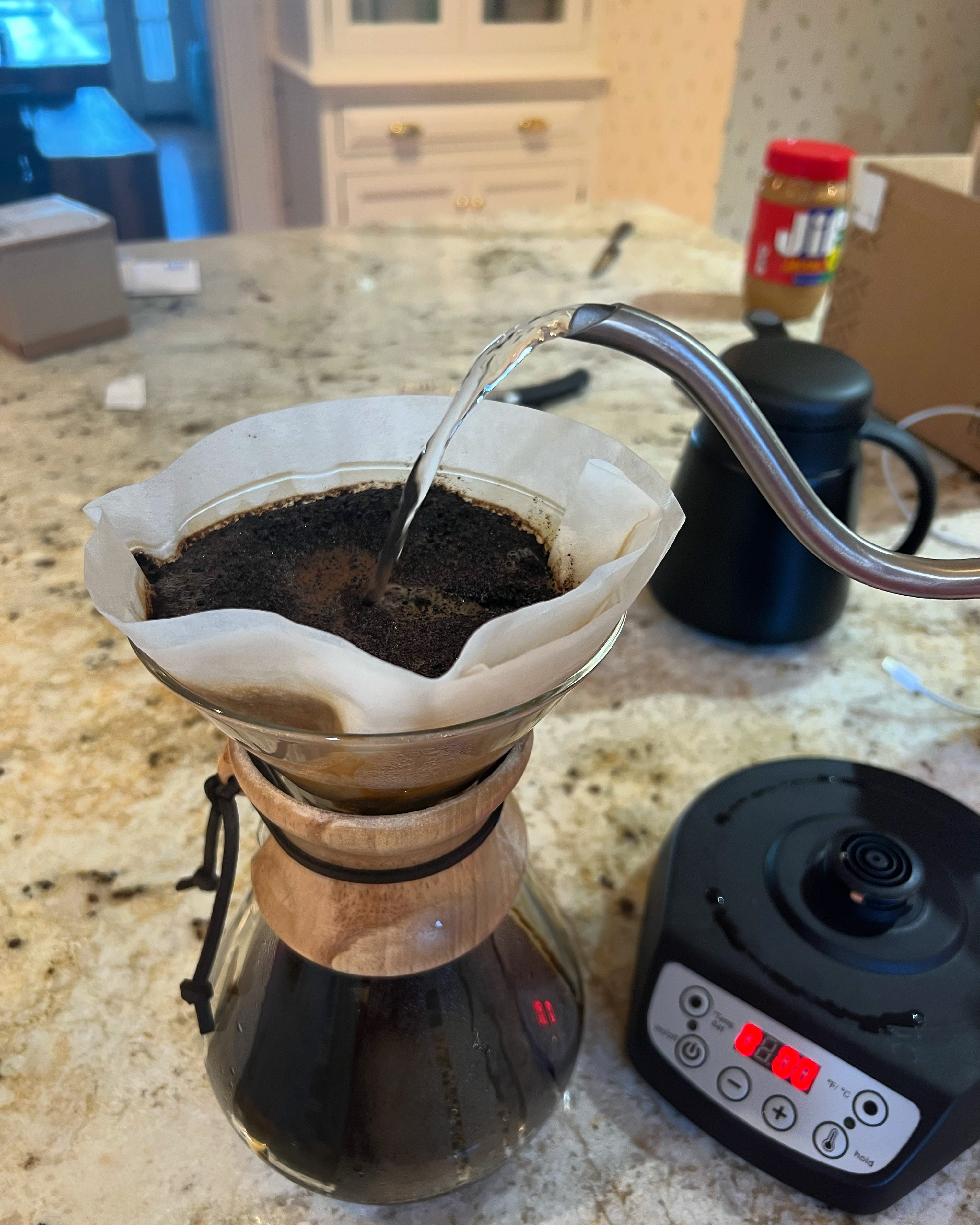
Coffee was once thought to be bad for the heart, and then we tested it. It turns out that coffee is good for your health. So much so that some elevated coffee “super food” status. Of course, that means the shirtless salesmen of supplements and scams will want to sell you some extract or put butter in the cup. Yes, seriously, if you wanted saturated fat in your coffee, use proper cream. But coffee is indeed good for many parts of you. But historically, coffee gave us not only a beverage to keep us up late, but also coffee houses.
In my podcast series, FORK U, I’ve had episodes about how bread gave civilization calories, beans gave it protein, olive oil gave it light. In the latest episode, coffee, the beverage that gave civilization somewhere to meet, and a reason/mechanism to stay awake.
Before the Coffeehouse: The Happy Goats
Legend has it that a goat herder named Kaldi noticed when his goats ate the coffee berries, the goats danced. Kaldi tried the coffee berry, and he felt more alert. It is a nice story.
Coffee originated somewhere in the Middle East, some say Ethiopia. My mom would say it began in Norway, then spread to Yemen, and perfected in the Ottoman empire. It was not perfected at Starbucks. Becoming not just a drink to keep awake for nighttime devotions, but providing a beverage around which people would gather and chat. Coffee became so important that a potential bride would have to make a satisfactory cup for her future in-laws. If she could make a good cup of coffee, the wedding would take place. Some traditions are worth bringing back.
The Coffee House
Want to foment a revolution - start a coffee house. No, not the type with WIFI where everyone sits in their cubby and watches a computer. But one where people talk, and not to mispronounce your name when they call your cup of “black coffee.”
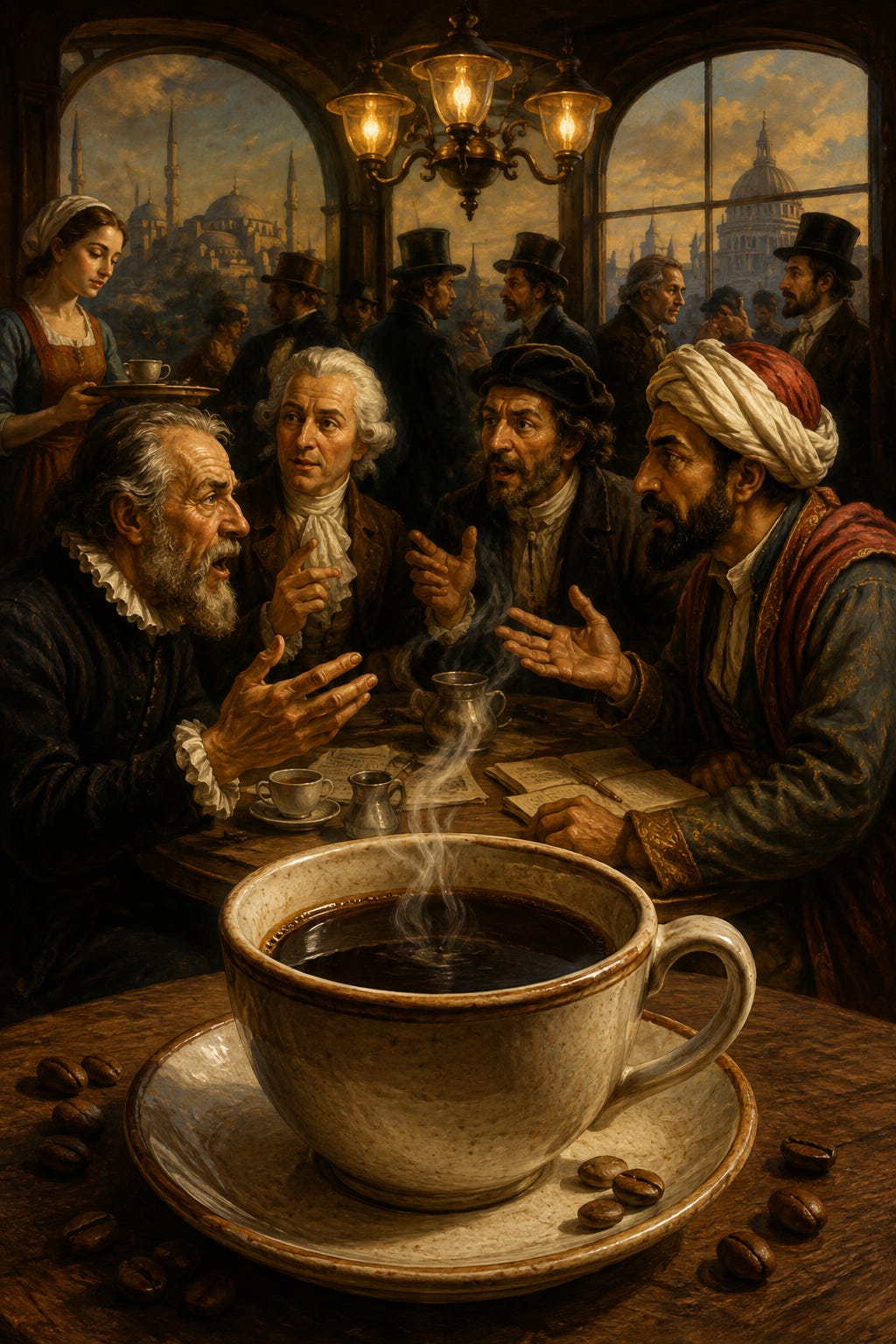
Coffee houses began in the Middle East, becoming public gatherings. On the occasion when ideas counter to governments were discussed. , various sultans, kings, and officials tried to ban them. Clearly, it didn’t work.
While many scholars no longer use the term “dark ages,” I define it as the western world before coffee. Once coffee came, we had a renaissance. Coincidence?
My favorite were the penny coffee houses, which started in Oxford and London. People would pay a penny, drink coffee, read newspapers and talk politics. They were sometimes called Penny Universities. Today, those university coffee houses exist, but we would call them 100,000 dollar coffee houses.
Before commercial real estate, people gathered in coffee houses to discuss everything from weather to shipping lanes. Edward Lloyd started one in 1686, near the docks, and provided information about ships, weather, pirates. Ultimately, this information became important for insuring ships, and that is where Lloyds of London came. Not tea, but coffee.
The Scandinavian love of coffee comes from when Sweden lost to Peter the Great and their King Charles XII sought refuge in the Ottoman empire. He fell in love with their coffee. Returning to Sweden, he brought coffee, some say meatballs, and the Swedish word Fika - or the world’s first sanctioned coffee breaks. Have coffee, have a cardamon roll, and talk to family and friends.
Today many a first date are at a coffee shop, replacing dinner or a bar. Some rebelled at such an idea, but wouldn’t you want to know what your “potential” partner thinks when their brain is fully wired? After all, if you cannot discuss Hume with your first date, there is no reason for a second. If your date puts everything in the coffee, making it a functional desert, you know it is time to find someone with serious taste buds.
The Science of Coffee
The first twin experiment was invoked by King Gustav III when he took a set of twins, condemned to death, allowing them to live if they would take part in his study. One would drink three pots of coffee a day, and one would drink three cups of tea a day and see who would live. They outlived the two doctors, and King Gustav. Yes, the tea drinker died first. Gustav, assassinated before the result was clear, felt coffee consumption was bad.
Most of us think about coffee and waking up or staying awake.
Wake Up Brain
The brain uses energy in the form of ATP, as the ATP (adenosine triphosphate) is metabolized, one component left is adenosine. As the day drags on, and you metabolize more ATP, your brain level of adenosine rises. That adenosine doesn’t just float around your brain fluid, it binds to an adenosine receptor. The more adenosine binds to the receptor, the more the brain slows down a bit, and then you get tired. By the end of a 16 hour day, your receptors are saturated and you fall asleep.
Drink coffee, the caffeine crosses the blood brain barrier and will also bind to those adenosine receptors. But instead of slowing down the brain, it stimulates things. Think of the adenosine receptor like a light switch (brain sleepy switch), caffeine turns the brain on, adenosine turns it sleepy.
Caffeine does a few other things, causes a burst of activity from your adrenal glands, and enhances dopamine function. So when you have coffee and a sweet, you get a bigger hit (and don’t forget the date at the coffee shop).
The adenosine is still around, and once the caffeine is metabolized, you will fall asleep. Some call this a caffeine crash. You still have to pay the piper. Caffeine metabolism varies greatly between people based on how much coffee they drink, drugs they take, smoking, and many other factors. My dad would wake up at 2 am, drink a cup of coffee, because it helped him sleep. I drink coffee after 2 in the afternoon, and I have lots of trouble falling asleep hours later.
Which brings us to the most important practical point: caffeine cannot replace sleep. If you slept four hours last night, a cup of Joe may convince your brain that things are going well for a while. But you still need your sleep.
While drinking that first morning cup, caffeine starts to cross into your brain, temporarily assisting your wake up. Which brings us to my favorite myth.
Coffee, Cortisol and the 90-Minute Myth
Some on social media say one should put off drinking coffee for 90 minutes, because it will increase your cortisol level. First, I cannot imagine anyone telling me not to drink coffee for the first 90 minutes of the day. If the world had adopted this, we would have already had WW3.
There is no study anywhere showing that waiting 90 minutes makes it healthier, or improves health, alertness, sleep, cortisol dynamics or long-term outcomes.
This is classic - we have a mechanism and we will guess the outcome. Happens a lot.
The other classic - we know coffee can increase heart rate and increase blood pressure. So for years cardiologists would tell their patients to avoid coffee. Then we actually studied patients who drank coffee. The first batch confirmed coffee was bad. Then we separated out those who smoked cigarettes, and the coffee drinkers actually did better than non-coffee drinkers.
Many social media types find a mechanism, make a click bait headline, and try to make people suffer (they clearly are not coffee drinkers, so I don’t trust them).
More Health Benefits of Coffee
Coffee is more than brown water with caffeine. Those berries contain a complex mix of anti-oxidants, polyphenols, and other words that when you say them will make you feel important.
Among other benefits, lower risk of liver failure and cirrhosis. One of my favorite hepatologists (a doctor who takes care of patients with liver problems) recommends her patients drink at least three cups of coffee a day (yes, Dr. Richards, your patient’s love you for it). She isn’t alone, coffee drinkers have less problems with their liver.
And fatty liver is a major problem in America, not with alcohol, although that was the primary cause, but because of the rise of metabolic disease from obesity. Fatty liver disease is now the most common reason for liver transplants. Coffee, while not an answer, is certainly an adjunct.
One to four cups of coffee is not associated with the cardiovascular catastrophe once feared, and is indeed associated with favorable outcomes. Still, there is always the warning to speak to your cardiologist before embarking on a new habit.
Type 2 diabetes has better outcomes in coffee drinkers, even among those who drink decaf - proving coffee is more than brown water with caffeine.
So what coffee should you actually drink—and does the way you make it matter?
Paper filtration, as it turns out, is a key to one of the health benefits of coffee. As is how the coffee is made, the type of coffee you buy, and how much you drink. Yes, the coffee apparatus matters. And there are two ingredients in coffee that will raise your cholesterol, but they can be mediated.
